Behind the public threats and the missile counts, something quieter has been happening.
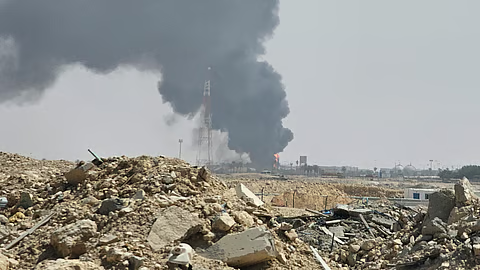
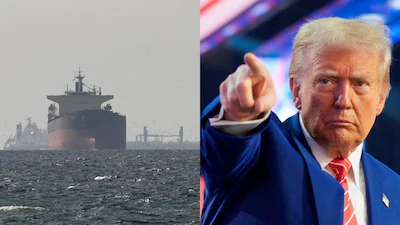
Iranian officials have privately told Trump advisers that attacking commercial ships in the Strait of Hormuz was a mistake — and that they want to keep negotiating.
According to senior US officials speaking Friday, Tehran’s message was blunt.
“They came back to the table and said, ‘We screwed up. We made a mistake. Let’s keep talking,'” one official said.
The Private Admission
The Iranian explanation, as relayed to Washington, places blame on an internal faction.
Officials in Tehran have described the ship attacks as the work of an errant sect of hardliners — an entity within their own system attempting to sabotage the negotiations and undermine the deal.
That framing serves an obvious purpose. It allows Iran to acknowledge the attacks happened without accepting that they represented state policy.
Whether Washington believes it is another matter.
The Public Demand
The White House is not satisfied with a private apology.
The administration wants Iran to publicly acknowledge the mistake, which it regards as a violation of the ceasefire.
That distinction — private admission versus public statement — is the sticking point. A quiet concession behind closed doors costs Tehran nothing domestically. A public one does.
The Negotiating Team
Trump has directed his team to continue talks, with a notably senior roster:
- Vice President JD Vance
- Jared Kushner, the president’s son-in-law
- Special envoy Steve Witkoff
- Secretary of State Marco Rubio
The talks are scheduled for Saturday in Oman — a country geographically positioned on the opposite side of the strait from Iran, and long accustomed to serving as a channel between the two governments.
What Washington Expects to Hear
The administration has a clear benchmark for the Oman meeting.
Officials expect Iran’s position to be that the Strait of Hormuz will remain open and managed exactly as it was before the conflict began.
If Tehran arrives with a different position, one official offered a memorably understated warning: “it’s not going to be a great day for them.”
Another summarized the mood more simply: “We’re definitely in a wait-and-see moment.”
Washington’s Alternative Theory
Here the American account diverges sharply from the Iranian one.
The US does not fully accept the rogue-faction explanation. Officials believe the ships were targeted for a different, more strategic reason.
Under the memorandum, Washington understood that a southern shipping lane in the strait — the one running along the Omani coast — would be open to traffic.
What happened next, in the American reading, caught Iran off guard. Traffic moved through that southern lane far faster and in far greater volume than Tehran anticipated. A substantial share of oil and gas shipments began flowing along a route outside Iranian control.
That, one official said, is why Iran reneged.
If accurate, the attacks were not the work of hardliners undermining a deal. They were a reaction to the deal working too well.
The Clock
Trump is giving his negotiators room to reach an agreement — but not unlimited room.
One official emphasized that the president is allowing space and time, and then added the qualifier: not a lot of time.
The US will respond with both military and economic leverage if Iran continues hostile acts, officials said.
The Nuclear Question, Deferred
The harder issue is what Trump refers to as the “nuclear dust” — the remnants of Iran’s nuclear program.
The American preference is to excavate the material. But officials indicated that if Iran refuses to behave like what one called a “normal country,” other options remain available, including simply leaving it buried permanently.
That threat carries an implicit logic. If Iran cannot access the material, the enrichment question becomes moot regardless of whether it signs anything.
The Sequencing Problem
One official laid out the structural obstacle facing the entire negotiation.
Opening the strait to trade is, in Washington’s view, the easiest component of the deal. It is the least ideologically loaded, the most immediately verifiable, and the most obviously in everyone’s economic interest.
If Iran cannot honor that, the official argued, negotiators will never reach the far thornier matter of the nuclear program.
In other words: the ships are the test. Pass it, and the real conversation begins. Fail it, and there is no conversation at all.
On the Assassination Reports
Officials declined to comment on reports that Israeli intelligence uncovered plots against Trump.
They offered only a general assurance: the president does not make decisions based on fear or threats.
Where This Stands
Two irreconcilable accounts sit on the table.
Iran says rogue actors attacked the ships and it wants to keep talking. The US suspects Iran attacked the ships deliberately because the shipping lane it conceded was carrying more traffic than expected.
Both sides are heading to Oman anyway.
Saturday will reveal which explanation Tehran is prepared to defend in public — and whether the ceasefire survives the answer.
Author