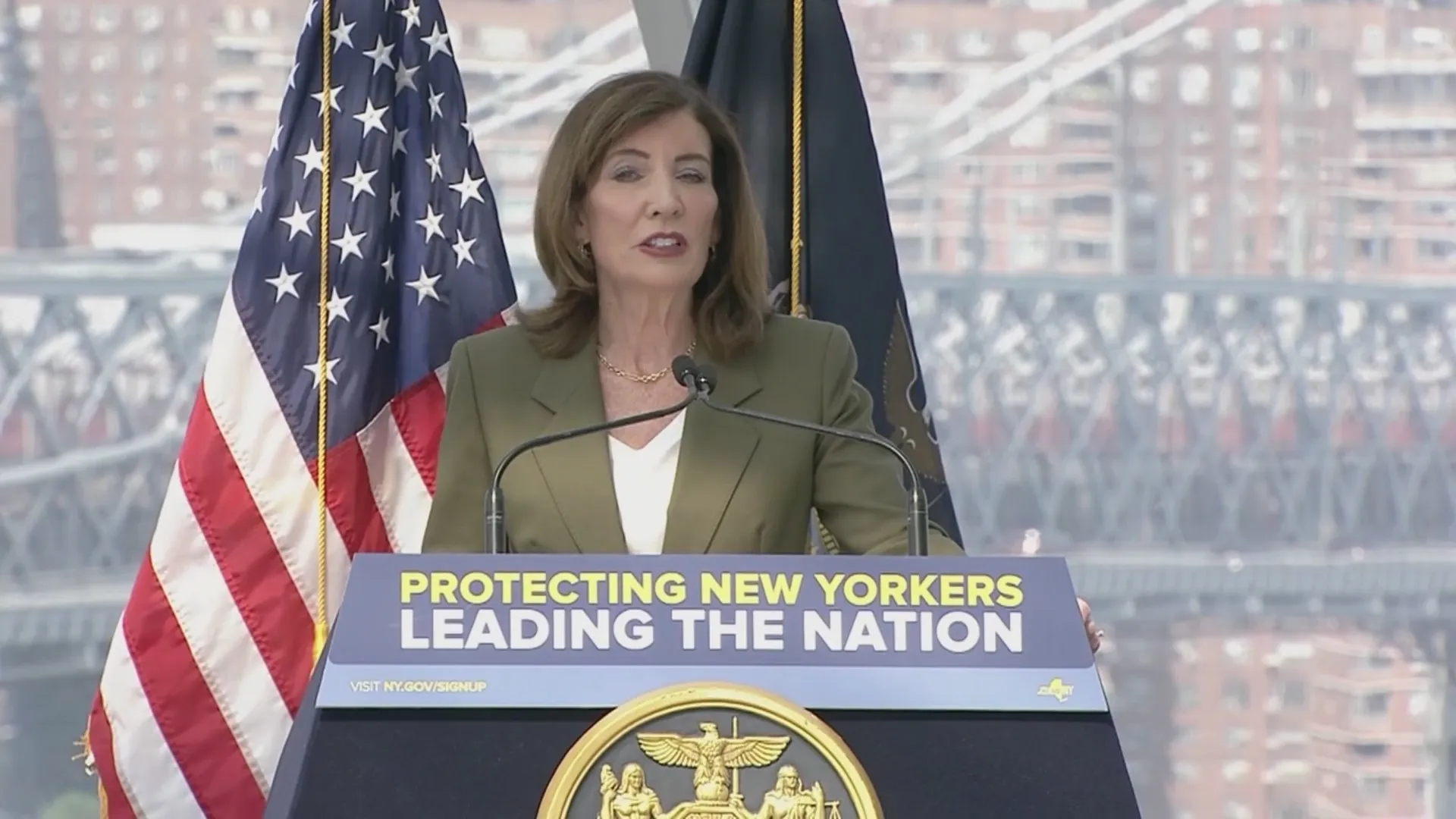
Hochul data center moratorium has put New York at the center of a national debate over the explosive growth of AI infrastructure, after Governor Kathy Hochul signed an executive order on Tuesday freezing approvals for new data centers until July 2027. The pause is designed to give state agencies time to weigh the environmental and economic costs of these power-hungry facilities, but it has already ignited fierce disagreement between environmental advocates and business leaders.
What the Order Actually Does
The executive order halts approvals for new data centers while the Department of Public Service and the Department of Environmental Conservation study their potential impacts through July 2027. At its core, the moratorium aims to prevent these massive facilities from driving up utility bills and draining local water supplies.
The order zeroes in on “hyperscale” data centers, defined as those demanding at least 50 megawatts from the grid. Such facilities are typically built to support artificial intelligence, cloud computing, and digital storage. Under the new rules, the Department of Environmental Conservation cannot issue discretionary permits for these projects without a thorough environmental review.
Hochul framed the move as a way to set a national standard. She argued that New York would lead the country in creating the strongest data center development rules, ensuring that when companies profit from operating in the state, New Yorkers benefit too.
Several categories of facilities are exempt from the pause, including data centers used for:
- Manufacturing
- Academic research
- Medical care
- Facilities majority-owned by public institutions for research purposes, such as the Empire AI project
Protecting Ratepayers and Workers
A central goal of the order is shielding everyday New Yorkers from rising costs. Hochul directed the Public Service Commission to require data centers to pay for their own grid upgrades or supply their own power, rather than passing those expenses onto residents.
The governor also moved to protect workers. She ordered Empire State Development to ensure that laborers receive standard local union wages and that developers hire union labor when constructing these facilities.
A Strain on the Grid
The urgency behind the order becomes clear when looking at the numbers. According to the New York Independent System Operator, the rush toward corporate AI projects has generated more than 30 proposals for new data centers, threatening to overwhelm the state’s aging electric grid. As of May, developers had requested nearly 12,000 megawatts of new power.
Democratic State Senator Kristen Gonzalez, who joined the governor for the signing, offered a striking comparison. She noted that potential data centers alone were seeking roughly 9 gigawatts, about a third of all the energy the state consumes annually. Gonzalez also pointed out that this surge in demand comes after New York experienced a 44 percent jump in residential electricity rates between 2020 and 2025, well above the national increase of 32 percent.
Beyond electricity, Hochul highlighted quality-of-life concerns for those living near these facilities, including constant loud noise and the heavy water use needed to keep servers from overheating.
Investing in Communities
To address local impacts, the order gives Empire State Development until mid-September to create a Community Investment Framework. A preliminary version released Tuesday suggested that developers contribute $1 million to a local community fund for every megawatt of anticipated demand. Those dollars could support parks, childcare, housing, or water infrastructure.
New Yorkers have a chance to shape the plan as well. The state is accepting public feedback on the preliminary framework through mid-August via email at DataCenterCIF@esd.ny.gov.
Business Leaders Push Back
Not everyone welcomed the moratorium. Construction groups, business advocates, and trade organizations warned that the pause could damage local economies and drive the technology industry elsewhere.
Union leader Mark McManus of the United Association of Union Plumbers and Pipefitters argued that a shortsighted moratorium accomplishes only one thing: killing good-paying union jobs. Carlo Scissura, president of the New York Building Congress, warned that shutting the door on development would cost tens of thousands of jobs and forfeit millions in investment, harming the state’s economy and competitive standing.
Mike Elmendorf, president of the Associated General Contractors of New York State, was even more pointed, cautioning that the moratorium could permanently push data centers to states like Virginia, Texas, and Georgia that are actively competing for these investments.
Environmentalists Cheer, but Spot Loopholes
Environmental watchdogs largely celebrated the order, though some flagged potential gaps. Laura Shindell, New York State Director for Food and Water Watch, pointed to Orangeburg in Rockland County, where four separate data center proposals would collectively exceed 120 megawatts. Yet because each is assessed individually at around 30 megawatts, they fall below the threshold and escape the moratorium entirely.
Why an Executive Order?
Notably, Hochul’s order bypassed a stricter moratorium the state legislature passed in June, which she has not signed. That legislation would have paused permits for a full year and applied to facilities drawing as little as 20 megawatts.
Hochul explained that the higher 50-megawatt threshold in her order would still allow data centers that power hospitals, schools, and back-office bank operations. When asked why she chose an executive order over the legislation, she said working through the complex bill would take too long and that immediate action was needed to address the problem quickly.
The legislative effort, known as S10642/A11560, passed both chambers as a bipartisan omnibus bill, backed by more than 70 memos of support from groups including the NAACP New York State Conference, Citizen Action of New York, and the Sierra Club Atlantic Chapter.
The Fight Reaches Washington
The battle over data centers has extended to the federal level as well. Democratic U.S. Congressmember Josh Riley introduced the federal FAIR Data Act on Monday, aiming to stop investor-owned utilities from passing grid upgrade costs onto New Yorkers. He said a proposed facility in Lansing and a rezoning push in Oneonta inspired the bill, adding that out-of-state tech companies should pay their own way if they want to build in New York.
Democratic U.S. Senator Kirsten Gillibrand also backed the order, describing the pause as a matter of trust. She insisted communities need firm guarantees that their energy bills won’t spike, their water will be protected, and their air will stay clean.
The order followed a sustained pressure campaign, including a letter to Hochul signed by more than 100 civil rights and environmental organizations. The coalition warned that unchecked data center expansion would strain the grid, raise utility bills, increase fossil fuel pollution, deplete water resources, and burden communities with unbearable noise.
The Road Ahead
As New York hits pause, the outcome of this moratorium could ripple far beyond state lines. With billions in investment, thousands of jobs, and the future of AI infrastructure hanging in the balance, the state faces a delicate task: balancing the demands of a booming technology industry against the needs of ratepayers, workers, and the environment. For now, all eyes are on how New York navigates one of the defining economic and environmental questions of the AI era.
Author