Japan Bans National Flag Desecration, Igniting Free Speech Fears
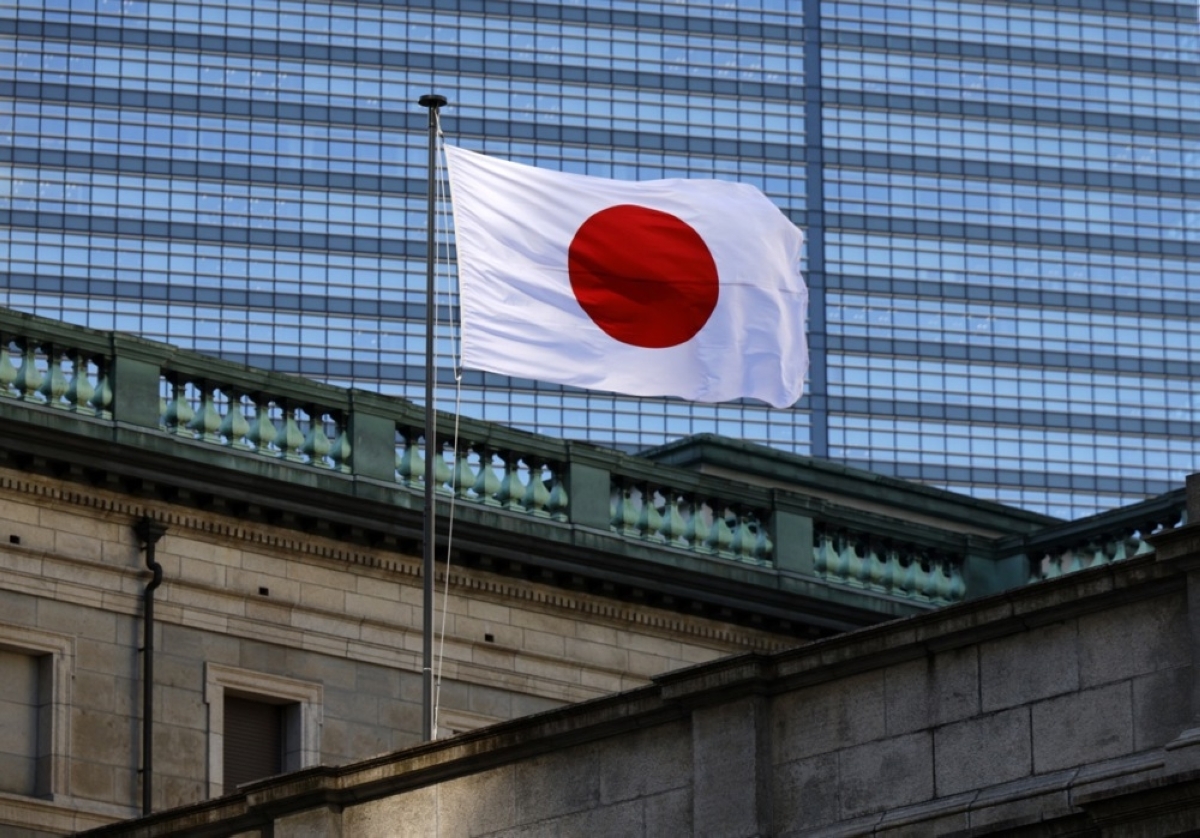
Japan has enacted a sweeping new law that criminalizes desecration of its national flag, setting off a fierce debate over patriotism, free expression, and the limits of state power. Passed by parliament on Friday, the Japan flag desecration law marks a significant win for the country’s conservative leadership — and a deeply worrying development for critics who see it as a threat to democratic freedoms.
At its heart, the law raises a difficult question: where does honoring national symbols end and silencing dissent begin?
Closing a Perceived Legal Gap
The legislation is part of a broader push by staunchly conservative Prime Minister Sanae Takaichi to promote traditional patriotism and correct what her supporters describe as a flawed legal double standard.
The reasoning hinges on an existing quirk in Japanese law. For years, Japan has penalized the desecration of foreign flags in order to prevent diplomatic disputes, yet it offered no equivalent protection for its own flag, the Hinomaru. Takaichi and her allies argued this imbalance was simply wrong — that a nation willing to shield other countries’ banners should extend the same respect to its own.
The new law is designed to close that gap, and in doing so, it plants a firm marker in Japan’s ongoing cultural and political shift toward the right.
What the Law Actually Punishes
Under the newly enacted rules, the consequences for defiling the national flag can be steep. Violators who publicly damage, remove, or defile the Hinomaru in a way that causes others extreme discomfort or disgust face up to two years in prison or a fine of up to 200,000 yen, roughly $1,250.
According to Japanese broadcaster Kyodo News, the law targets a range of specific acts, including:
- Physical vandalism such as stomping on the flag
- Burning the flag in public spaces
- Throwing mud at it
- Livestreaming any of these acts
The inclusion of livestreaming reflects a modern awareness of how such acts spread online, extending the law’s reach well beyond the physical moment.
Carefully Drawn Exemptions
Anticipating concerns about overreach, the law’s drafting committee — led by former Chief Cabinet Secretary Hirokazu Matsuno — built in a series of highly specific exemptions.
The ruling party clarified that the law does not apply to a surprisingly broad set of representations. Completely exempt are:
- Physical paintings depicting the flag
- Digital media, including anime, manga, and video games
- Content generated by artificial intelligence
- Even the miniature paper flags famously used to decorate children’s restaurant meals
These carve-outs appear aimed at reassuring the public that everyday cultural and artistic uses of the flag remain untouched. Yet for critics, such precise exemptions only underscore how blurry the law’s core prohibition really is.
A Threat to Free Speech?
The sharpest objections center on the law’s vague language and its potential to chill legitimate expression. Opponents, including constitutional scholars and liberal politicians, warn that it poses a severe threat to freedom of speech as guaranteed under Article 21 of Japan’s constitution.
The Democratic Lawyers Association of Japan delivered a pointed condemnation, arguing that the very notion of what counts as discomfort is left entirely to the arbitrary judgment of investigative authorities. That ambiguity, they cautioned, risks turning the law into a tool for targeting political protests and government critics.
The concern is far from fringe. A group of 150 Japanese academics petitioned lawmakers to halt the bill before its passage, voicing strong concerns that it could curb freedom of political expression. Their warning captures the fundamental worry: that a law framed as protecting a symbol could end up policing the very dissent a democracy depends on.
The Weight of History
Part of what makes the Hinomaru so contentious is its complicated place in Japanese memory. The flag doesn’t carry the same universally embraced meaning that many national symbols hold elsewhere.
Ritsumeikan University law professor Takaaki Matsumiya highlighted these unique domestic sensitivities, noting that Japan has a history of waging wars of aggression. Because of that past, he explained, even some Japanese citizens hold a negative image of the flag — one that, in his view, doesn’t symbolize democratic values the way many European flags do.
That historical baggage is impossible to separate from the debate. Following its defeat in World War II in 1945, Japan adopted a U.S.-imposed pacifist constitution. Yet the national flag itself remained unchanged, carrying forward associations that some citizens still find troubling. For these critics, compelling reverence for the Hinomaru through criminal law feels like an attempt to paper over a contested history rather than reckon with it.
The Bigger Picture
The flag law doesn’t exist in isolation. It fits within a wider conservative agenda under Takaichi’s leadership, reflecting a broader effort to reshape Japanese identity around traditional notions of patriotism and national pride.
That context sharpens the concerns of opponents, who see the measure as one piece of a larger pattern. Several tensions now sit at the center of the controversy:
- Whether protecting a national symbol justifies restricting individual expression
- How undefined terms like “discomfort” might be exploited by authorities
- Whether the law could be wielded selectively against protesters and critics
- How a nation reconciles patriotism with a difficult wartime history
Looking Ahead
Japan’s new flag law hands conservatives a symbolic victory, but it leaves the country wrestling with unresolved questions about the balance between reverence and freedom. Supporters see it as long-overdue respect for a national emblem. Detractors see a vaguely worded statute ripe for political abuse.
As the law takes effect, much will depend on how it is enforced — and whether the fears of scholars, lawyers, and activists prove justified. What’s already clear is that in trying to protect a piece of cloth, Japan has reopened a far deeper debate about the kind of society it wants to be. Whether the Hinomaru becomes a unifying emblem or a flashpoint for conflict may ultimately hinge not on the flag itself, but on how much space Japan leaves for those who choose not to salute it.
Author