How Will Israel Vote in October? Inside the Knesset’s Dissolution and the Race Ahead
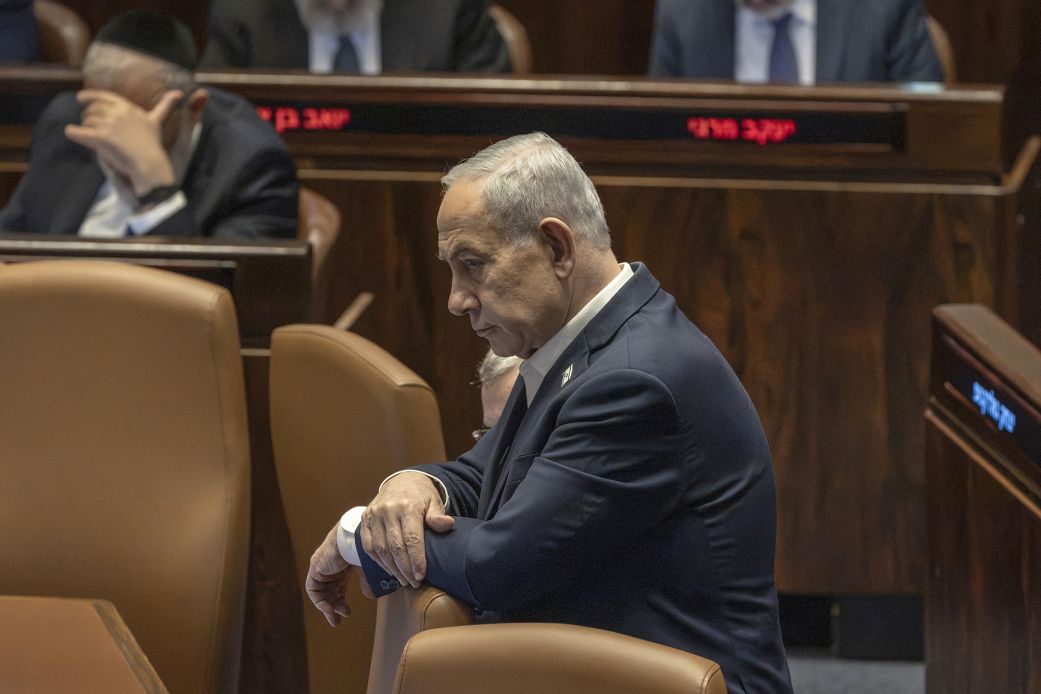
Israel’s general election is now firmly on the horizon, and the political landscape is anything but settled. The Knesset, the country’s unicameral parliament, dissolves on Friday ahead of a national vote set for October 27, 2026 — a moment made all the more remarkable because it marks the first time the body has completed a full term since 1988.
That milestone arrives after one of the most turbulent and contested chapters in Israel’s modern history, setting the stage for an election whose outcome could reshape the nation’s direction.
A Parliament Amid Turmoil
The outgoing Knesset served through a period defined by war and controversy, with many of its most consequential decisions fiercely debated within the parliament itself.
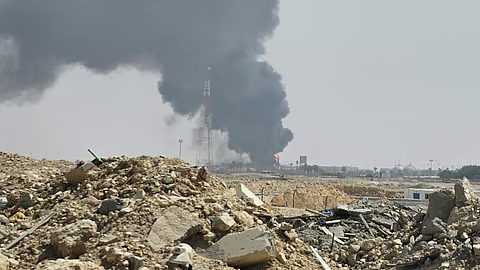
During its term, the body backed a series of military campaigns and domestic policies that drew intense scrutiny at home and abroad. These included support for the war in Gaza, which began following the Hamas-led attacks into southern Israel on October 7, 2023, as well as conflicts involving Iran and Lebanon. Closer to home, it endorsed a dramatic and often violent expansion of illegal settlements on Palestinian land across the occupied West Bank.
Even some of Israel’s own allies, including the United States, have leveled sharp criticism at the government over an array of accusations. All of this unfolded under Israel’s most right-wing government to date, led by Prime Minister Benjamin Netanyahu, who has faced allegations of corruption, an aggressive campaign against the country’s judiciary, and efforts to politicize its security services to serve his agenda.
How exactly these events will shape voter behavior remains uncertain. Yet opinion polls suggest Israeli society continues to drift rightward, adding a layer of unpredictability to the contest.
How the Vote Works
Understanding the election requires grasping Israel’s distinctive electoral system. The country uses nationwide proportional representation, meaning voters cast their ballots for party lists rather than individual candidates.
The mechanics are straightforward but consequential:
- Israel functions as a single electoral district
- Seats in the 120-member Knesset are distributed according to each party’s share of the national vote
- A party must clear a 3.25 percent electoral threshold to win any seats
Because no party has ever won an outright majority in Israel’s history, coalition-building sits at the very center of the process. After the votes are counted, the president invites the politician best positioned to form a government to assemble a governing coalition — a task that often proves more difficult than winning the vote itself.
The Main Contenders
This election features a crowded and competitive field, with several familiar figures vying to unseat or preserve Netanyahu’s grip on power.
According to the most recent poll by Israel’s Channel 12, former Chief of Staff Gadi Eizenkot and his newly formed Yashar party appear best positioned to mount a serious challenge. The poll projects Yashar to win 23 seats, narrowly edging out Netanyahu’s Likud party at 22 — though both would still need to build coalitions to actually govern.
Eizenkot, a former military commander whom Israeli media describe as centrist, has sharply criticized Netanyahu’s handling of the regional wars and the country’s deepening internal divisions.
He isn’t the only challenger. Two former prime ministers, Naftali Bennett and Yair Lapid, are campaigning jointly on the Together ticket, an alliance projected to secure 16 seats. Their partnership blends distinct political identities:
- Bennett, a right-wing politician, casts himself as a pragmatic alternative to Netanyahu
- Lapid, a centrist and former opposition leader, emphasizes institutional reform and secular concerns
An Opposition That Agrees on Gaza
For all the rivalry, a striking consensus emerges on one of the most consequential issues. While the opposition may promise a softer approach on certain domestic matters, none of the candidates vying for government has offered any real criticism of the multiple wars Israel has waged under the current government.
Nor have they meaningfully urged restraint in the ongoing conflict in Gaza. Instead, much of their criticism of Netanyahu centers on how the wars have been managed — and the damage done to Israel’s relationships with allies and its international standing — rather than the wars themselves.
In other words, the opposition tends to challenge Netanyahu’s style and competence far more than his fundamental foreign policy direction. Voters seeking a dramatic shift on Gaza are unlikely to find one among the leading contenders.
What the Campaign Is Really About
If not the wars themselves, then what will define this election? So far, much of the opposition’s energy has gone toward attacking the character of Netanyahu’s government, accusing him of weakening state institutions and deepening social divisions to secure his own political survival.
One issue looms especially large and is tightly bound up with Netanyahu’s fate: whether the country’s growing ultra-Orthodox minority should be conscripted into the military. His coalition has long depended on ultra-Orthodox parties, offering them softened measures on military service in exchange for their support.
That arrangement has grown increasingly unpopular. With Israel engaged in multiple regional wars, much of the public wants the ultra-Orthodox community to share the burden of military service. Notably, Eizenkot, Lapid, and Bennett have all rejected Netanyahu’s practice of blurring the issue to keep ultra-Orthodox parties on side.
The topic carries personal weight for Eizenkot, who has become closely identified with it after losing his son and two nephews during Israel’s military operations in Gaza.
The Math of a Deadlocked Race
Perhaps the most telling detail from the polling is how tight the overall balance remains. According to the Channel 12 poll, neither major bloc appears able to secure a governing majority, even with allied support.
The projected breakdown reveals a nation split nearly down the middle:
- Parties opposed to Netanyahu are forecast to win 59 of the 120 seats — two short of the 61 needed to govern
- The pro-Netanyahu bloc, including ultra-Orthodox parties, would take 51 seats
- Arab parties, which have historically played only a limited role in coalition governments, would hold the remaining 10 seats
That arithmetic points toward a potentially prolonged period of negotiation and uncertainty, with the balance of power possibly resting on parties that have traditionally been sidelined from coalition talks.
The Bigger Picture
This election unfolds at a pivotal juncture, with several forces converging at once:
- A society that appears to be moving rightward despite mounting international criticism
- An opposition unified in tone against Netanyahu but largely aligned with him on war policy
- A conscription debate that could fracture long-standing political alliances
- A projected deadlock that may leave no bloc able to govern outright
Looking Ahead
As the Knesset dissolves and campaigning intensifies, Israel heads toward a vote whose outcome is far from predetermined. The rivalry between Netanyahu and challengers like Eizenkot, Bennett, and Lapid will dominate the headlines, but the deeper questions run beneath the personalities — about military service, institutional integrity, and the country’s path through a period of war and international scrutiny.
With the polls suggesting a near-even split and no clear route to a majority, the October 27 election may resolve less than it reveals. What seems certain is that the coalition-building to follow could prove just as decisive as the vote itself, shaping who ultimately leads Israel through the uncertain months ahead.
Author