Andy Burnham Enters Downing Street as Britain’s Fourth Prime Minister in Four Years
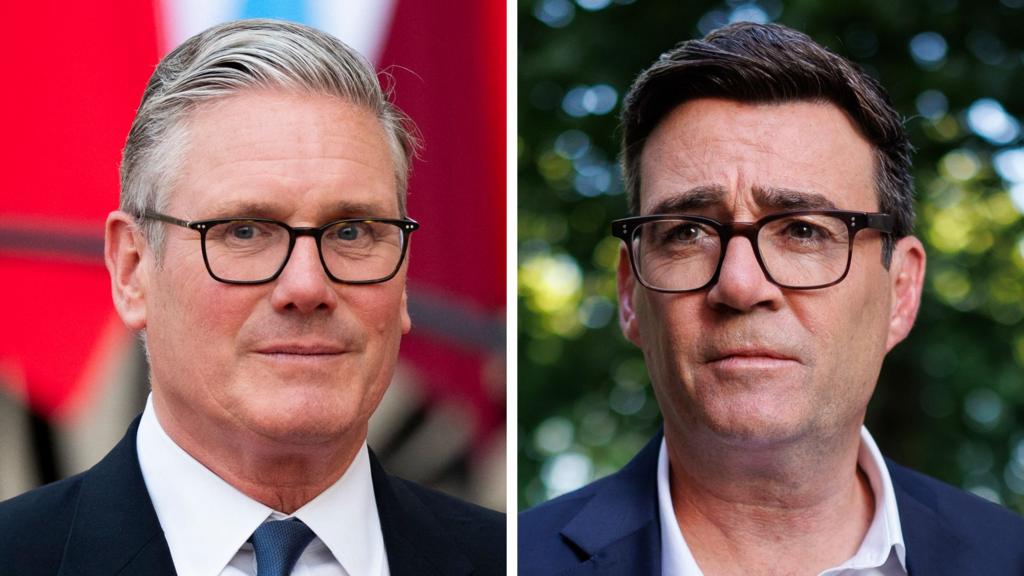
Andy Burnham prime minister is now a matter of constitutional fact. The former Greater Manchester mayor formally took office after meeting King Charles at Buckingham Palace, becoming the fourth person to hold the role in under four years and the sixth in a decade.
The appointment came shortly after Keir Starmer travelled to the palace to tender his resignation to the monarch.
A Rapid Ascent
Burnham took over as Labour leader on Friday. He had returned to parliament only a month earlier.
That timeline is genuinely unusual. A byelection in June, the party leadership in July, and the premiership days later — a sequence compressed enough that most voters will have had little opportunity to assess him in his new role before he assumed the highest office in British politics.
From the palace, Burnham headed to Downing Street, where he addressed assembled media before announcing his cabinet.
The Byelection That Made It Possible
Burnham’s return to the Commons came through a Makerfield byelection staged by his allies with an explicit purpose: replacing Starmer.
That framing is unusually candid for British politics. Byelections are ordinarily triggered by death, resignation or scandal rather than engineered as a route back to Westminster for a leadership challenger.
The opening arose after Starmer lost the confidence of many Labour MPs and several of his own ministers, following what has been described as a series of political missteps and policy reversals.
Power Without a Contest
The most striking feature of Burnham’s elevation is what didn’t happen.
No one else in Labour stood against him. He became leader — and therefore prime minister — without a contest and with limited public scrutiny.
Comparisons to Rishi Sunak’s uncontested rise in 2022 only go so far. Sunak had fought a leadership contest against Liz Truss weeks earlier, meaning he had been tested publicly and had very recent cabinet experience.
Burnham’s situation differs. He has been an MP and a cabinet minister before, but he left parliament in 2017 to take up the Greater Manchester mayoralty. He has spent the intervening years in devolved regional government rather than national politics.
What the Manchester Years Represent
That gap cuts both ways.
Critics will note distance from Westminster’s current machinery — from the departmental relationships, the parliamentary arithmetic, and the daily grind of national government that shapes how a prime minister operates.
Supporters will argue the opposite: that running Greater Manchester gave him executive experience of a kind most MPs never acquire, and that time away from Westminster is an asset rather than a liability at a moment when public frustration with the political class runs high.
Which reading proves accurate will become clear soon enough.
Six Prime Ministers in Ten Years
The statistic deserves its own consideration.
Six prime ministers in a decade represents a level of turnover with few modern precedents in British politics. Each transition brings new priorities, cabinet reshuffles, and a period during which policy direction is uncertain.
The consequences reach beyond politics. Civil servants recalibrate. International partners recalculate. Long-term programmes — infrastructure, defence procurement, industrial policy — struggle to survive the churn.
Whatever Burnham’s individual merits, he inherits an office that has changed hands often enough to raise questions about institutional stability itself.
The Immediate Task
Cabinet appointments will be the first real signal of his intentions.
The composition will indicate whether he intends continuity with the Starmer government, a decisive break, or an attempt to balance the party factions whose support he needs to govern. Whether he brings in allies from his Manchester years, retains experienced Starmer-era figures, or does both will tell observers a great deal.
He faces the standard early tests: establishing authority over a parliamentary party that has just deposed one leader, setting out priorities, and doing so with the knowledge that the mechanism that removed his predecessor remains available.
The Legitimacy Question
There is a persistent argument in British politics about prime ministers who take office between general elections without facing the electorate.
The constitutional position is straightforward — the prime minister is whoever commands the confidence of the House of Commons, and no separate mandate is required. It is entirely proper.
The political argument is separate and less settled. Opposition parties routinely demand elections in these circumstances, and the pressure tends to grow the longer an unelected leader governs. Burnham will face that question, and how he handles it may shape his early months considerably.
What Comes Next
For now, Britain has a new prime minister who returned to parliament in June and reached Downing Street in July.
The cabinet announcement follows immediately. After that, the ordinary business of governing — and the ordinary judgement that comes with it.
Given the recent record of the office, how long he holds it may be the question worth watching.
Author