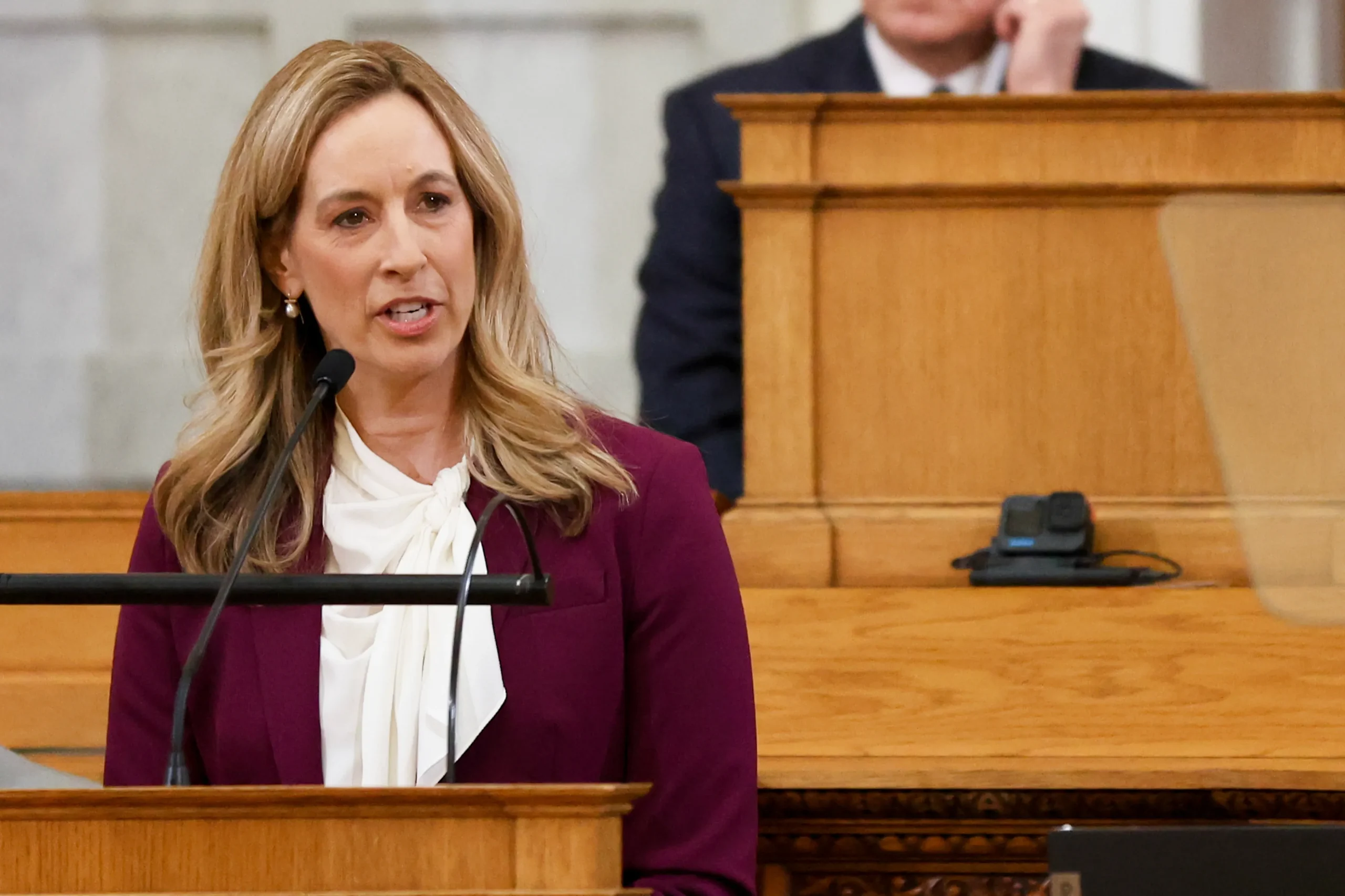
The New Jersey non-citizen voter registration disclosure Governor Mikie Sherrill made Tuesday is a genuinely significant admission — and also considerably less than what it is being turned into.
Both things are true at once, which is precisely why the story deserves careful handling rather than shouting.
A software failure resulted in roughly 6,600 non-citizens being added to the state’s voter rolls. About 400 of them subsequently cast ballots. Those numbers are real, they come from a Democratic governor in a blue state, and no one is disputing them.
What happens next depends entirely on which questions you ask about them.
Why This Case Is Different
Claims about non-citizen voting have historically rested on shaky ground — exaggerated figures, speculative extrapolations, and audits that shrink dramatically under scrutiny.
This one does not fit that pattern. A state government examined its own systems, found a failure, and acknowledged it. There is no partisan incentive structure here pushing toward the finding.
It is also larger than comparable disclosures in recent years:
- Ohio’s Republican secretary of state identified 597 possible non-citizen registrations in 2024, with 138 having voted
- A federal court in Kansas found just 39 non-citizen registrations across a fourteen-year window
- Iowa flagged more than 2,000 records for review in 2024, ultimately confirming 277 registrations and 35 ballots cast
New Jersey’s figures exceed all of these by a wide margin. That is worth acknowledging plainly.
The Concealment Problem
The most damaging element may not be the error itself but what followed it.
Sherrill said the problem was identified and addressed back in 2024 under the previous administration — and never disclosed to the public. She attributed the failure to reckless conduct under former Governor Phil Murphy and called it unacceptable that no one brought the matter forward.
Murphy’s camp has not responded.
Whatever the intent, the effect is corrosive. Nothing feeds suspicion of a cover-up more effectively than an actual undisclosed problem surfacing years later. New Jersey’s leadership handed critics a legitimate grievance.
Now for the Other Half
Here is where the story stops supporting the conclusions being drawn from it.
Four hundred ballots is not a rounding error, but it is close to one. Those votes were spread across multiple elections since 2023 — not concentrated in a single race. Sherrill also noted the affected individuals registered as Democrats, Republicans, and unaffiliated voters, scattered geographically across the state.
Even the most aggressive framing runs into arithmetic. New Jersey recorded more than 2.2 million voters in the 2024 presidential election. Four hundred votes represents roughly 0.018 percent of that total.
For context, Pew Research calculated that only two presidential state margins in American history have been tighter than that figure — Maryland in 1832 and Florida in 2020.
Florida in 2020 obviously mattered enormously. But that comparison requires assuming all 400 votes landed in one election and broke overwhelmingly one direction, neither of which is true here.
What Actually Happened
The mechanism matters more than the count.
These were not people attempting to game the system. They disclosed their non-citizen status. The software then registered them anyway, incorrectly.
Some likely received voter registration cards afterward — official-looking documentation from a state agency indicating they were eligible. Acting on that, a portion voted, with no apparent intent to commit fraud at all.
That distinction reframes the entire episode. This is an administrative failure that produced improper votes, not a fraud scheme that produced improper votes.
The SAVE Act Problem
This creates an awkward complication for the legislation being promoted in response.
The SAVE America Act’s central provision requires registrants to furnish proof of citizenship. But the people in New Jersey were never registering in the first place — they were registered by a broken system. No documentation requirement applies to someone who never filled out the form.
The administration argues other provisions of the bill could catch registrations of this type. That may be worth examining on the merits. It is a different argument than the one being made publicly.
The Scale Mismatch
There is also a substantial gap between this incident and the claims it is being used to support.
The administration recently estimated, using methods that remain unclear and figures that remain unverified, that as many as 250,000 non-citizens are registered across four states — including more than 35,000 in New Jersey alone.
New Jersey’s own accounting found 6,600. That is not a small discrepancy. It is a factor of five, in the state where the actual audit occurred.
The Logic Problem
Beyond the numbers, the theory of large-scale coordinated non-citizen voting has always struggled with basic plausibility.
Consider what such a scheme would require:
- Recruiting enormous numbers of undocumented immigrants
- Keeping that recruitment entirely undetected across multiple jurisdictions
- Convincing each participant to risk imprisonment and deportation
- All in exchange for a single ballot apiece
The cost-benefit calculation for any individual participant is catastrophic. One vote, weighed against criminal prosecution and removal from the country.
Schemes that require thousands of people to accept terrible odds and stay quiet about it tend not to work.
The Honest Conclusion
New Jersey demonstrates that non-citizen registration and voting can happen, at a scale larger than skeptics have generally allowed for. Anyone who has insisted the phenomenon is entirely imaginary should update.
It does not demonstrate a coordinated effort to rig elections. It does not produce vote totals capable of deciding realistic races. And it does not validate the specific policy remedy currently being advanced, since that remedy addresses a behavior that did not occur here.
What it shows is a state agency running faulty software, a previous administration declining to say so, and several hundred people voting because their government told them they could.
That is a real failure requiring a real fix. It is just not the failure it is being described as.
Author
-
Lucienne Albrecht is Luxe Chronicle’s wealth and lifestyle editor, celebrated for her elegant perspective on finance, legacy, and global luxury culture. With a flair for blending sophistication with insight, she brings a distinctly feminine voice to the world of high society and wealth.