Wildberries Drone Attacks Bring the War Into Russian Shopping Habits
Black smoke columns rising above burning warehouses have given Ukraine’s drone campaign some of its most visually striking images yet. The target: Wildberries, Russia’s largest online retailer and the closest thing the country has to Amazon.
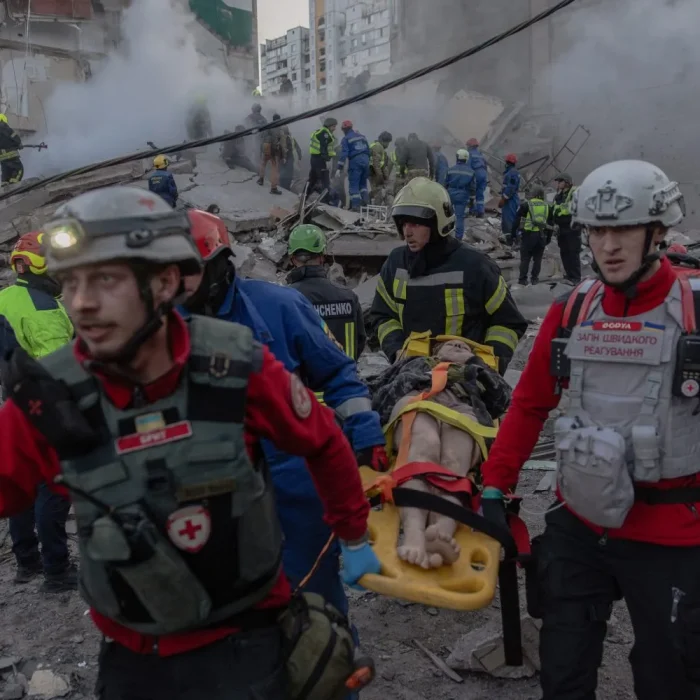
Ukrainian drones struck first over the weekend, then hit five additional Wildberries facilities during the week — including one in Crimea, the peninsula Russia illegally annexed in 2014. Nine people were killed across the strikes, with scores more injured.
The campaign forms part of Kyiv’s broader effort to degrade Russia’s war capacity, damage its economy, and force ordinary Russians to feel consequences from the invasion.
How Wildberries Became a National Institution
The company started in 2004, founded by Tatyana Kim — then a teacher and young mother — selling clothing.
Two decades later, the purple-logoed platform dominates Russian e-commerce. It handles storage, shipping and delivery for businesses of every size, connecting sellers to customers across an enormous country. Forbes Russia valued Kim’s personal fortune at $8.1 billion in April.
The catalogue spans nearly everything: clothing, books, cosmetics, toys, appliances, household goods, sports equipment. There is an e-pharmacy section and a travel portal for booking flights and hotels.
In 2021 Kim purchased a small bank and built it into Wildberries Bank, an institution now sanctioned by both the United Kingdom and European Union.
The Scale Involved
Kim reported that the company operated more than 200 logistics facilities last year, covering over 5.2 million square metres — roughly 55 million square feet. Expansion plans for 2026 included new warehouses in Belarus and Kazakhstan, where the company also operates, alongside its facilities in Russian-held Crimea.
Sergei Semko, a leading analyst at the Moscow-based online retail research firm Data Insight, estimates between 500,000 and 800,000 sellers use the platform.
Wildberries handles 52% of all online orders placed in Russia, according to Semko.
Two Competing Explanations for Why It Was Hit
President Volodymyr Zelenskyy did not name Wildberries specifically, but said the facilities Ukraine struck were involved in supplying gear and technical components to Russian forces.
Kremlin spokesman Dmitry Peskov rejected that Tuesday, saying it is simply not the case and accusing Kyiv of striking civilian targets.
An Associated Press review of the Wildberries site found dual-use goods available for purchase — body armour, helmets, radios and assorted electronics. Some listings carried marketing language referencing the SVO, the Russian acronym for special military operation that the Kremlin uses for the war. Products were labelled as tested in the SVO or as the choice of SVO fighters.
Wildberries did not respond to a request for comment.
Russia, for its part, regularly targets Ukrainian logistics and retail sites, several of which were struck last week.
Where the Strikes Landed
The pattern of attacks covered wide geography:
- Elektrostal, just east of Moscow, and the Tambov region over the weekend
- Krasnodar and Stavropol in the south, set ablaze early Wednesday
- St. Petersburg, the surrounding Leningrad region, and Simferopol in Crimea on Friday
Recovery times varied considerably. Wildberries said the Elektrostal fire — at a key distribution hub serving Moscow — burned for three days. The Kotovsk facility in Tambov resumed operations Thursday. In Stavropol, authorities reported the fire out Thursday evening, more than 24 hours after the strike.
Regarding St. Petersburg, Leningrad and Crimea, Kim said some spaces and goods had been salvaged without providing detail.
Small Sellers Absorb the Damage
The businesses hurt most are the smallest ones.
Semko explained that platforms like Wildberries, along with competitors Ozon and Yandex Market, gave local craftsmen and entrepreneurs the ability to reach customers across Russia’s vast territory — a market that was previously inaccessible to them.
Since Saturday, sellers have posted on social media describing inventory destroyed in the burned warehouses, some of them recounting their losses in tears.
A Policy Change With Awkward Timing
The compensation question turned immediately contentious.
Earlier this month, Wildberries revised its seller policy to exempt the company from liability for stock damaged by force majeure events — a category that explicitly includes drone attacks.
The company has nonetheless offered support measures:
- Discounted storage fees
- Free transfer of goods to other facilities
- Reduced-rate loans through Wildberries Bank
Late Wednesday, Kim announced payments had begun for sellers whose inventory was destroyed at Elektrostal. She said the priority was supporting the smallest and most vulnerable entrepreneurs, numbering more than 88,000, with funds appearing on seller balances within 24 hours.
Estimating the Losses
Semko cautioned that available data is insufficient for firm conclusions, but offered a rough figure.
He estimated the damaged facilities in the Moscow, Tambov, Krasnodar and Stavropol regions represented about 12% of Wildberries’ total warehouse capacity, with goods stored there potentially worth as much as $3 billion.
That damage compounds pressures small Russian businesses were already facing this year: higher taxes, a fuel crisis, and additional regulatory requirements.
Semko described the combination as almost a perfect storm.
A Sector That Grew Because of the War
Chris Weafer, CEO of Macro-Advisory Ltd. Consultancy, explained that Russian online retail expanded rapidly after 2022.
E-commerce now accounts for roughly 20% of all retail sales, up from well under half that share five years ago.
The growth was a direct consequence of sanctions. When Western brands exited Russia, Wildberries and Ozon replaced them by sourcing comparable products from Asia, the United Arab Emirates and Turkey.
Weafer put the overall e-commerce sector at around $150 billion, with online retail representing $80 billion to $90 billion of that.
The Real Objective May Be Psychological
Weafer’s assessment of the economic damage was measured. He described the harm to the industry and the broader economy — which he characterised as effectively stagnant but stable — as relatively slight, while acknowledging severe pain for small businesses already struggling badly.
The more significant effect, in his view, is on public consciousness.
For years following the 2022 invasion, Russians appeared largely detached from the fighting. It was, as Weafer put it, something happening far away.
That has shifted this year. Regular strikes on oil refineries produced enormous fires in various parts of the country, and now the warehouses of a company nearly every Russian household uses have burned.
He described the result as greater awareness accompanied by considerably more discussion, with more people asking what is happening, why, and why the conflict has continued so long. In his phrase, it brings it home.
Consumers Seem Unbothered So Far
Shoppers interviewed by AP in Moscow on Thursday spoke warmly about the platform’s convenience.
Irina Potapova said she would keep using the service even if prices rise because of the attacks, reasoning that it saves her time — and time, she said, is worth more.
That response may be the most telling detail in the story. The strikes have destroyed inventory, killed nine people and burned warehouses across seven regions. Whether they change how Russians think about the war is a separate question, and one that consumer convenience may prove surprisingly resistant to.
Author
-
Lucienne Albrecht is Luxe Chronicle’s wealth and lifestyle editor, celebrated for her elegant perspective on finance, legacy, and global luxury culture. With a flair for blending sophistication with insight, she brings a distinctly feminine voice to the world of high society and wealth.