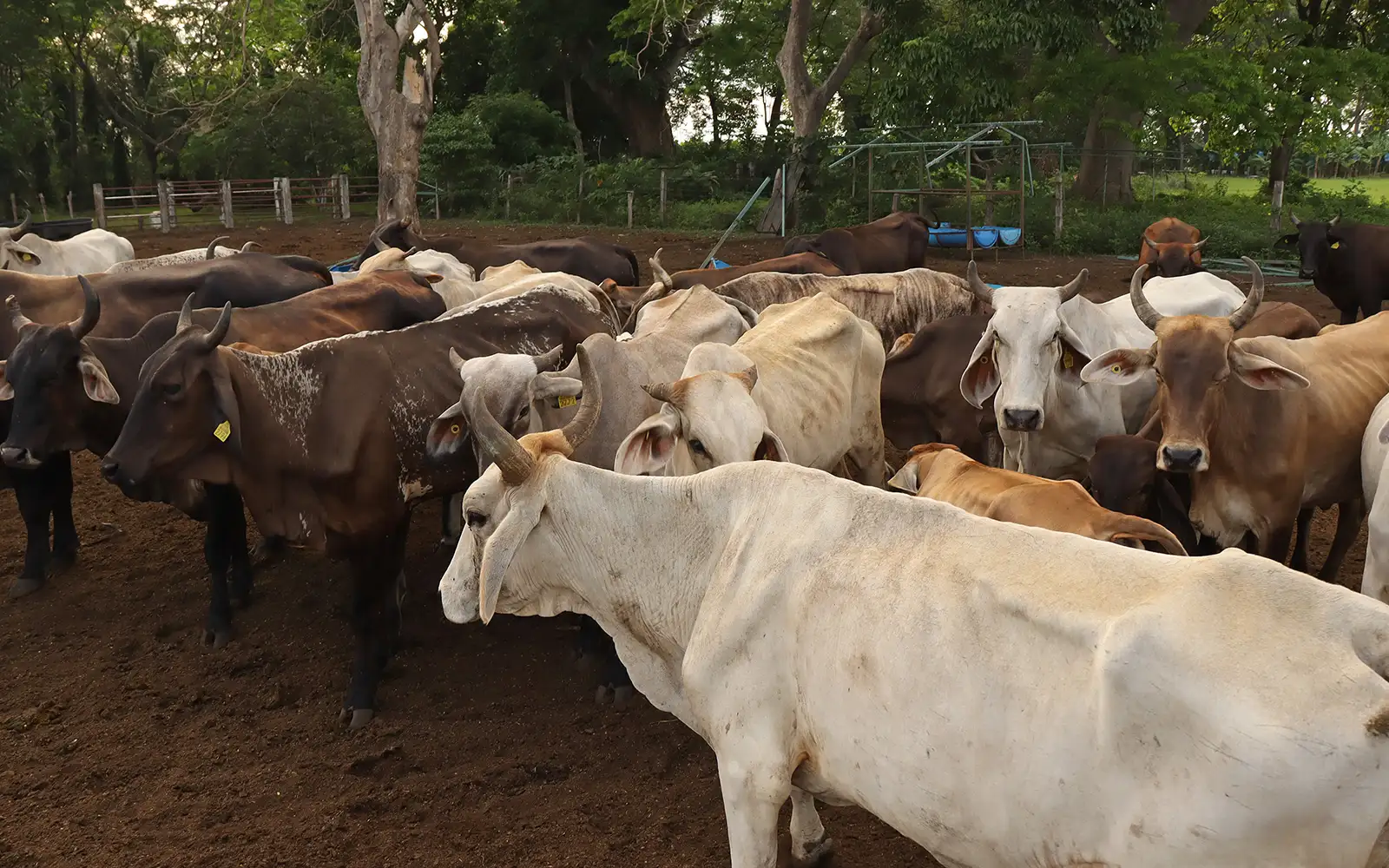
Mexican cattle imports will begin flowing north again on August 24, the United States announced Friday, ending more than a year of near-total shutdown imposed after a flesh-eating parasite began spreading through Mexican herds.
The decision arrives after months of pressure from ranchers on both sides of the border and represents a cautious, staged reopening rather than a return to business as usual.
Where the Gates Open First
According to a statement from the U.S. Department of Agriculture, the first crossing to resume operations will be at Douglas, Arizona, which sits opposite Agua Prieta in the Mexican state of Sonora.
The department indicated that preparations are also underway to reopen two additional crossings in New Mexico — Santa Teresa and Columbus — though officials did not attach specific dates to either. That sequencing suggests the government intends to test the system at a single point before widening access.
Agriculture Secretary Brooke Rollins said in the announcement that conditions now make it safe to resume trade through the Arizona crossing.
The Parasite Behind the Ban
The restrictions trace back to the New World screwworm, the larval stage of the fly Cochliomyia hominivorax. Unlike most maggots, which feed on dead tissue, screwworm larvae burrow into the living flesh of warm-blooded animals. Cattle are the primary economic concern, but the parasite can infest wildlife, pets and humans as well.
An untreated infestation can kill a full-grown animal within a couple of weeks. That severity is why the United States spent decades and enormous sums eradicating the pest, and why any reappearance triggers an immediate and aggressive response.
Mexico confirmed its outbreak in November 2024. Since then, the parasite has reached 29 of the country’s 32 states, with official figures currently listing 1,792 active cases.
The Ban Did Not Keep It Out
Here is the uncomfortable detail sitting underneath Friday’s announcement: the border closure failed to seal the threat out entirely.
Screwworm was detected last month in Texas and in southeastern New Mexico, and more than 30 cases have been documented so far. Flies do not check paperwork at ports of entry, and wildlife movement across the border presents a route that livestock inspections cannot address.
That reality complicates the political argument on both sides. Critics of the closure can point to the domestic detections as evidence that halting trade imposed heavy costs without delivering the protection it promised. Defenders can argue the opposite — that limited spread proves the measure slowed what could have been a far larger introduction.
What Reopening Actually Requires
The border is not simply swinging open. U.S. officials said imported Mexican cattle must satisfy the terms of a joint action plan negotiated between the two governments, and animals will face inspection on the American side specifically aimed at intercepting screwworm larvae.
In practice, that typically means treatment protocols before shipment, documentation tracing animals to their origin, and physical examination at the crossing. Any detection would likely halt movement at that facility while investigators work backward through the supply chain.
The staged approach also serves a practical function. Concentrating initial volume at Douglas allows inspectors to build experience with the new procedures before the system absorbs traffic from multiple crossings simultaneously.
Mexico’s Response
President Claudia Sheinbaum confirmed she had been informed of the decision through a letter from Rollins.
She said Mexico intends to move quickly to ensure readiness for cattle movement through Sonora, followed by Chihuahua — a state that recently recorded five screwworm cases of its own. That detail matters, because Chihuahua’s status will likely determine how fast the New Mexico crossings can follow.
Sheinbaum framed the outcome as evidence of what cooperation between the two countries can accomplish, describing it as a product of dialogue and collaboration grounded in mutual respect. The language reflects a broader effort to point to functioning bilateral mechanisms at a moment when trade relations between the neighbors have been strained on multiple fronts.
The Financial Damage
Mexico’s livestock industry estimates losses from the suspension running into the millions of dollars.
The figure is easy to understand once the structure of the trade is clear. Mexico ships large numbers of feeder cattle north each year — young animals that American operations then raise and finish before slaughter. When that pipeline closes, Mexican producers lose their primary export market while carrying the cost of feeding animals they cannot sell.
American feedlots feel the squeeze from the other direction, losing a dependable supply of stock at a time when the U.S. cattle herd has already been running historically small. Reduced supply pushes feeder cattle prices higher, and those increases work their way toward consumers at the meat counter.
Border communities absorb secondary damage as well. Crossings that handle livestock support trucking operations, veterinary services, brokers and holding facilities, all of which sat idle during the closure.
Why Eradication Is So Difficult
Screwworm was eliminated from the United States in the 1960s and 1970s through a technique that remains one of the more elegant achievements in pest control: releasing enormous quantities of sterilized male flies. Females mate only once, so pairing with a sterile male ends that reproductive line, and sustained releases collapse the population.
That approach requires industrial-scale fly production facilities and consistent funding across years, not months. Rebuilding capacity after decades of relative quiet takes time, which is part of why the current outbreak has proven stubborn.
The barrier that historically held the parasite south of the border ran through Central America. Once that line was breached, northward movement through Mexico became a question of timing rather than possibility.
What to Watch Next
Several markers will indicate whether the August reopening holds. Whether any screwworm cases surface among inspected shipments. Whether Chihuahua’s outbreak expands or contracts. Whether the Santa Teresa and Columbus crossings receive firm dates. And whether the domestic cases in Texas and New Mexico remain contained or spread further into American herds.
For ranchers on both sides, the reopening offers relief. For animal health officials, it opens a period of close observation.
Author
-
Lucienne Albrecht is Luxe Chronicle’s wealth and lifestyle editor, celebrated for her elegant perspective on finance, legacy, and global luxury culture. With a flair for blending sophistication with insight, she brings a distinctly feminine voice to the world of high society and wealth.