Gaza three years of war have changed the territory so completely that many residents say it no longer resembles the place they once called home. Since the conflict began after the Hamas-led attack of October 7, 2023, Israel’s air and ground campaign has flattened neighbourhoods, damaged vital infrastructure and left around two million people struggling to meet basic needs. The Gaza Health Ministry says more than 74,245 Palestinians have been killed, and a ceasefire announced in October 2025 has not stopped the violence. The ministry reports 1,462 deaths since it took effect. Israel says its strikes target Hamas militants.
Daily Life Built Around Survival
For most people in Gaza, ordinary routines now take planning and effort. According to the UN, 94 percent of the population urgently needs shelter and basic household help, and 65 percent of households live in tents or makeshift shelters.
Water and power are also scarce:
- 91 percent of assessed households faced moderate-to-high water insecurity in early August, up from 84 percent in June
- Gaza has no functioning electricity grid, so homes and services depend on generators and dwindling fuel
- Damaged roads and communication networks make transport, calls and internet access difficult
Collecting water, charging a phone, cooking and washing all demand resources that once went unnoticed.
An Economy in Ruins
The UN trade agency estimates that 92 percent of Gaza’s economic establishments were damaged or destroyed, and unemployment has reached 78 percent. GDP per capita was just 212 dollars in 2025, about 17 percent of its 2022 level. Agriculture and industry operate at 6 percent of earlier output, and construction at 1 percent.
Prices remain around 200 percent above pre-war levels. Restrictions on goods entering through Israeli-controlled crossings have deepened the damage. Families now depend on aid, debt and small informal jobs, and many rely on cash assistance, with e-wallets replacing scarce physical cash. One researcher said the war has pushed society back decades.
A Lost Generation of Learners
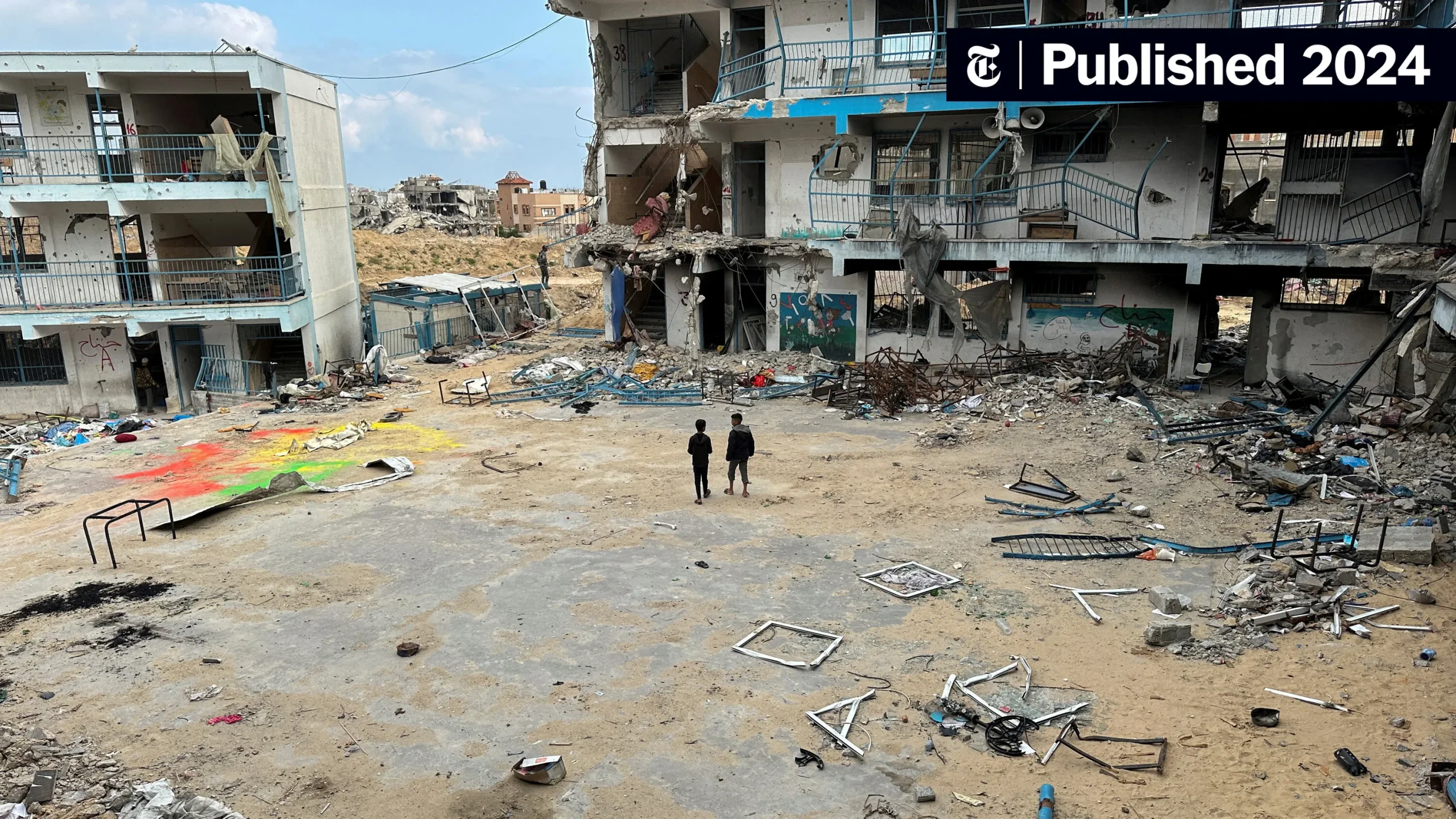
UNICEF says nearly 98 percent of schools have been damaged or destroyed, and many surviving buildings serve as shelters. As of April 2026, about 700,000 children aged 4 to 17 had missed almost three years of in-person schooling, and around 200,000 have no access to education at all. Many study in tents or temporary spaces. The Palestinian Ministry of Education warns of serious learning loss and a widening gap that threatens an entire generation.
A Health System Near Collapse
All 36 hospitals have been damaged, and only 19 still function, none at full capacity, according to the World Health Organization. Shortages of medicine, equipment and fuel have disrupted cancer care, dialysis and treatment for chronic illness. About 12,400 patients have been evacuated for treatment abroad, while tens of thousands more still need care. The WHO warns that overcrowding and poor water and sanitation raise the risk of disease outbreaks.
A Shrinking Territory
Israeli military control now covers around 70 percent of Gaza, according to Euro-Med Human Rights Monitor, leaving over two million people in less than 30 percent of the Strip. The so-called Yellow Line, a demarcation of Israeli deployment and restricted access created under the ceasefire, has reportedly been moved deeper into populated areas, forcing families out.
Rafah shows the change clearly. Once a refuge for more than a million displaced people, almost all of it, except the western Mawasi area, is now under Israeli control, and former residents cannot return.
Weakened Security and Governance
Hamas ruled Gaza from 2007. In July it said it would hand administrative powers to the National Committee for the Administration of Gaza, a technocratic body set up under the post-war plan, but the transfer has not happened. The UN Human Rights Office recorded at least 12 attacks on police between January and May 2026, killing 53 people, including 35 officers. Rights groups say this has created a security vacuum, with kidnappings, property attacks and looting of aid.
What to Watch Next
- Whether the ceasefire holds and violations decline
- Progress on the handover to the technocratic committee
- Aid and goods access through crossings
- Reconstruction funding and medical evacuations
The Bottom Line
Three years on, Gaza’s people face a daily fight for shelter, water, income, schooling and care, with no clear route to recovery. The figures describe a society pushed back by decades, and the pace of any rebuilding will depend on access, security and political decisions still unresolved.
Author