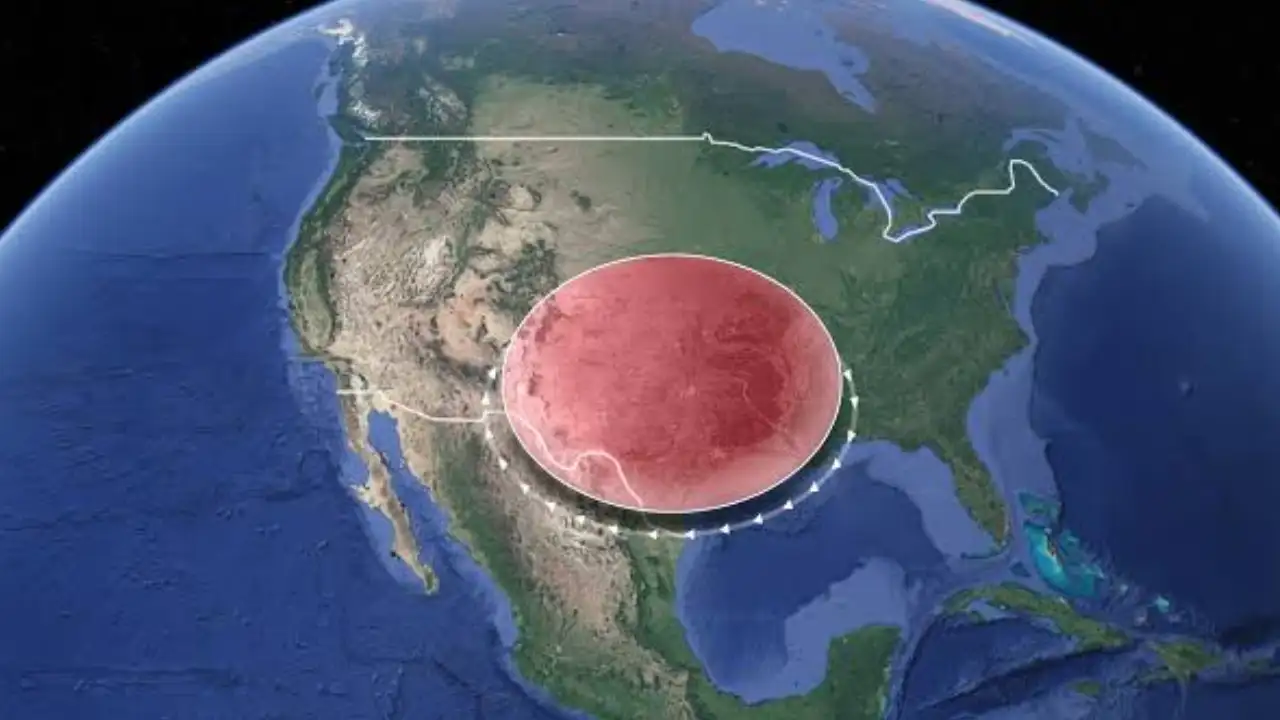
US heatwave warnings blanketed a huge portion of the country on Sunday, with at least 40 million people living under extreme heat alerts as punishing temperatures and thick humidity settled over the central and southern states for a second consecutive day.
Heat index readings climbed well past 100F, forming a band that ran from Minnesota all the way down to Mississippi before pushing west into southern California and Nevada. Parts of the south-west were forecast to reach 120F, according to the National Weather Service.
The Culprit: Another Heat Dome
Meteorologists pinned the misery on a heat dome — an atmospheric setup in which high pressure effectively caps the air beneath it, trapping heat close to the ground and preventing it from escaping.
The result is not simply a hot afternoon. A heat dome intensifies whatever temperatures already exist and, crucially, keeps them in place for days. Nights fail to cool properly, which removes the recovery window the human body relies on to reset after a scorching day.
That absence of overnight relief is what turns a heatwave from uncomfortable into genuinely dangerous.
On the Ground in Omaha
Pete Miller, an outreach manager with the homeless services network Threshold CoC, spent Sunday distributing water bottles to residents in Omaha, Nebraska.
He described conditions as extraordinarily hot, and said his team was encountering large numbers of people who looked exhausted and drained in a way he considered genuinely hazardous. The humidity, he said, was overwhelming — stand outside for half a minute and you are soaked. And it was set to stay that way through the night.
That last point matters enormously for people without reliable shelter or air conditioning. Heat illness accumulates. Someone who cannot cool down after sunset begins the following day already depleted.
Records Falling, Events Cancelled
The numbers reflected the severity. Rapid City, South Dakota, registered an all-time high of 112F on Saturday.
In Shakopee, Minnesota, organisers cancelled a horse race scheduled at Canterbury Park on Sunday because of the conditions — one of the more visible signs that the heat had moved past inconvenience into risk management territory.
NWS meteorologist Bob Oravec said the worst of it was concentrated across the middle of the country, with the core of the heat expected to slide southward by early in the week.
Storms on the Edges
Heat domes do not exist in isolation, and the same moist air fuelling the humidity was generating volatility elsewhere.
Around the northern edge of the dome, forecasters warned of severe thunderstorms, flash flooding and hail near the Great Lakes on Sunday, with that storm potential expected to shift eastward over the following days.
Oravec explained the connection simply: a heat dome sitting over one region produces corresponding weather elsewhere. The systems are linked, and the boundary where hot, humid air collides with cooler air aloft is exactly where violent storms tend to form.
He added that the central US should see temporary relief around the middle of the week, though high temperatures could return by the weekend.
Who Is Most at Risk
Authorities repeated the warnings that accompany every major heat event, and they are worth taking seriously rather than skimming.
Children, older adults and people managing certain medical conditions face the highest danger of heat exhaustion, heat stroke and, in severe cases, death. Heat stroke in particular is a medical emergency — it occurs when the body loses the ability to regulate its own temperature, and it can cause organ damage within a short window.
Warning signs worth knowing include:
- Confusion, slurred speech or unusual behaviour
- Skin that is hot and dry, or alternatively drenched in sweat
- Rapid pulse and shallow breathing
- Nausea, vomiting or a pounding headache
- Fainting or difficulty staying conscious
If someone shows these symptoms, cooling them and calling emergency services immediately matters far more than waiting to see whether it improves.
Practical Steps That Actually Help
Experts recommend a short list of measures that make a measurable difference.
Find air conditioning. If a home lacks it, cooling centres, libraries, shopping centres and community facilities exist precisely for this purpose, and using them is not an overreaction.
Drink water consistently rather than waiting for thirst, which lags behind actual dehydration.
Limit direct sun exposure, particularly between late morning and late afternoon when radiation is strongest.
Check on neighbours, especially anyone elderly, living alone or without cooling. A brief knock on a door has prevented a substantial number of heat deaths.
Never leave people or animals in parked vehicles, where interior temperatures rise to lethal levels within minutes even with windows cracked.
Adjust physical activity. Outdoor work and exercise should shift to early morning or evening where possible, with frequent breaks in shade.
The Bigger Pattern
Extreme heat events like this one are becoming more frequent and more intense as the climate crisis progresses, driven by the burning of fuels including gasoline, oil and coal.
The trend is visible in the data rather than only in individual events. The continental United States recorded its second-hottest first half of any year on record in 2026, according to average temperature tracking by the National Centers for Environmental Information.
That framing matters for how communities plan. A single brutal week can be handled with emergency measures. A pattern of recurring, prolonged heat requires different infrastructure — more cooling centres, shade in public spaces, updated building standards, workplace protections and electrical grids capable of handling sustained peak demand without failing precisely when people need power most.
Looking Ahead
The immediate forecast offers a partial reprieve mid-week for the central states, followed by the possibility of temperatures climbing again by the weekend.
Until then, the guidance is unglamorous and effective: stay indoors during peak hours where you can, drink more water than feels necessary, and pay attention to the people around you who may not be able to escape the heat on their own.
Author
-
Lucienne Albrecht is Luxe Chronicle’s wealth and lifestyle editor, celebrated for her elegant perspective on finance, legacy, and global luxury culture. With a flair for blending sophistication with insight, she brings a distinctly feminine voice to the world of high society and wealth.