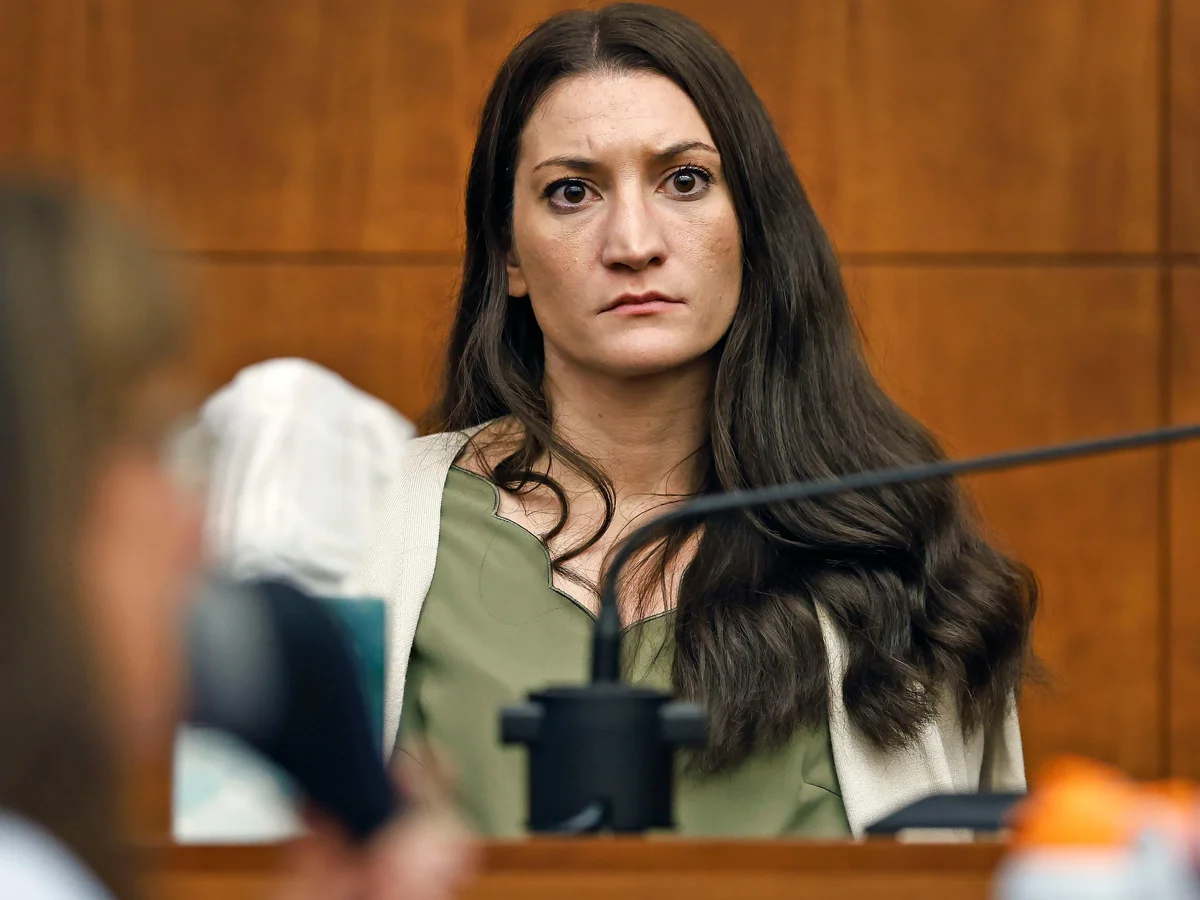
The Lindsay Clancy trial opened Monday in Massachusetts, drawing the state’s most closely followed criminal case in years into a courtroom where two entirely different accounts of the same day will be argued over the coming weeks. Clancy stands accused of killing her three young children at the family’s Duxbury home in January 2023. What jurors must ultimately decide is not simply what happened, but whether the woman who did it understood what she was doing.
The First Day in Court
Proceedings began Monday morning with opening statements from both sides, followed by the prosecution’s first witness: Patrick Clancy, Lindsay’s former husband and the father of the three children. His testimony was, at moments, difficult to get through. He spoke about his kids and walked prosecutors through the deterioration of his then-wife’s mental health in the period leading up to that day.
The case centers on January 24, 2023. Prosecutors say Lindsay Clancy sent Patrick out of the house on errands and, while he was gone, killed the couple’s three children: Cora, 5, Dawson, 3, and Callan, who was 8 months old. She then went to a second-story window and jumped, suffering injuries that left her paralyzed from the waist down.
The trial is expected to run several weeks.
Two Competing Theories
The prosecution’s position is direct. They argue that Clancy, a former labor and delivery nurse at Massachusetts General Hospital, thought about what she was going to do before she did it, arranged for her husband to be away from the house, and is fully responsible for the deaths that followed. In their telling, the sequence of events reflects planning rather than a sudden collapse.
Defense attorney Kevin Reddington is arguing something fundamentally different. His client, he says, was in the grip of postpartum psychosis, a rare and severe psychiatric condition that can emerge in the weeks and months after childbirth. Under that theory, Clancy was not making decisions in any meaningful sense. She was experiencing a break from reality.
Both sides accept that the children died. The dispute is over her mental state, and that dispute will define the entire trial.
Understanding Postpartum Psychosis
Because the defense rests on it, the condition itself is likely to receive considerable attention as testimony proceeds.
Postpartum psychosis is distinct from the far more common postpartum depression, and it is much rarer. It is generally understood to be triggered by a combination of factors that follow childbirth, including hormonal upheaval, extreme sleep deprivation, and psychological stress. Unlike depression, it can involve delusions, hallucinations, severe confusion and a genuine loss of contact with reality. Clinicians typically treat it as a psychiatric emergency because of how quickly it can escalate and how dangerous it can become for both mother and child.
Expect expert witnesses on both sides. The defense will almost certainly call clinicians to describe what the condition looks like and how it applies here. Prosecutors will likely counter with their own experts and press hard on the question of whether behavior in the hours before the deaths is consistent with psychosis or with deliberate action.
The Legal Standard That Matters
An insanity defense in Massachusetts does not ask whether a defendant was mentally ill in a general sense. Many people are, and it does not excuse criminal conduct.
The standard is narrower. A defendant may be found not guilty by reason of mental illness if, because of that illness, she lacked the substantial capacity either to appreciate the wrongfulness of her conduct or to conform her behavior to the requirements of the law. The burden ultimately sits with the prosecution to prove sanity once the issue has been raised.
This is why the prosecution has emphasized the sequence of events. Getting a spouse out of the house is the kind of detail that a jury may read as awareness and forethought. The defense will argue the opposite, that actions taken during a psychotic episode can appear organized on the surface while being driven by delusional beliefs that made no sense in reality.
Why Patrick Clancy’s Testimony Carries Weight
Calling the husband first was a deliberate choice by prosecutors, and it is a complicated one. He was closer to the situation than anyone. He can describe what his wife was like in the months before, what treatment she was receiving, how she behaved, and what he observed changing.
Testimony like that cuts in both directions. Detail about her declining mental health strengthens the defense narrative. But prosecutors presumably want jurors to hear that account from someone with no motive to shade it, and to hear about the children as people rather than as case facts.
Patrick Clancy has drawn attention since the case first became public for his measured statements about his wife and about the broader issue of maternal mental health, and his appearance on the stand was among the most anticipated moments of the trial’s opening.
What Comes Next
Over the coming weeks, jurors will hear from investigators, medical personnel and mental health experts. Records related to Clancy’s treatment, her medications and her clinical history are likely to feature heavily, as are communications from the days leading up to the deaths.
The verdict options are limited but consequential. A conviction on murder charges would carry a lengthy prison sentence. A finding of not guilty by reason of mental illness would send Clancy into the custody of a state psychiatric facility, potentially for the rest of her life, subject to periodic review.
Cases like this one tend to become proxies for larger arguments, and this trial has already generated a national conversation about how postpartum mental illness is screened for, treated and taken seriously. But inside the courtroom, the question is far more confined: what a jury believes was happening in one woman’s mind on a single January morning in Duxbury.
If you or someone you know is struggling with mental health after childbirth, help is available. The Postpartum Support International helpline offers free, confidential support, and emergency services should be contacted in any situation involving immediate risk.
Author
-
Lucienne Albrecht is Luxe Chronicle’s wealth and lifestyle editor, celebrated for her elegant perspective on finance, legacy, and global luxury culture. With a flair for blending sophistication with insight, she brings a distinctly feminine voice to the world of high society and wealth.