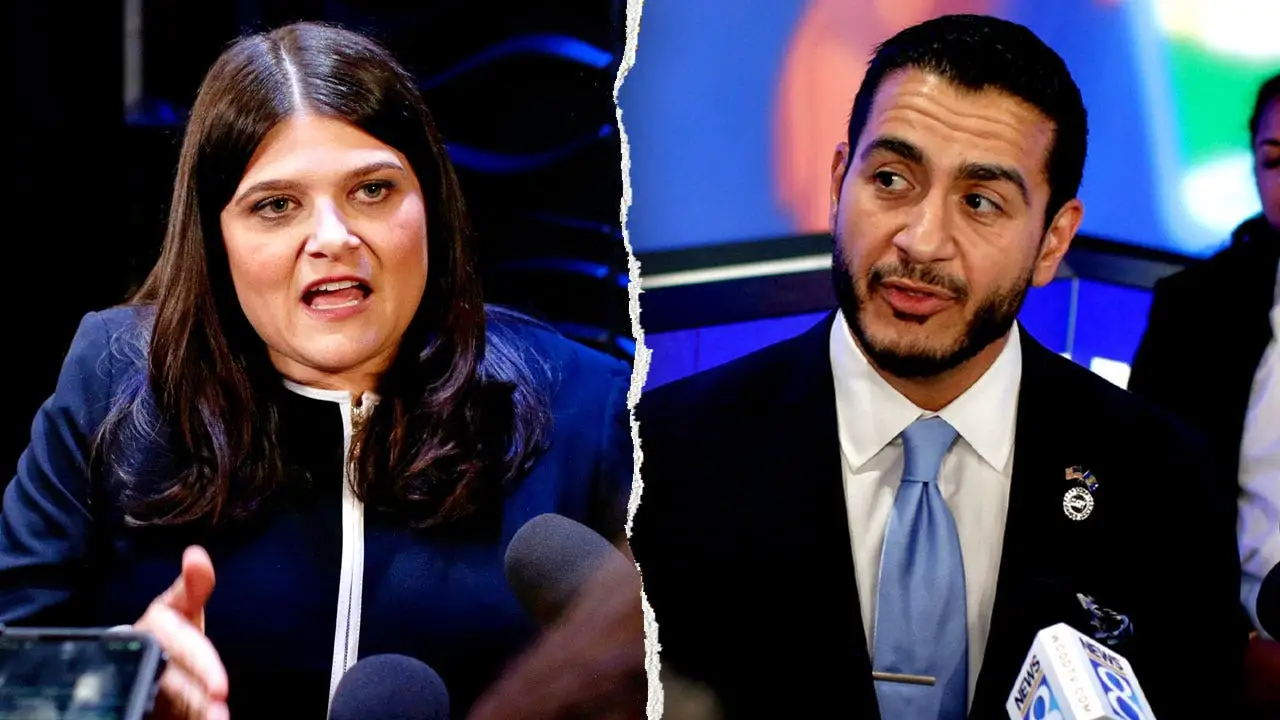
The final Michigan Senate primary debate delivered exactly what the race has become known for: sharp personal exchanges, deep disagreements over money in politics, and two Democrats presenting fundamentally different visions of what their party should look like heading into November. With the August 4 primary approaching, Rep. Haley Stevens and former public health official Abdul El-Sayed each spent Monday night arguing that they are the candidate best equipped to keep a critical seat in Democratic hands.
Why This Race Matters Beyond Michigan
The stakes here extend well past state lines. The winner will face former Republican Rep. Mike Rogers in the general election, competing for the seat being vacated by retiring Sen. Gary Peters.
Democrats need a net gain of four seats to take control of the Senate. Losing Michigan would make that path close to impossible. That arithmetic has turned a state primary into the most consequential intraparty contest of the 2026 midterms, and it has drawn national money, national attention and national commentary into a race that would ordinarily stay local.
The matchup itself follows a familiar template: a progressive favorite against a moderate with establishment backing, playing out in one of the country’s most reliably contested battlegrounds.
Two Different Closing Arguments
Stevens leaned into experience and alliances. Over the course of the hour she invoked two-term Gov. Gretchen Whitmer five separate times. She reminded viewers that she has won elections in a Republican-leaning district northwest of Detroit, and she framed her candidacy around effort rather than visibility, describing herself as the person who would serve as Michigan’s workhorse.
El-Sayed built his pitch around independence. He argued that corporate money and foreign influence hold too much sway over both major parties, and he positioned himself as someone unbound by either. Conviction, in his framing, is the qualification that matters most. A candidate, he said, needs something they are actually fighting for.
The Ogre Exchange
The most memorable moment of the night grew out of a story published earlier that day.
Politico reported that El-Sayed had told donors on a recent virtual call that the progressive movement could advance by helping to put one ogre on a pike. Many readers assumed the remark referred to Stevens.
El-Sayed used the debate to say otherwise. The comment, he explained, was aimed at Pennsylvania Sen. John Fetterman, whom he accused of campaigning on one set of principles and then abandoning them once in office.
From there he turned to television advertising funded by a group tied to the American Israel Public Affairs Committee, which has portrayed him as having a record of disparaging women. El-Sayed said the ads strip his past remarks of context, pointing to commentary he wrote about former first lady Michelle Obama, his 2018 primary loss to Whitmer, and comments about state Sen. Mallory McMorrow, who exited the Senate race earlier this month.
He responded by describing the women in his own life: two daughters he says he is raising to be stronger than any man, a wife who is a physician, and a mother who became the first tenured engineering professor at her university. An op-ed written fifteen years ago and a primary campaign against a sitting governor, he argued, do not add up to disrespect.
He also noted that he had asked his own supporters to avoid personal attacks on Stevens.
Stevens was not persuaded. She acknowledged El-Sayed as a good man and a good father, then listed the remarks in question in her own phrasing, saying only he could account for describing Whitmer as bought and paid for, dismissing interest in Sen. Debbie Stabenow, or suggesting McMorrow lacked intelligence.
El-Sayed replied that a conversation supposedly about civility had produced another attack, and asked viewers to consider what they should expect from their politics.
As the moderator moved on, Stevens got the last word, thanking him for clarifying that she was not the ogre.
The Fight Over Outside Money
Tens of millions of dollars in AIPAC-linked advertising has flowed into this race, all of it aimed at El-Sayed. The spending has cut both ways. It has likely hurt him with some voters while simultaneously validating his central argument about the role of large donors in Democratic primaries, and giving him a mechanism for tying Stevens to the war in Gaza.
Stevens rejected the suggestion that she would take direction from the group, saying flatly that she would not. She did acknowledge substantive disagreement with El-Sayed on Israel and the Palestinians, describing herself as a supporter of a two-state solution and saying she has been attacked by name for holding the view that both peoples deserve to live side by side in peace. Long-term peace, she said, is the objective.
El-Sayed’s read was blunter. AIPAC backs Stevens, he argued, because the organization expects her to vote its way consistently. He predicted the debate’s commercial break would carry at least one ad targeting him.
His own position, he said, rests on equal rights to peace, dignity and self-determination for Palestinians and Israelis alike, opposition to wars he considers unnecessary, and a preference for spending American money domestically.
Insider Credentials Against Outsider Energy
Immigration produced the sharpest contrast of the evening. Both candidates criticize how Immigration and Customs Enforcement has operated under President Donald Trump, but El-Sayed has consistently called for abolishing the agency outright.
Stevens described her approach as legislative and unglamorous, saying she is working within Congress to check what she called abuses of power in the administration’s deportation campaign. She contrasted that with shouting through a bullhorn or chasing the nearest camera.
She then made the contrast personal, calling El-Sayed talented while noting his three books and roughly 300 podcast episodes. Michigan, she argued, does not need a celebrity candidate or a celebrity senator, but someone prepared for six years of difficult, unrewarding work.
El-Sayed pushed back by pointing to votes Stevens has cast to increase ICE funding, and he framed reluctance to call for abolition as the kind of caution the party can no longer afford. He said he is willing to pick up the bullhorn precisely because he is not worried about the criticism that follows.
On the podcast, which he hosted through Crooked Media until last year, he offered an invitation and a redirect, suggesting Stevens listen if public health interests her, while saying his own attention is on people struggling to afford gas and groceries.
Voters go to the polls August 4.
Author
-
Lucienne Albrecht is Luxe Chronicle’s wealth and lifestyle editor, celebrated for her elegant perspective on finance, legacy, and global luxury culture. With a flair for blending sophistication with insight, she brings a distinctly feminine voice to the world of high society and wealth.