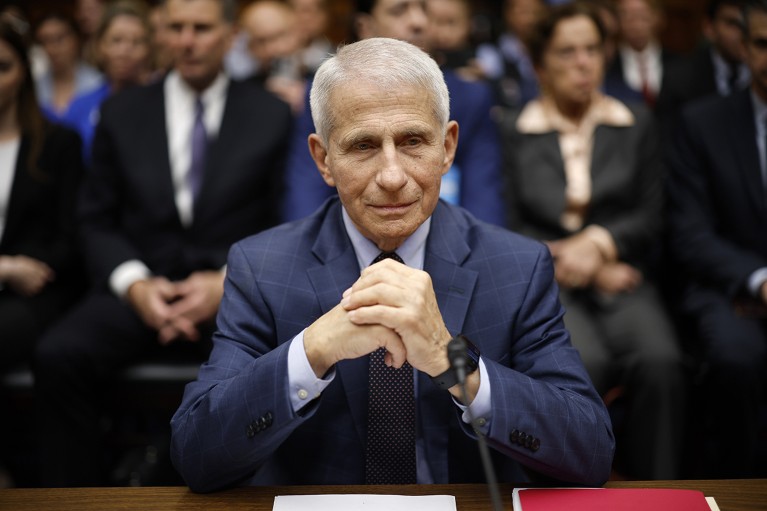
The Fauci diary released this weekend by Sen. Rand Paul offers something the public has never had before: an unfiltered, day-by-day record of what the country’s most visible pandemic official was thinking while the crisis unfolded around him. Running to more than a thousand pages of near-daily notes, the journal covers the stretch of months when Anthony S. Fauci was simultaneously advising two administrations, absorbing an extraordinary wave of celebrity, and fielding threats serious enough to put police outside his home.
Why the Entries Are Surfacing Now
Paul, a Kentucky Republican who has spent years pursuing questions about how the coronavirus emerged, made the material public ahead of a hearing before the Senate Homeland Security and Governmental Affairs Committee, where Fauci is scheduled to testify Wednesday.
The senator’s long-running argument is that Fauci and other officials obscured the possibility that the virus escaped from a laboratory in Wuhan. Fauci has rejected that characterization repeatedly and continues to do so. A spokesperson for him declined to comment on the journal when asked Monday, and the White House did not immediately respond either.
A Working Relationship That Ran Hot and Cold
The most striking material concerns Fauci’s dealings with President Donald Trump during 2020, and what emerges is less a feud than a relationship that lurched between warmth and open frustration.
Their first encounter in the Situation Room in late January 2020 went unexpectedly well by Fauci’s account. He recorded that the president arrived, immediately remarked on his reputation, cited praise from a television host, and then spent twenty minutes directing most of his questions at Fauci rather than anyone else in the room. Fauci noted that colleagues in the meeting seemed taken aback by the attention.
The tone shifted as the outbreak accelerated. By late February, Fauci was urging the president not to minimize the threat, warning him that if conditions deteriorated it would look like concealment. He believed the message had landed. The next day, he wrote, the president downplayed the situation again.
By late March, the entries turn openly exasperated. Fauci described one press conference as a wasted opportunity, with the president drifting from the relief package into criticism of past administrations. A separate entry from the following day recounts a meeting he found deeply scattered, with the conversation veering into television ratings, hydroxychloroquine and influenza while he tried to keep it on course. He noted that he pushed until the president stated plainly that a proposed measure was not a quarantine.
Yet the personal rapport survived. In June, after an Oval Office discussion on vaccines, Fauci wrote that the president greeted him with unusual affection, offering an embrace.
That summer, as the press framed the two men as adversaries, Fauci recorded telling Vice President Mike Pence bluntly that credibility was being lost by opening briefings with reassuring language while cases, hospitalizations and deaths climbed. He took a similar line directly with Trump during a July call, asking permission to speak candidly and arguing the administration had to acknowledge the seriousness of the moment rather than project optimism. The president, by Fauci’s telling, was not pleased but accepted the point.
Other entries are less collegial. In August, Fauci described having to explain that expanded testing does not by itself generate more infections, and concluded that the president still did not grasp what was happening. Days later he wrote that Trump was behaving more erratically, fixated on testing volume while ignoring rising positivity rates and a death toll exceeding a thousand a day.
The Post-Election Entries
After the November election, the journal grows sharper. Fauci wrote that the president was insisting the race had been won, describing the White House posture as an alternate reality and accusing prominent Republicans of enabling baseless claims. He worried aloud about a constitutional crisis.
Another entry from mid-November paired a surge of 138,000 new infections with the observation that the president had lost interest in the pandemic entirely, focused instead on blocking the transition. Fauci also recorded his difficulty reconciling that behavior with the 72 million votes Trump had received.
A separate call from Air Force One, made after a newspaper interview with Fauci ran, is recounted in unusually raw terms. Fauci wrote that Trump told him he would not be fired despite pressure to do so, but pressed him repeatedly to strike a more positive tone in public.
By March 2021, Fauci’s assessment had hardened considerably, and he described the former president in terms bordering on contempt.
Where He Landed on the Lab-Leak Question
The origins material is what Paul has emphasized most.
In late January 2020, Fauci recorded new information indicating the earliest infection dated to early December and was not linked to the Wuhan seafood market, which he described as an amplifier rather than the source. Days later, a biologist called seeking guidance on circulating theories that the virus had been engineered or released, whether deliberately or by accident. Fauci suggested convening a wider group of evolutionary biologists and virologists, which happened the next day. His notes acknowledge the experts did not reach unanimous agreement on whether deliberate insertion was plausible, and they discussed whether the World Health Organization might assemble a broader panel.
Critics argue those early doubts should have been aired publicly and immediately. Fauci’s defenders point to interviews from that period in which he acknowledged the market’s role as an amplifier and confirmed that accidental or intentional release was being examined, even as he considered it unlikely.
Later entries show mounting irritation. In spring 2021 he described accusations linking him to the creation of the virus as a conspiracy theory, while conceding that enough people believed it to make it a real problem. When he began calling for a thorough investigation, he wrote, the request was recast in the press as a reversal, which he attributed to distortion rather than any change in his own view.
Fame He Did Not Expect
Woven through the crisis material is a running account of a scientist becoming a household name in his late seventies. By March 2020 he was noting calls from around the world and an unmanageable volume of profiles. He recorded doughnuts named after him, T-shirts bearing his face, a radio station dedicating a song, and appearances alongside entertainers and athletes. He turned down a reality dancing show. By May, he judged himself the most talked-about person in the country and admitted he could no longer keep up with what was written about him.
He also noted the internal cost: White House officials were unhappy that his profile appeared to eclipse the president’s.
Security and the Toll
The lighter entries sit uneasily beside the darker ones. As early as March 2020 he documented threats against his wife and daughters circulating online, strangers photographing his house, and police stationed outside. Later notes describe sustained attacks over gain-of-function research and accusations of lying to Congress, and a period in 2021 when he wrote that the pressure had pushed him past his limit. Among his final entries, written in December 2022, is a note about arranging personal protection for life after government service.
Author
-
Lucienne Albrecht is Luxe Chronicle’s wealth and lifestyle editor, celebrated for her elegant perspective on finance, legacy, and global luxury culture. With a flair for blending sophistication with insight, she brings a distinctly feminine voice to the world of high society and wealth.