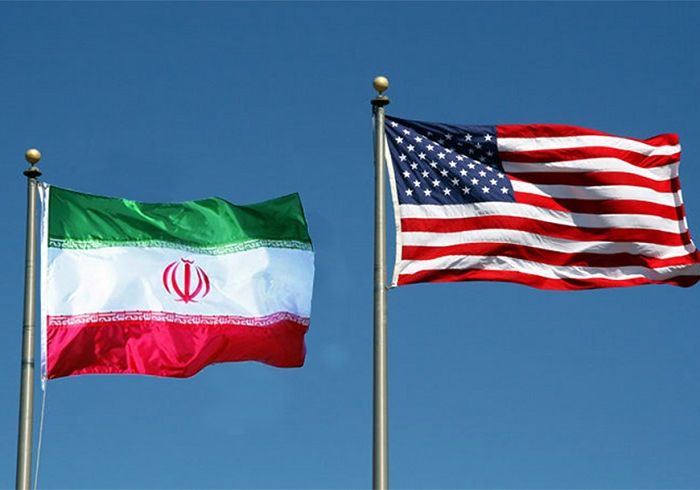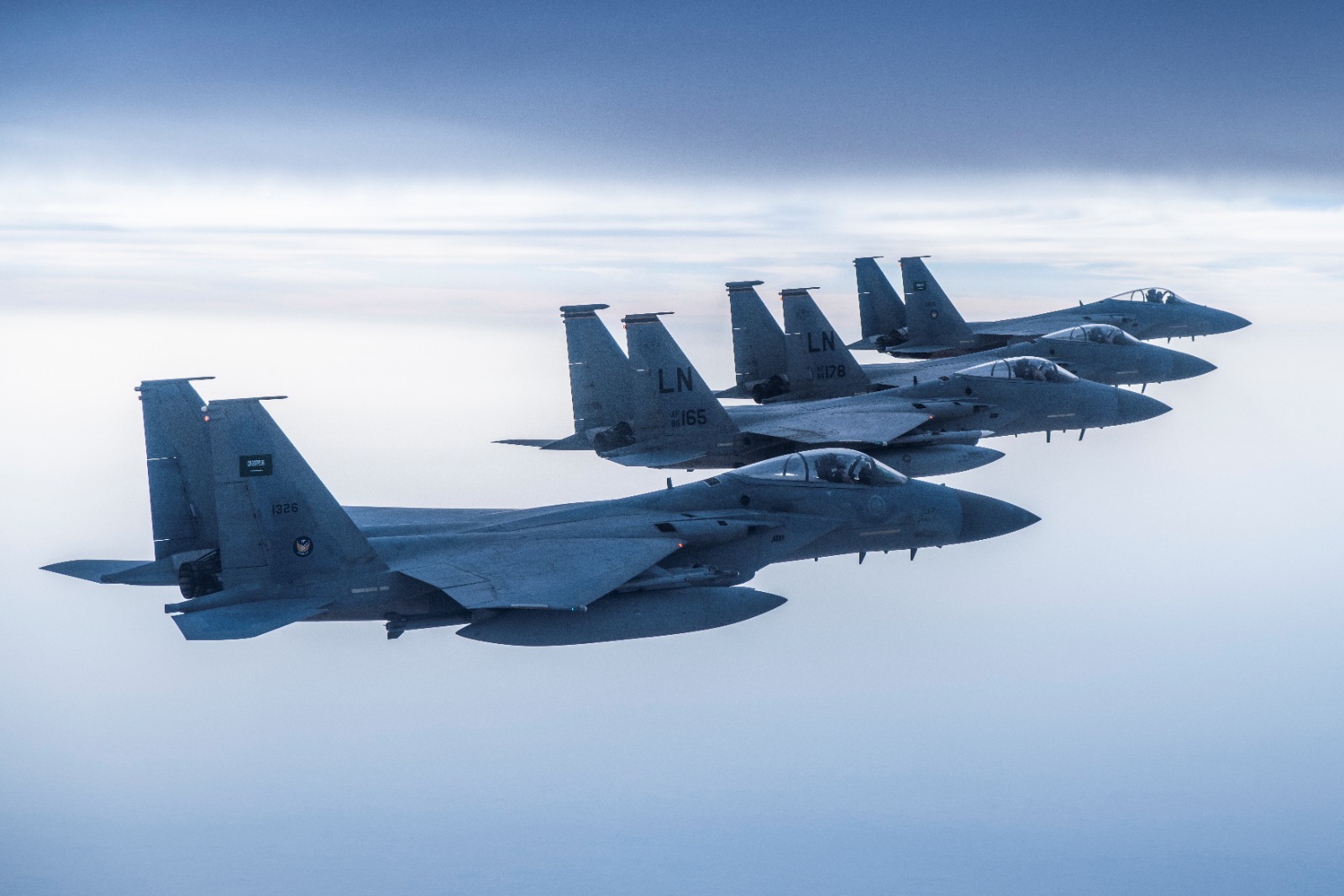
Saudi Arabia joins US strikes on Iran proxies for the first time in this war, and the significance of that sentence is hard to overstate. On Tuesday, Saudi and American fighter aircraft flew a joint mission against Iranian-backed forces inside Iraq — an operation that pulls Riyadh out of the role of cautious bystander and places it directly inside a conflict it had spent five months trying to stay out of.
U.S. Central Command described the targets as multiple terrorist logistics and weapons sites spread across eastern Iraq. The stated justification was a campaign of more than thirty drone attacks in recent days, which American officials attributed to direction from Iran’s Islamic Revolutionary Guard Corps.
The Saudi military confirmed it took part but released almost nothing beyond that acknowledgment. Tehran offered no immediate response.
A Missile Salvo Earlier the Same Day
Hours before the joint strikes, Central Command reported that American forces in the region had shot down several ballistic missiles fired by Iran. Officials called it an attempted surprise attack aimed at U.S. personnel and said the interception was fully successful.
They declined to say where the missiles were headed.
Whether the two events were connected remains unclear. Officials have not linked them publicly, and the sequence may simply reflect a day of unusually heavy activity in a theater that has grown steadily more crowded.
What is clear is that both incidents cut against the pause President Donald Trump had been trying to sustain. That quiet stretch was intended to give stalled negotiations room to breathe. Tuesday suggests the negotiations are getting less oxygen, not more.
Why Riyadh’s Participation Matters
Saudi Arabia has generally preferred to work around this conflict rather than through it. Tuesday changed that calculation in a visible way.
Mark Cancian, a senior adviser at the Center for Strategic and International Studies, called the move a major step and one that likely signals more to come. In his reading, the Saudis have run out of patience and done something they had long avoided, which is to strike directly at other Arab organizations.
He raised a second implication that may matter even more. Riyadh’s willingness to join offensive operations could open the door to allowing American forces to operate from Saudi territory — either for strikes on Iran itself or for missions tied to the Strait of Hormuz.
That would represent a structural shift rather than a tactical one. Basing rights change what is militarily possible, and they are far harder to walk back than a single joint sortie.
The Economics Driving the Decision
Saudi Arabia did not arrive at this point for ideological reasons. It arrived because the money stopped moving.
Washington and Tehran have gone through repeated rounds of talks without resolving access to the Strait of Hormuz, the Persian Gulf passage that carries an enormous share of Middle Eastern oil to global markets. Iran’s closure of the waterway has already scrambled energy flows across the region.
Then last week the Houthis, Iran’s most capable proxy in Yemen, declared a blockade on Saudi oil shipments transiting the Red Sea.
That is a squeeze from both directions. With the Gulf route constrained and the Red Sea route threatened, the kingdom’s primary export faces obstruction at nearly every exit. Analysis from the Institute for the Study of War indicates Saudi forces have responded by striking Houthi positions inside Yemen in recent days, attempting to degrade the group’s capacity to keep applying pressure.
The United States backed Riyadh’s long bombing campaign against the Houthis in previous years, so the cooperation is not unprecedented. What is new is the two militaries operating together against Iranian proxies in Iraq, a theater with different politics and different risks.
A War That Was Declared Over Twice
The timeline of this conflict is worth laying out, because it explains why officials speak carefully about pauses rather than endings.
Trump announced the start of the war on February 28. In May, following a ceasefire announcement, he declared it finished.
It was not finished. American military activity in the region continued throughout, with two aircraft carriers operating nearby, air patrols running consistently, and periodic exchanges of fire. On July 7, full hostilities resumed.
The pattern has been one of de-escalation announced from podiums and escalation carried out in the field. Tuesday fits that pattern precisely.
The Cost So Far
Eighteen American service members have been killed in the conflict to date. More than six hundred have been wounded.
Four of those deaths came this month, after fighting resumed. Three troops were killed on July 17 when an Iranian ballistic missile struck a base in Jordan. A fourth died the following day during a controlled detonation of an Iranian drone at a base in Iraq.
Those numbers arrive alongside scrutiny of how the Pentagon has categorized casualties during the war, an issue that has drawn attention to questions of wartime transparency.
Where This Could Go
The immediate risk is geographic. A conflict that began as a confrontation between the United States, Israel and Iran now involves strikes in Iraq, fighting in Yemen, disrupted shipping in two separate waterways, and a Gulf monarchy flying combat missions it previously declined to fly.
Each expansion adds actors with their own interests and their own thresholds for retaliation. Wars that spread this way rarely contract on command.
There is also a diplomatic cost. Every escalation makes the next round of talks harder to convene and narrows the range of outcomes both sides can accept without appearing defeated.
For now, the interceptors worked and the joint strikes hit their targets. But the pause Trump sought looks less like a foundation for peace and more like a gap between rounds — and Tuesday suggests the next one has already begun.
Author
-
Lucienne Albrecht is Luxe Chronicle’s wealth and lifestyle editor, celebrated for her elegant perspective on finance, legacy, and global luxury culture. With a flair for blending sophistication with insight, she brings a distinctly feminine voice to the world of high society and wealth.