Iran attacks US bases across the Middle East on Wednesday, and it chose the hour deliberately: the missiles were in the air while President Donald Trump sat with Israeli Prime Minister Benjamin Netanyahu inside the White House.
US Central Command announced that forces belonging to the Islamic Revolutionary Guard Corps had fired multiple ballistic missiles in what it called an attempted surprise attack on American personnel in the region. Every one was intercepted, the command said, adding that its troops remain at a heightened state of readiness.
The Jordanian state news agency reported five interceptions over Jordanian airspace. The IRGC confirmed the target itself, saying its air force had fired several ballistic missiles at an American airbase and a Central Command facility inside Jordan.
Tehran attached a warning to the announcement. So long as threats against Iran persist, and so long as American forces continue acting against Iranian interests, the resistance will go on.
A Strike That Came First, Not Second
The most notable feature of Wednesday’s launch may be that nothing obvious preceded it.
Reporting from Tehran, Al Jazeera’s Resul Serdar described the operation as pre-emptive rather than retaliatory — an opening move instead of an answer. That framing changes how the escalation should be read. Iran was not responding to a fresh American strike. It was creating the situation.
Jason Campbell, a senior fellow at the Middle East Institute, offered a similar reading. In his assessment, Tehran is attempting to seize back initiative and momentum after weeks of reacting to events. He noted that Iranian officials have grown deeply sceptical of the pauses Washington announces, suspecting they are used to prepare the next phase of bombing rather than to pursue diplomacy. Iran, he said, almost certainly views the current lull the same way.
That suspicion is not baseless. Trump halted an intensive thirteen-day air campaign last Friday, citing what he described as productive conversations with Iran. Wednesday’s exchanges were the first major military activity since.
Twenty Dead in Iraq
The other half of Wednesday’s violence unfolded on Iraqi soil.
Joint American and Saudi air strikes killed at least twenty members of Iraq’s Popular Mobilisation Forces and wounded thirty-two more, according to the group itself. CENTCOM and Riyadh said the targets were Iran-aligned militias responsible for attacks on US troops and on Saudi energy infrastructure.
The complication is legal as much as military. Reporting from Baghdad, Al Jazeera’s Jack Hewson noted that the PMF is formally part of Iraq’s state security apparatus, which makes a strike on its facilities something quite different from a strike on an irregular armed group.
The Iraqi presidency condemned what it called an unacceptable attack, rejecting any assault on Iraqi territory. But its statement cut in both directions. Baghdad also objected to Iraq being used as a launching pad or a battlefield for attacks against neighbouring countries — a rebuke aimed squarely at the militias operating from its own soil.
That is the position Iraq has occupied throughout this war: unable to prevent the fighting, unwilling to endorse either side of it, and absorbing the damage regardless.
Tankers Stopped in the Strait
Iran also moved against shipping. The IRGC said it struck and halted three oil tankers in the Strait of Hormuz, asserting that the vessels had ignored warnings and continued along a route Tehran considers unsafe and unlawful.
Trump has repeatedly condemned Iran’s interference with traffic through the waterway. Iran maintains it is entitled to regulate passage.
Diplomacy on the question has now stalled visibly. Oman put forward a plan for joint management of transit through the strait, and Iran turned it down. Deputy Foreign Minister Kazem Gharibabadi told state television that Tehran rejects any arrangement dividing the routes equally. Iran’s counterproposal would give it control over shipping on its own side while allowing Muscat to manage part — but not all — of the opposite lane.
The distinction sounds technical. It is not. What Iran is refusing is parity, and what it is offering preserves the leverage it has spent months building.
Markets Reacted Within Minutes
Energy traders had been pricing in the pause. Wednesday erased that assumption.
US oil futures, which had been sliding since Washington suspended its bombing campaign, climbed more than four percent to surpass $82 a barrel. Brent crude pushed past $88.
Those moves reflect how directly the strait connects the fighting to the global economy. Roughly a fifth of the world’s traded oil passes through it. Interference with even a handful of vessels resets risk premiums across the market, and the cost eventually reaches drivers and manufacturers who have no interest in Gulf politics whatsoever.
Message Sent to a Meeting in Progress
The timing of the missile launch drew immediate interpretation.
Speaking from Washington, Al Jazeera’s Alan Fisher described it as Iran signalling to Trump that it expects a seat in any conversation about its future. Talks held over Tehran’s head, in other words, will be interrupted.
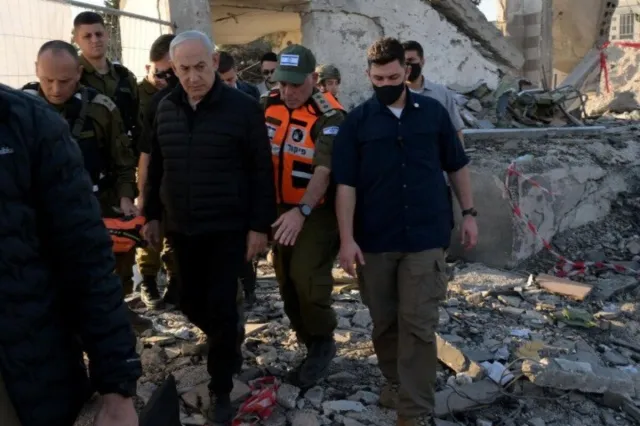
There was plenty to interrupt. Israeli reporting indicated Netanyahu arrived intent on raising Pickaxe Mountain, a site where Israel says construction activity suggests Iran is assembling another nuclear facility. Trump had already dismissed the briefing publicly, suggesting the prime minister was raising it mainly to keep American forces engaged.
Iran’s Next Move Is Already Shipping
One development points toward a longer conflict rather than a shorter one.
Reuters, citing three informed sources, reported that Iran expects delivery of up to 400 Chinese-made shoulder-fired air defence launchers within weeks. It would be among the most significant efforts Tehran has made to rebuild its short-range air defences since the war began.
Those systems do not threaten high-altitude bombers. They threaten helicopters, drones and low-flying aircraft — the assets used for close support and reconnaissance. A country stocking up on them is not preparing for a settlement. It is preparing to make the next phase more expensive.
After days of relative quiet, as Serdar put it from Tehran, the region is on edge once more. The pause held for five days. What replaces it now involves a NATO partner’s airspace, an allied government’s own security forces, and a waterway that sets the price of energy for everyone.
Author
-
Lucienne Albrecht is Luxe Chronicle’s wealth and lifestyle editor, celebrated for her elegant perspective on finance, legacy, and global luxury culture. With a flair for blending sophistication with insight, she brings a distinctly feminine voice to the world of high society and wealth.