Fauci Fifth Amendment Standoff: Inside the Senate Hearing That Ended in Silence
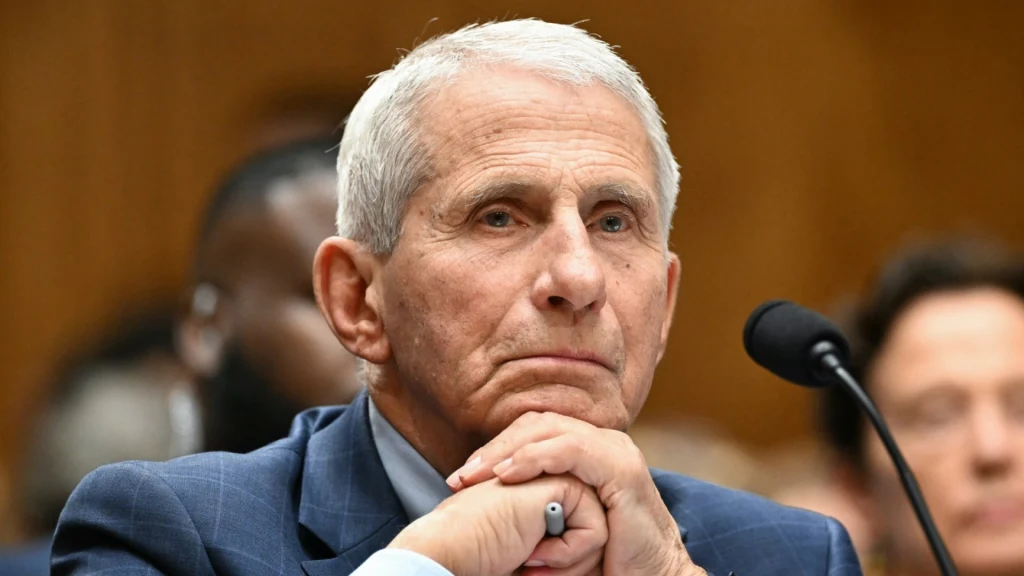
The Fauci Fifth Amendment moment arrived early and then repeated more than a hundred times. Summoned under subpoena before a Republican-led Senate committee on Wednesday, the former head of the National Institute of Allergy and Infectious Diseases delivered a short opening statement and then, question after question, declined to answer on the grounds that doing so could incriminate him.
The session ran roughly three hours. By the end, one of the most recognizable figures of the pandemic era had said almost nothing of substance, and the committee’s chairman was openly discussing punishment.
Who Is Being Questioned
Anthony Fauci, now 85, is a physician and immunologist who ran NIAID for 38 years and advised seven presidents from both parties. Long before COVID-19, he was central to the American response to HIV and AIDS, Ebola outbreaks and the anthrax mailings of 2001.
In 2020 he became the most visible face of the federal pandemic response — and, for many on the political right, the most contentious. Masking guidance, vaccine policy and school closures all became flashpoints. He spent his final year in government as chief medical adviser to President Joe Biden before retiring in 2022.
The Case Republicans Are Making
The hearing before the Senate Homeland Security and Governmental Affairs Committee was driven by Senator Rand Paul of Kentucky, who has pursued Fauci for years. His argument rests on several connected claims.
Paul contends the virus behind COVID-19 may have escaped from a laboratory in Wuhan, China, and that American research funding might have contributed to it. He alleges the National Institutes of Health backed gain-of-function work at the Wuhan Institute of Virology — research that involves modifying viruses to study how they evolve and to gauge pandemic risk — and that Fauci misled lawmakers about it.
Fauci has consistently rejected that account, maintaining that the NIH did not finance the research that produced the pandemic. He likewise denies concealing anything from Congress.
The Diary at the Center of It
Ahead of the hearing, Paul released more than 1,100 pages of typewritten diary entries Fauci compiled between 2019 and 2022. The notes document his meetings with senior officials, his dealings with the press, and his day-to-day work advising the White House.
Health Secretary Robert F. Kennedy Jr. characterized the material as an official government record, citing that it was produced by a federal employee, on a government computer, during a declared health emergency, and recovered from government property.
Paul argues the entries reveal a gap between what Fauci said privately and what he told the public. Fauci’s defenders read the same pages differently, describing them as an honest record of scientists grappling with an unfamiliar pathogen in real time, revising their views as evidence accumulated.
Why He Stayed Silent
Fauci said his lawyers advised him not to answer, and he followed that advice because he believed his responses could create fresh legal exposure. He also accused Paul of pursuing a prosecution rather than conducting oversight, describing the chairman as fixated on charging him.
The constitutional principle is straightforward: the Fifth Amendment shields a person from being compelled to provide testimony that could be used against them in a criminal case. Invoking it is a legal right and, as a matter of law, carries no implication of guilt.
The Pardon Complication
In January 2025, days before leaving office, Biden issued Fauci a full and unconditional pardon covering any federal offenses dating back to 2014. Biden framed the decision as a shield against prosecutions he considered politically driven.
That protection has a hard edge, though. It reaches backward only. Anything Fauci might do after the pardon was signed sits outside its coverage — including, Republicans note, any false statement made under oath at a hearing in 2026.
That is precisely the risk his attorneys cited.
Paul and his allies press a counterargument that cuts the other way: if the pardon already immunizes Fauci for his past conduct, then testimony about that conduct cannot incriminate him, which they say removes the basis for claiming the Fifth. Whether that reasoning holds up legally is unsettled. Paul has conceded it raises a novel question that courts may ultimately have to resolve.
A Hearing That Turned Combustible
The proceedings grew heated. Paul instructed Capitol Police to escort Fauci’s attorney, David Schertler, from the room after Schertler attempted to speak without recognition from the committee, with Paul insisting the testimony was Fauci’s to give, not his lawyer’s. Schertler later characterized the entire exercise as a vendetta.
Democratic members pushed back on the premise. Senator Gary Peters described the hearing as a partisan production built to validate a conclusion reached in advance rather than a genuine oversight effort.
Paul closed by posing a rhetorical question about whether Fauci’s decisions had produced the largest man-made plague in history.
What Contempt Would Actually Mean
Paul announced the committee will vote next week on holding Fauci in contempt of Congress over his refusal to respond to more than 100 questions, and warned there would be consequences.
A contempt finding is a formal declaration that lawmakers believe a witness obstructed a lawful inquiry. It does not automatically produce charges. From there, the committee has a few possible paths:
- Refer the matter to the Justice Department for potential criminal prosecution
- Ask a federal court to take up a civil enforcement action
- In an extraordinarily rare move, ask the Senate to compel compliance through its sergeant-at-arms
Paul has not indicated which route he favors, or whether he will pursue any of them.
Where the Evidence Currently Stands
On origins, the scientific mainstream still leans toward zoonotic spillover — transmission from animals to people — with a wildlife market in Wuhan viewed as the most plausible early site. Fauci has said he reads the evidence that way while remaining open to alternatives.
His diary records a January 2020 call with 11 leading virologists and evolutionary biologists in which only two were persuaded of a natural origin, with the remainder actively debating whether the virus could have been engineered.
American intelligence agencies remain split. The FBI concluded in 2023 that a lab-related incident is the likelier explanation, and the CIA reached a similar assessment in 2025 while attaching low confidence to it. Other agencies and the National Intelligence Council lean toward natural emergence or have not settled the question.
That unresolved split is much of the reason this fight has outlasted the pandemic itself — and why Wednesday’s silence is unlikely to be the last word.
Author
-
Lucienne Albrecht is Luxe Chronicle’s wealth and lifestyle editor, celebrated for her elegant perspective on finance, legacy, and global luxury culture. With a flair for blending sophistication with insight, she brings a distinctly feminine voice to the world of high society and wealth.