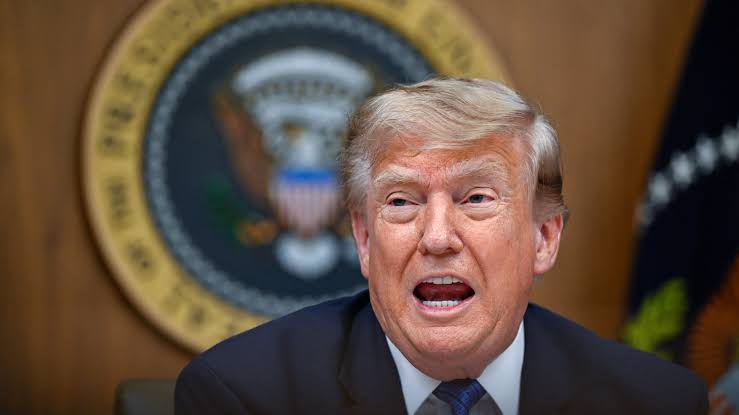
The Minnesota water system cyberattack that disrupted operations across the state this week has taken an unexpected political turn, with President Donald Trump suggesting that the state government itself was responsible rather than any foreign actor.
Hackers breached control systems at treatment plants serving more than thirty Minnesota communities earlier in the week. Officials have been clear on one crucial point: the intrusion did not compromise water quality, and service to residents continued.
What the President Said
Asked by a reporter whether Iran could be ruled out as the origin of the breach, Trump moved in an entirely different direction. He identified Minnesota as the culprit, attributing the incident to what he described as gross incompetence, and said he believed the governor was behind it. He rejected the notion that Iran had carried out any cyberattack at all.
He provided nothing to substantiate the claim.
Walz Responds
Governor Tim Walz answered on social media, arguing that the president is fully aware of who conducted the operation and equally aware that Minnesota was not the only state targeted.
The governor then broadened his criticism considerably. He accused the administration of having no viable strategy for concluding the conflict with Iran, and he pointed to reductions made through DOGE that he said gutted the Cybersecurity and Infrastructure Security Agency, the federal body charged with defending exactly the kind of systems that were just compromised.
That second point carries weight regardless of who ultimately proves responsible. Municipal water utilities typically operate with modest technology budgets and rely heavily on federal guidance and threat intelligence to secure aging industrial control systems.
What Investigators Actually Believe
Officials at both the state and federal level have told news organisations, including the New York Times, that Iran is the likely source of the intrusion. They have also been careful to add a qualifier: no conclusive evidence tying the operation to the Iranian government has yet been established.
That distinction matters. Attribution in cyber incidents is genuinely difficult, often taking weeks or months, and preliminary assessments sometimes shift as forensic work progresses. What investigators have not done at any point is suggest that a US state government attacked its own infrastructure.
Minnesota’s Delegation Reacts
MPR News contacted every member of the state’s ten-person congressional delegation seeking comment. The responses that came back were pointed.
Representative Angie Craig described the accusations as baseless and characterised them as an attempt at political payback. She said Minnesotans were already absorbing the consequences of the president’s war with Iran and now had reason to believe those consequences had reached their own communities. Her call was to end the conflict, abandon the political manoeuvring and stop putting Americans at risk.
Representative Betty McCollum was equally direct, calling the remarks foolish and cruel. She said it was outrageous for the president to hold American cities and the state responsible for attacks by foreign entities that she argued he had provoked.
Senator Tina Smith described the response as unserious and beneath the dignity of the presidency. She argued that a suspected Iranian operation against water infrastructure represents a legitimate national security concern and should be treated accordingly, adding that the episode underscores how the risks compound the longer the war continues.
Senator Amy Klobuchar took a different approach. Rather than engage with the president’s comments, she reported speaking on Friday with National Cyber Director Sean Cairncross, who confirmed that water service had not been interrupted by the attacks.
Why the Target Choice Is Concerning
Water treatment facilities have become an attractive target for state-aligned hackers for reasons that have little to do with the water itself.
Small utilities often run legacy equipment that predates modern security standards
Operational technology in these plants was designed for reliability, not for defending against network intrusion
Staffing rarely includes dedicated cybersecurity personnel
Successful intrusions generate outsized public anxiety relative to the technical effort required
An attacker who gains access to control systems does not need to poison anything to achieve an effect. Demonstrating the capability is frequently the objective, serving as a signal about what could be done in a future escalation.
The Question Left Hanging
Beneath the exchange of statements sits a substantive policy dispute that has been building for some time. If federal cybersecurity capacity has genuinely been reduced, local utilities are left more exposed at precisely the moment when geopolitical tensions are driving increased probing of American infrastructure.
Walz raised that argument explicitly, and it is one that does not resolve itself through political messaging. Whether CISA retains sufficient resources to support hundreds of small municipal systems is a measurable question, and it will likely be examined more closely if further incidents occur.
Where Things Stand
For Minnesota residents, the practical situation remains stable. Water is flowing, quality has not been affected, and officials continue to say the disruption was limited to control systems rather than treatment itself.
The investigation into the Minnesota water system cyberattack continues, with Iran named as the leading suspect but attribution not yet confirmed. What has been definitively established is that the incident has become a political flashpoint, with the state’s entire Democratic delegation pushing back against an accusation that no investigator has endorsed.
Author
-
Lucienne Albrecht is Luxe Chronicle’s wealth and lifestyle editor, celebrated for her elegant perspective on finance, legacy, and global luxury culture. With a flair for blending sophistication with insight, she brings a distinctly feminine voice to the world of high society and wealth.