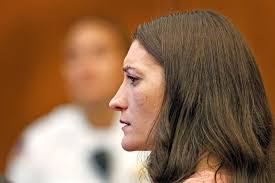
The Lindsay Clancy trial took an unusual turn on Friday when jurors were transported to the Duxbury property where three young children died in January 2023, walking through the rooms and grounds that photographs alone apparently could not convey.
The excursion lasted roughly forty minutes. Jurors moved through the house in groups of six, viewing the basement where the children were killed and the yard where Clancy was discovered after jumping from a second-floor window.
Before reaching the residence, the bus carried them past two businesses that feature in the account of that night.
Note on sensitive content: this article discusses suicide. Anyone in the United States who needs support can reach the national suicide and crisis lifeline by calling or texting 988.
How the Visit Was Handled
Police established a barricade keeping reporters away from the property. Through the surrounding trees, court officers were visible escorting jurors between the bus and the house along what had been the family’s driveway.
The home has since been sold and is now under different ownership.
Clancy did not accompany the jury. She has not returned to the property since the day of the killings.
Why Juries Sometimes Leave the Courtroom
Jurors in American criminal proceedings are typically instructed not to visit locations connected to a case on their own. The reasoning is practical as much as procedural. Sites change over time, and what a juror observes months or years later may bear little resemblance to conditions at the time in question.
Supervised group visits are a different matter. Courts occasionally permit them when the physical layout of a space carries evidentiary weight that images cannot capture, such as distances between rooms, sight lines or the actual scale of an area.
The practice has appeared in several widely followed cases:
The 2023 murder trial of South Carolina attorney Alex Murdaugh
The 2022 sentencing proceeding for Parkland shooter Nikolas Cruz
The 2015 Massachusetts trial of former New England Patriots player Aaron Hernandez
The 1995 murder trial of O.J. Simpson
Retracing the Errand
A significant portion of the trip involved following the route taken by Patrick Clancy, her then-husband, on the evening of the deaths. She had asked him to collect takeout food and to pick up medication for their daughter Cora.
Jurors were driven past the restaurant, situated about 5.5 miles from the family home in Duxbury, a town south of Boston, and the pharmacy roughly a mile away.
When Patrick Clancy returned, he found the children dead and his wife severely injured and bleeding in the yard.
The Competing Arguments
Prosecutors contend the errands were engineered to remove him from the house. They argue that Clancy, who had worked as a labor and delivery nurse, acted deliberately and bears criminal responsibility for the deaths of Cora, 5, Dawson, 3, and Callan, 8 months.
Her defence does not dispute that she caused their deaths. What it disputes is her mental state.
Her attorneys argue she was experiencing postpartum psychosis, a rare condition connected to the sleep deprivation, hormonal shifts and psychological strain that follow childbirth. They say she had bipolar disorder and that her condition deteriorated while taking antidepressants prescribed after the birth of her third child.
According to her lawyers, she was hearing a voice instructing her to kill the children so that she could then kill herself.
The Aftermath for Clancy
She survived that night but sustained catastrophic injuries. Clancy remains paralysed from the waist down after multiple attempts to end her own life.
Two Possible Outcomes
The verdict carries starkly divergent consequences.
A murder conviction would result in life imprisonment without the possibility of parole.
A finding of not guilty by reason of lack of criminal responsibility would send her to a state mental health facility rather than a prison, where she would remain until a court determined she no longer posed a danger.
What the Jury Must Actually Decide
This case does not hinge on what happened. Both sides accept the essential facts. The dispute is entirely about whether Clancy was capable of understanding the wrongfulness of her actions at the time.
That makes the trial fundamentally a contest between competing psychiatric interpretations, with jurors asked to evaluate expert testimony about a condition most people have never encountered. The site visit, in that context, serves a narrower purpose than it might in a case where the sequence of events is contested.
Whether standing in those rooms clarifies anything about a mother’s state of mind is a question the jury will have to answer for itself.
Postpartum psychosis is uncommon but recognised in clinical literature, and cases involving it have produced widely varying legal outcomes. Anyone struggling with thoughts of self-harm, or concerned about a new parent who may be, can reach support by calling or texting 988.
Author
-
Lucienne Albrecht is Luxe Chronicle’s wealth and lifestyle editor, celebrated for her elegant perspective on finance, legacy, and global luxury culture. With a flair for blending sophistication with insight, she brings a distinctly feminine voice to the world of high society and wealth.