The Athens suitcase murder case has reached a turning point, with Greek authorities announcing that a 26-year-old Afghan national has been arrested and charged over the killing of a 38-year-old British woman whose body was discovered inside a suitcase in an abandoned building in July.
The suspect faces charges of homicide, robbery, and weapons offences. According to police, he has admitted to some of his actions during questioning.
A Body Without a Name
The case began in the Kypseli district of Athens, where the woman’s remains were found concealed in a suitcase inside a derelict property.
Responsibility for the investigation passed to the Department of Crimes against Life and Personal Freedom, a specialist unit operating within the Sub-Directorate for the Investigation of Crimes against Life and Property, which itself sits under the Directorate for Combating Organised Crime, known as DAOE.
The first obstacle was fundamental. Investigators had a victim but no identity, and without a name there was no starting point for establishing movements, contacts, or motive.
Recovering Prints Against the Odds
Officers from the Directorate of Criminal Investigations carried out an on-site forensic examination alongside biological testing of the remains.
The conditions were poor. Decomposition was already advanced, and the environment where the body had been left compounded the difficulty. In many cases those factors would rule out fingerprint recovery entirely.
Despite this, forensic specialists succeeded in lifting usable prints from the victim. It proved to be the single most important development in the case, converting an unidentified body into a person with a documented history.
An International Search for a Match
Prints are only valuable if they can be matched against an existing record, and Greek databases held nothing.
The Interpol Division of the Directorate of International Police Cooperation at Hellenic Police Headquarters issued an international request for information. The response came from United States authorities, who confirmed the prints belonged to a 38-year-old British national.
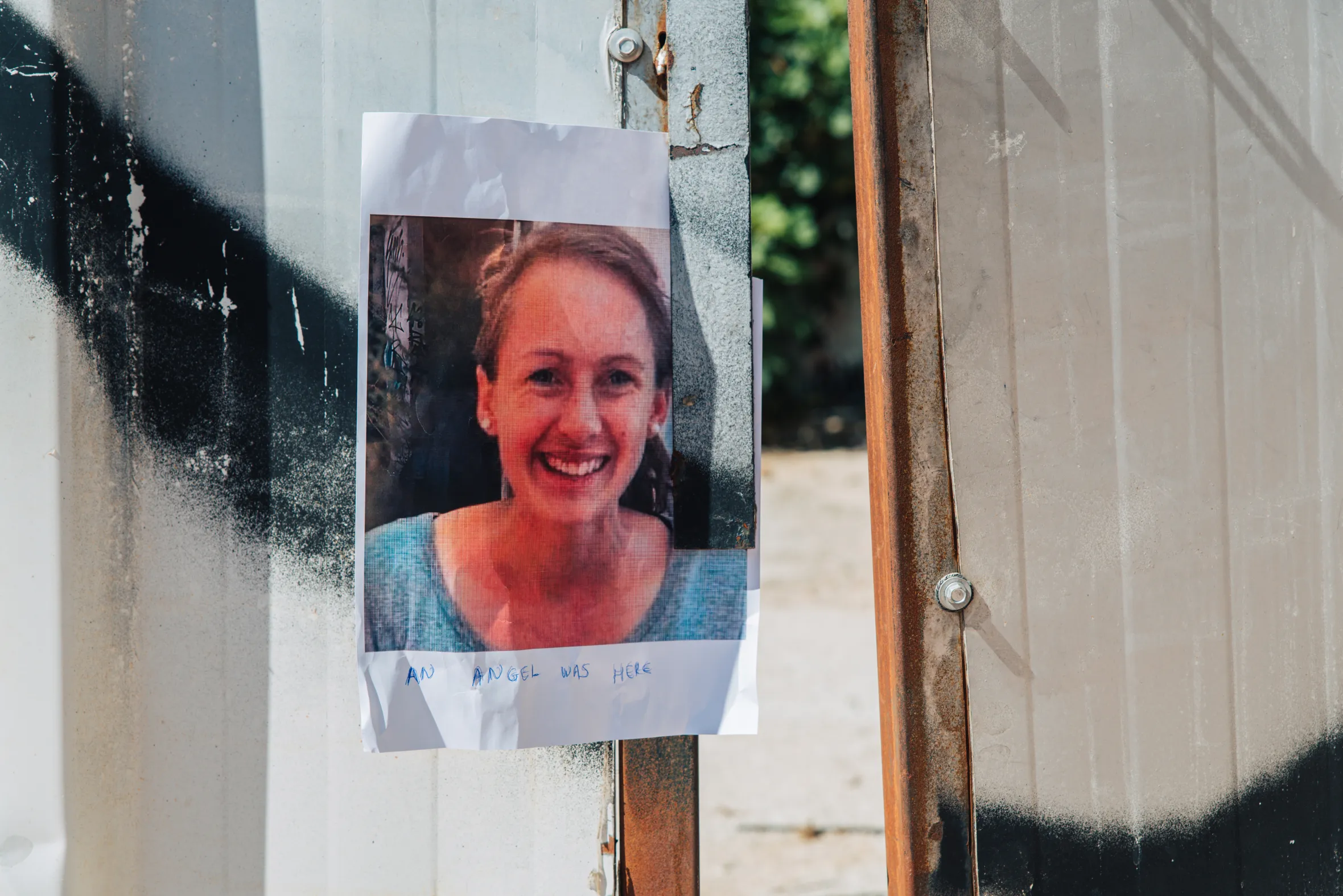
Media reports have named her as Elisabeth-Jane Ross, from Scotland.
The route by which she was identified is itself notable. A woman from Scotland, killed in Greece, was ultimately named through American records accessed via an international policing channel. It reflects how thoroughly modern identity records cross national boundaries.
Reconstructing Her Final Weeks
Once investigators had a name, the timeline began to take shape.
She arrived in Greece on 26 June and stayed at a friend’s home in the Piraeus area, the port district southwest of central Athens. She remained there until 10 July, when she left for a destination that investigators were initially unable to determine, somewhere within the wider Attica region.
That departure marks the point where the trail went cold and where the case became a matter of piecing together fragments rather than following a clear path.
Digital Evidence Closes the Gap
The breakthrough came through a combination of physical evidence gathered at the scene and detailed digital analysis of video footage.
Athens, like most major European cities, carries dense camera coverage across streets, transport hubs, businesses, and residential buildings. Working through that material allowed investigators to establish the suspect’s involvement.
Camera analysis of this kind is slow and unglamorous work. It requires officers to review vast quantities of footage, track movements across multiple locations, and build a sequence that holds together. It rarely produces a dramatic single moment, but it frequently produces convictions.
Questioning and Admission
The 26-year-old was brought in for questioning on Thursday at the headquarters of the Directorate for Combating Organised Crime. According to police, he admitted to his actions during that interview.
Investigators concluded that he had placed the victim’s body inside the suitcase and transported it to the abandoned building where it was eventually discovered.
What Happened Afterwards
The days following the killing produced further evidence against him.
Police established that he had used the victim’s bank cards to withdraw cash. Financial transactions of this type leave a permanent trail, with each withdrawal generating a timestamp, a location, and in most cases camera footage at the machine itself. It is among the more self-defeating actions a suspect can take.
A search of his residence recovered a replica pistol and a knife. Both items were seized, and their discovery resulted in the additional weapons charge now filed against him.
British Agencies Involved Throughout
Because the victim was a British citizen, UK authorities were engaged in the investigation. Greek police confirmed cooperation with a liaison officer from the National Crime Agency, as well as with Police Scotland.
Liaison officers exist precisely for situations like this. They allow information to move between jurisdictions quickly, without waiting on formal diplomatic requests that can take weeks to process. In a case with an unidentified victim and a suspect still at large, that speed carries real weight.
Police Scotland’s involvement reflects the victim’s origins and would typically include supporting her family, gathering background information, and assisting with any inquiries required on the UK side.
The Case Moves to Court
The suspect has now been brought before the relevant prosecutor’s office, which marks the transition from police investigation to judicial proceedings.
Under the Greek system, the prosecutor will review the evidence assembled, formalise the charges, and determine how the case proceeds toward trial. That process can extend over a considerable period, particularly in cases involving multiple charges and international elements.
What the Investigation Demonstrates
Stripped to its essentials, this case turned on three things: forensic technicians who managed to recover fingerprints in conditions that should have made it impossible, an international database query that turned an anonymous body into a named woman, and patient examination of video footage that placed a suspect at the centre of the timeline.
None of it was quick. All of it was methodical. For the family of a woman who travelled to Greece in June and did not return, it has at least produced answers, even if the answers are the worst kind imaginable.
Author
-
Lucienne Albrecht is Luxe Chronicle’s wealth and lifestyle editor, celebrated for her elegant perspective on finance, legacy, and global luxury culture. With a flair for blending sophistication with insight, she brings a distinctly feminine voice to the world of high society and wealth.