The Gaza ceasefire plan backed by the United States has run into an immediate obstacle, with Hamas warning mediators that continued Israeli airstrikes are making implementation impossible. A Hamas official told Al Jazeera that the framework, which requires the group to disarm and Israeli forces to withdraw from the territory, cannot advance while what appears to be an intensified bombing campaign continues.
The Message to Mediators
According to the official, Hamas has reached out directly to the parties mediating the process and asked them to intervene with Israel.
The request was specific: that Israel be compelled to halt its military operations in Gaza entirely, rather than reduce them or pause selectively.
The Hamas source stated that the group had made clear to mediators that ongoing attacks will disrupt both the implementation of the agreement and the negotiations over its timeline.
That second element is worth noting. The complaint is not only that the bombing prevents disarmament from happening, but that it obstructs the discussions about when and how disarmament would occur.
The Sequence of Events
The timing here matters, because Hamas moved first.
Late last week, the group accepted a Board of Peace roadmap covering the second phase of the Gaza ceasefire agreement. That acceptance was the step the framework required from it, and it was given.
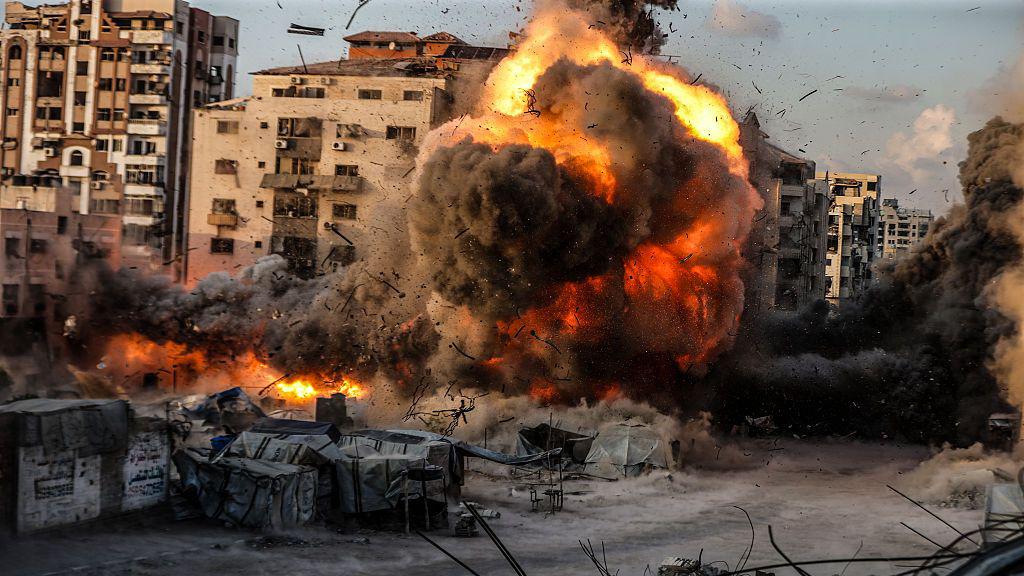
Israel has not reciprocated. Its position is that the plan cannot function while Hamas retains weapons, and it has continued conducting waves of airstrikes on a nightly basis.
The result is a stand-off in which each side treats the other’s action as the precondition for its own.
The Circular Problem
The logic on both sides is internally coherent, which is precisely why the situation is difficult to break.
Israel’s position holds that stopping military operations while an armed opponent remains intact simply grants time to rebuild. It has pointed to previous pauses as evidence for this concern and insists that disarmament must be verified before the pressure is lifted.
Hamas’s position holds that no disarmament process can realistically be organised while its personnel and infrastructure are under active attack. Handing over weapons requires a functioning administrative environment, agreed handover points, and some assurance that the process will not simply expose those participating in it.
Each precondition sits on the other side of the sequence from the other. Neither side can concede its own without abandoning what it regards as the core protection of its position.
Casualties Rising
The human cost of the stalemate is measurable. Hamas-run authorities in Gaza reported 18 people killed in Israeli strikes over the preceding 24 hours.
That figure represents one of the highest daily tolls recorded in recent months, which is why the group has framed the current phase as an escalation rather than a continuation.
Casualty figures reported by Gaza authorities have been contested throughout the conflict, and independent verification remains limited. But the trend, rather than the precise number, is what is driving the current diplomatic urgency.
Why the Mediators Matter Now
Hamas’s decision to route its complaint through mediators rather than issue it as a public ultimatum is significant.
It indicates the group intends to remain inside the process rather than walk away from it. Escalating through third parties preserves the framework while applying pressure, whereas a public withdrawal would collapse it.
For the mediators, the difficulty is that they are now being asked to deliver something Israel has publicly refused. Getting a party to stop military operations it considers essential to its security is among the harder tasks in any negotiation, and it requires leverage that mediators may not possess.
The American Position
The plan is a White House priority, which raises the stakes for Washington in particular.
American officials are now positioned between an ally that has stated the published framework does not reflect its positions, and a counterparty that has formally accepted the same framework and is pointing to that acceptance as evidence of good faith.
That is an uncomfortable place to stand. Pressing Israel risks a public rift with a close partner. Failing to press it risks the collapse of an initiative the administration has invested significant political capital in.
What Would Need to Change
Any resolution would require someone to move first on the sequencing question, and there are only a few plausible routes.
A limited or geographically restricted pause could allow initial disarmament steps to begin without requiring Israel to halt operations entirely.
Robust third-party verification, with monitors able to confirm compliance in real time, might address Israeli concerns about rebuilding during any pause.
A phased approach, in which specific weapons categories are surrendered in exchange for corresponding reductions in military activity, could allow both sides to move incrementally rather than requiring either to go first in full.
None of these are simple, and all of them require a degree of mutual trust that is currently absent.
The Immediate Outlook
For now the framework exists on paper with one party’s acceptance and the other party’s objections lodged through diplomatic channels.
Strikes continue nightly. Casualties accumulate. The timeline for the second phase remains unagreed, and the disarmament mechanism at its centre has not begun.
Whether mediators can find a formula that satisfies Israel’s demand for verifiable disarmament while giving Hamas the conditions it says are necessary to disarm will determine whether the roadmap becomes an agreement or joins the long list of Gaza frameworks that were accepted but never implemented.
Author
-
Lucienne Albrecht is Luxe Chronicle’s wealth and lifestyle editor, celebrated for her elegant perspective on finance, legacy, and global luxury culture. With a flair for blending sophistication with insight, she brings a distinctly feminine voice to the world of high society and wealth.