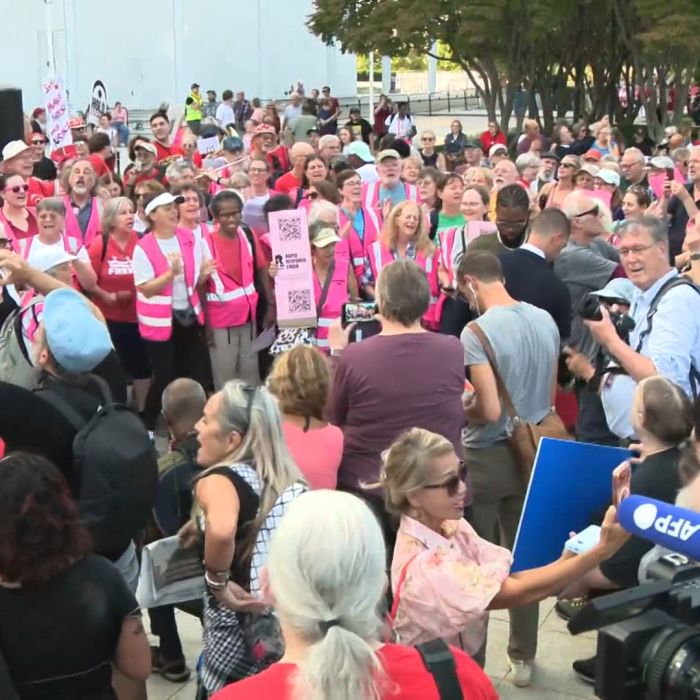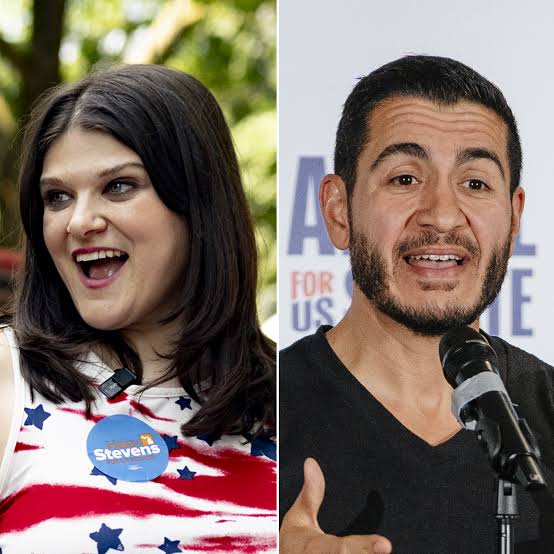
The Abdul El-Sayed Michigan Senate primary result has handed the progressive movement something it has been chasing for years: a win in a genuine swing state, not just a safely blue one. The former county health director edged out Rep. Haley Stevens in a razor-thin contest that turned nasty in its closing weeks, and he did it while being outspent by a staggering margin.
For a left flank that has racked up primary victories in places like New York and Colorado, Michigan was always the harder test. Those states offered friendly terrain. Michigan is a battleground that Donald Trump carried in both 2016 and 2024, losing it only to Joe Biden in 2020. Winning a Democratic nomination there, against the full weight of the party apparatus, is a different order of difficulty.
A Race Decided Despite a Massive Money Gap
The spending imbalance in this primary was extraordinary. Roughly $65 million in outside money poured in against El-Sayed’s campaign. According to ad-tracking figures, Stevens and the groups backing her put close to nine times more into advertising than El-Sayed and his allies managed.
A large share of that came from an organization tied to AIPAC, the influential pro-Israel lobbying group, which alone accounted for more than $30 million. Much of the messaging made a positive case for Stevens, though a portion of it went directly after her opponent.
El-Sayed turned that imbalance into his central argument rather than treating it as a liability. At a Detroit debate in the final week, he framed it bluntly, suggesting that anyone who requires a $60 million crutch to stand up probably cannot win on their own merits. He hammered Stevens repeatedly over corporate PAC contributions and the wall of television advertising bought on her behalf.
The Establishment Closed Ranks Too Late
Stevens, serving her fourth term in the House, positioned herself as the candidate of the party mainstream. She had backing from Senate Minority Leader Chuck Schumer, from retiring Sen. Gary Peters, whose seat is up for grabs, and eventually from Gov. Gretchen Whitmer.
Whitmer’s endorsement arrived on July 24, unusually late for a governor of her stature. Many read it as an emergency intervention aimed at halting El-Sayed’s momentum rather than a routine show of support. The governor had beaten El-Sayed herself in the 2018 gubernatorial primary, which gave her backing extra symbolic weight.
It was not enough. El-Sayed built a counterweight that combined national progressive star power with local muscle. Bernie Sanders and Alexandria Ocasio-Cortez both toured the state on his behalf, drawing the kind of crowds that television advertising cannot manufacture. Just as importantly, he secured the endorsement of the United Auto Workers, an organization whose influence in Michigan is difficult to overstate.
Gaza, Health Care, and a Message That Never Wavered
El-Sayed ran on a compact and unchanging platform: Medicare for All, an end to the dominance of big money in politics, and sharp criticism of Stevens over her support for military aid to Israel. He described Israel’s campaign in Gaza as a genocide against Palestinians, a position that resonated powerfully in a state with one of the largest Arab American and Muslim populations in the country.
That combination gave him something Stevens struggled to match. His pitch fit on a bumper sticker, and he repeated it relentlessly. At the final debate he reduced the entire contest to a single question: whether voters wanted a politics belonging to ordinary people, or one owned by corporations, billionaires, and special interests.
A Primary That Turned Personal
The race grew increasingly bitter after state Sen. Mallory McMorrow withdrew last month. She had tried to occupy the middle ground, presenting herself as a candidate acceptable to both moderates and progressives. Squeezed between a torrent of pro-Stevens advertising and the grassroots energy behind El-Sayed, she found no room to grow. Her exit stripped away the buffer between the two remaining contenders.
Stevens spent much of the campaign arguing that El-Sayed was more interested in national headlines than in Michigan’s problems. A leaked recording of a donor call gave her ammunition. On it, El-Sayed suggested a Michigan victory could echo into 2028 and inspire primary challenges against Democrats like Sen. John Fetterman of Pennsylvania, using the phrase “an ogre on a pike.” Some Democrats interpreted the remark as aimed at Stevens, though El-Sayed had previously applied the same label to Fetterman.
Stevens also spent the closing stretch fielding online mockery of her Upper Midwest accent and appearance. She flipped it into a talking point, telling debate viewers that the people ridiculing how she sounded were not the ones telling her what they needed.
McMorrow was the first to call for unity once the race was decided, offering El-Sayed her full endorsement and noting that however brutal the primary had been, those differences shrink beside what November offers.
November Will Be a Fight for the Senate Itself
El-Sayed now faces former Rep. Mike Rogers, who secured the Republican nomination unopposed after an early Trump endorsement cleared his path. The general election is expected to rank among the most competitive in the nation and could plausibly decide which party runs the chamber.
Republicans currently hold 53 seats. Democrats need four flips to take control, and while they are targeting several red states, they must simultaneously defend vulnerable ground in Michigan and Georgia.
Notably, national Republicans made little secret of preferring El-Sayed as an opponent. The National Republican Senatorial Committee even released a digital ad spotlighting his progressive record and Sanders endorsement, widely interpreted as an attempt to lift him past Stevens. Whether that calculation proves shrewd or badly misjudged will be answered in November.
Author
-
Lucienne Albrecht is Luxe Chronicle’s wealth and lifestyle editor, celebrated for her elegant perspective on finance, legacy, and global luxury culture. With a flair for blending sophistication with insight, she brings a distinctly feminine voice to the world of high society and wealth.