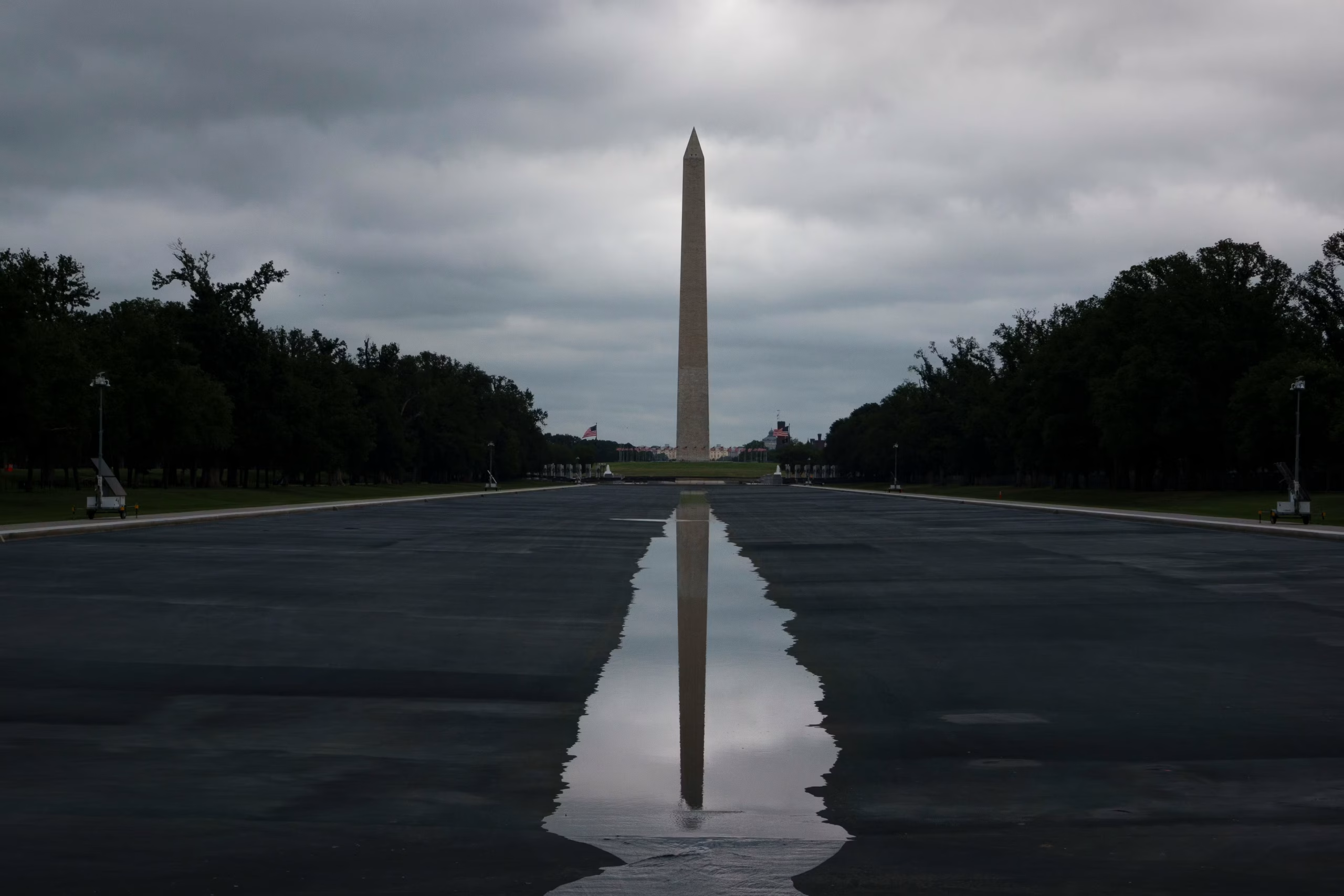
The Lincoln Memorial Reflecting Pool case against former Olympian David Hearn has collapsed, but his attorneys are not letting it end quietly. In a motion filed Tuesday in D.C. Superior Court, they argue the Justice Department pursued a felony charge it had every reason to know was baseless, and they want a judge to slam the door shut permanently.
The 28-page filing lands one day after U.S. Attorney Jeanine Pirro moved to drop the charge herself. Her office cited newly produced material from the Interior Department indicating the pool’s damaged liner was the result of a flawed contractor installation, compounded by pressure to wrap up work ahead of America 250 events surrounding the Fourth of July.
Hearn’s legal team says that conclusion was available long before an indictment was ever returned.
The Core of the Defense Argument
Attorneys Mary Dohrmann, Steve Levin and Norman Eisen make a simple claim at the center of their motion: the evidence pointed away from their client from the very beginning. They wrote that the pool liner was already deteriorating and that Hearn did not cause the damage described in the indictment.
Their broader accusation is procedural rather than merely factual. They argue prosecutors moved to charge before doing the investigative work that would have established whether Hearn caused the damage, or whether a single person on a bicycle could physically have caused it at all.
That distinction matters legally. A prosecutor is expected to hold a good-faith basis for bringing a charge at the moment it is filed, not to assemble one afterward. The defense contends that basis was missing.
Evidence They Say Was Sitting in Plain Sight
The motion emphasizes that the Reflecting Pool’s condition was not a hidden or technical finding requiring specialized forensic analysis. According to Hearn’s lawyers, the deterioration was visible for weeks preceding the indictment.
They also point to public acknowledgments from Atlantic Industrial Coatings, the contractor behind the $14.7 million renovation, that portions of the project needed repair work. Those statements, the filing notes, predated the grand jury’s action.
The implication is pointed. If a contractor was publicly conceding problems with the installation while prosecutors were simultaneously building a vandalism case against a cyclist, the defense argues, someone in the chain failed to ask obvious questions.
What Hearn Says Happened That Day
Hearn’s own account of June 19 is brief and largely undisputed in its outline. He was cycling near the Reflecting Pool when he noticed a section of liner peeling away from the surface. He touched it momentarily. A National Park Service employee asked him to leave the area, and he did.
That sequence, according to the defense, describes curiosity rather than destruction. The peeling material he touched, they argue, was already separating on its own.
Why “With Prejudice” Is the Real Fight
Pirro’s office has already moved to dismiss, which raises a fair question: if the charge is gone, what is left to argue about?
The answer is in the wording. A dismissal without prejudice leaves the government free to refile the same charge later. A dismissal with prejudice ends the matter for good.
Hearn’s attorneys are pushing for the latter, and their reasoning is that the government should not receive credit for cleaning up a mess they say it created through haste. In their framing, correcting an error after public scrutiny is not the same as never having made it.
There is also a practical dimension. An indictment carries consequences that a dismissal does not fully erase, including reputational harm, legal expenses, and the ongoing uncertainty of whether charges might return.
A Political Dimension the Case Cannot Escape
The dispute has not remained confined to a courtroom. President Donald Trump has continued to maintain publicly that the Reflecting Pool damage was an act of vandalism, and he criticized Pirro directly for abandoning the prosecution.
That puts a sitting U.S. attorney in an unusual position, having reached a conclusion based on evidence from the Interior Department that runs contrary to the president’s stated view. Prosecutors determined the contractor’s work, not Hearn, produced the failure.
For Hearn’s lawyers, that friction arguably strengthens their argument about why the case moved as quickly as it did. For the government, it complicates the standard defense that the process simply worked as intended once new information arrived.
The Larger Questions This Raises
Cases like this one tend to generate scrutiny that extends beyond the individual defendant. A few threads are likely to persist regardless of how the judge rules.
Timing and verification. Charging decisions built on early assumptions can be difficult to reverse once public statements have been made.
Infrastructure accountability. The condition of the liner and the circumstances surrounding the $14.7 million renovation remain a separate open question, independent of any criminal case.
Deadline pressure. The push to complete work before major national celebrations is now cited in the government’s own dismissal filing as a contributing factor.
The judge now weighs whether to grant the dismissal as prosecutors requested or to go further and bar refiling entirely. Either way, the case has already become less a story about a damaged monument and more a story about how quickly a federal charge can be brought, and how much harder it is to undo.
Author
-
Lucienne Albrecht is Luxe Chronicle’s wealth and lifestyle editor, celebrated for her elegant perspective on finance, legacy, and global luxury culture. With a flair for blending sophistication with insight, she brings a distinctly feminine voice to the world of high society and wealth.