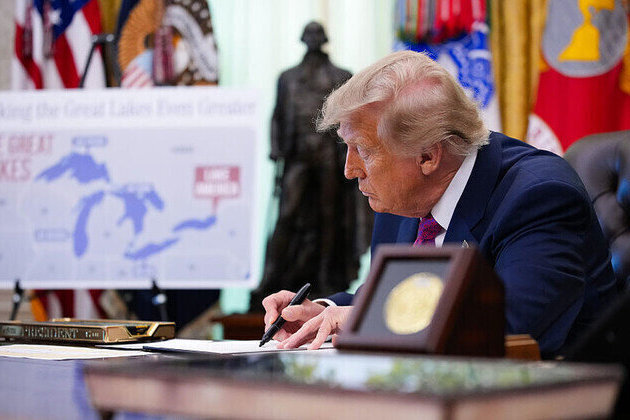
Birthright citizenship is back on the president’s agenda barely two months after the Supreme Court rejected his first attempt to limit it. Donald Trump announced Thursday that he is signing two new executive actions on immigration, one narrowing eligibility for automatic citizenship at birth and another targeting travel to the United States for the purpose of giving birth.
The move signals that a June loss at the high court did not end the administration’s interest in reshaping who qualifies as an American.
What the New Order Actually Does
The written order released Thursday is noticeably narrower than the sweeping version the Court struck down.
Rather than attempting to exclude broad categories such as children of people in the country illegally or temporarily, it targets specific groups. These include children born to adults with connections to foreign embassies or organizations, and anyone classified as an alien enemy of the United States.
It also seeks to deny automatic citizenship where parents engaged in fraudulent activity to obtain citizenship.
The second order addresses what Trump described as birth tourism by tightening restrictions on visitors seeking visas with the intention of giving birth in the country.
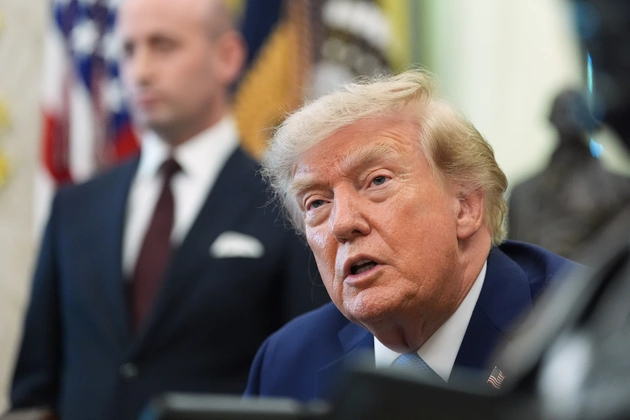
Trump framed the retreat and the retry in the same breath. He said he had expected to prevail at the Supreme Court, called the decision bad and very unfair, argued the country suffers because of it, and said the administration is ending the practice through a different route.
The Legal Ground Already Covers Some of This
Part of what makes the second order unusual is that portions of it describe conduct already treated as prohibited.
The Migration Policy Institute noted in a 2026 article that seeking a visa specifically to travel to the United States and secure citizenship for a child is already considered fraud and grounds for visa denial.
Previous administrations have also pursued criminal cases against organized birth tourism operations, including schemes that coached women on concealing pregnancies while traveling.
That history raises a practical question about whether the second order changes enforcement authority or primarily restates and emphasizes existing policy.
How Large Is Birth Tourism?
The administration has characterized the practice as widespread. The available numbers suggest a narrower phenomenon.
No official government estimate exists. The Migration Policy Institute’s 2026 analysis put the figure at roughly 26,000 births that might fall into the category, out of approximately 3.5 million births annually in the United States.
That works out to well under one percent of American births, which is a meaningful data point in assessing whether the policy addresses a systemic issue or a marginal one.
What the Supreme Court Decided in June
The June ruling rejected Trump’s initial effort to declare that children born to people in the country illegally or on temporary status are not citizens, and affirmed a broad understanding of birthright citizenship.
The vote was 6-3 against the order. But the headline margin conceals a more fragile underlying result.
On the specific constitutional question, whether birthright citizenship is guaranteed by the Constitution itself, only five justices agreed that it is. Justice Brett Kavanaugh voted against the executive order on different grounds, concluding that federal statute confers birthright citizenship rather than resting his reasoning on the Constitution.
That distinction matters enormously. A five-vote constitutional holding is thinner protection than a six-vote one, and a statutory rationale is theoretically vulnerable to legislative change in a way a constitutional one is not.
Many immigration advocates and legal observers found the closeness unsettling precisely because the question had been regarded as settled law for well over a century.
The Original Order and Its Collapse
Trump signed his first birthright citizenship order on the opening day of his second term.
Opponents sued immediately, arguing it conflicted with the 14th Amendment, adopted after the Civil War, which establishes that anyone born in the country is a citizen subject to very limited exceptions.
Several lower courts blocked the order, and it never took effect before reaching the Supreme Court.
The Opposition’s Position
The American Civil Liberties Union predicted the new effort will fail in the same way.
Cody Wofsy, deputy director of the organization’s Immigrants’ Rights Project, said in a statement Thursday that the Supreme Court has already resolved the question, that birthright citizenship is guaranteed by the Constitution, and that no executive order can alter constitutional meaning. Any order attempting to rewrite it, he said, will meet the same end as the first.
Immigration advocates and many legal scholars make a broader argument as well. They contend the constitutional text is clear about who qualifies, that universal birthright citizenship benefits the country by giving everyone an equal stake in its future, and that restricting eligibility would produce a permanent second class of residents born on American soil.
Supporters of restriction argue the opposite: that automatic citizenship functions as a magnet drawing migration, and that citizenship should be reserved for those who genuinely value it rather than conferred on anyone who happens to be born within the borders.
Why This Version Might Fare Differently
The narrower drafting appears deliberate rather than incidental.
By focusing on categories with existing legal ambiguity, such as children of foreign officials and individuals designated as alien enemies, the order edges toward the recognized exceptions in 14th Amendment jurisprudence rather than confronting the core rule directly.
The fraud provision follows similar logic, since citizenship obtained through fraud has long been subject to challenge under separate legal doctrines.
Whether courts view this as legitimate line-drawing within established exceptions or as a repackaged attempt at the same objective will determine the outcome.
What Happens Next
Litigation is essentially certain, and the timeline is likely to resemble the first round. Lower courts will weigh preliminary challenges, injunctions are probable, and the question could climb back toward the Supreme Court.
The more consequential long-term issue is the composition of the June majority. With only five justices grounding birthright citizenship in the Constitution itself, the doctrine rests on a narrower foundation than its long history would suggest.
That fragility, more than any single executive order, is what will shape this fight going forward.
Author
-
Lucienne Albrecht is Luxe Chronicle’s wealth and lifestyle editor, celebrated for her elegant perspective on finance, legacy, and global luxury culture. With a flair for blending sophistication with insight, she brings a distinctly feminine voice to the world of high society and wealth.