A Russian energy sanctions bill cleared the United States Senate on Friday by a margin that left little doubt about where the chamber stands, passing 86 to 11 and aiming directly at the oil and gas revenue funding Moscow’s continued war in Ukraine.
The legislation now moves to the House of Representatives, where its path looks considerably less certain and where no vote can happen until at least early September because of the congressional summer recess.
What the Bill Actually Does
Formally titled the Lindsey O Graham Sanctioning Russia and Iran Act of 2026, the measure attacks the problem from two directions.
The headline provision authorises tariffs reaching as high as 100 percent on major economies that continue purchasing Russian oil and gas. That structure targets buyers rather than sellers, effectively forcing importing nations to weigh cheap Russian energy against their trading relationship with the United States.
At least five of the largest importers of Russian fuel would fall within its scope, China and India among them. Both have significantly expanded their purchases since Western markets closed off, and both have become central to keeping Russian export revenue flowing.
The second component goes after the logistics. The bill takes aim at the covert shipping networks that have grown up around sanctions evasion, the aging tankers operating under opaque ownership structures and shifting flags that move Russian crude while obscuring its origin.
The Argument on the Senate Floor
Republican Jim Risch, ranking member of the Foreign Relations Committee, made the case shortly before the vote. His argument was that economic pressure could accomplish what military developments have not.
He suggested the measure might finally push Russia toward genuine negotiations, and described its potential impact as decisive in a way that battlefield outcomes have not been. The central logic, in his framing, is straightforward: cut the money and the war machine slows down.
Democratic Senator Jeanne Shaheen, also on the Foreign Relations Committee, framed the vote as a message rather than a mechanism. She said the bipartisan support communicated something to Vladimir Putin in the only vocabulary he responds to, which is pressure.
A Bill Named for a Late Senator
The legislation carries the name of Senator Lindsey Graham, who died on July 11 and who had spent much of the conflict pushing for tougher measures against Moscow.
The timing of his final effort was striking. One day before his death, Graham and a bipartisan group of colleagues announced they had won White House sign-off to advance sanctions on Russian hydrocarbons. Those measures had previously been held up by President Donald Trump.
His sister, Darline Graham Nordone, who was appointed to fill the vacant seat, responded to Friday’s vote by saying the bill strikes Putin where it genuinely hurts.
Reaction from Kyiv and Brussels
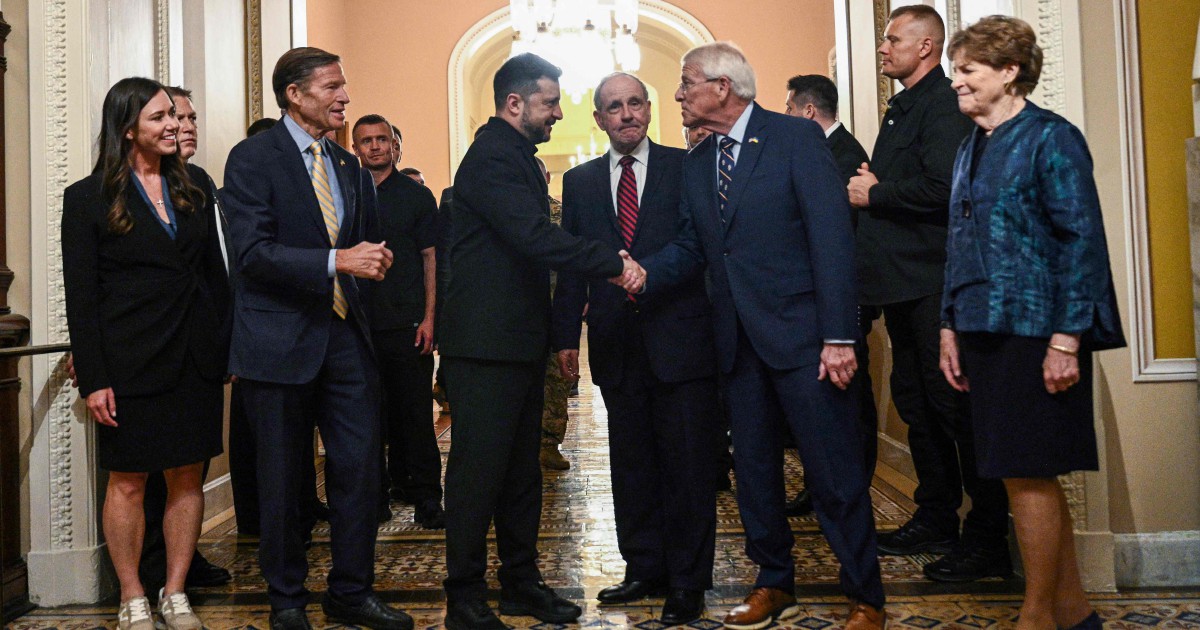
Ukrainian President Volodymyr Zelenskyy welcomed the outcome, saying strong American pressure and sanctions represent the most effective tool available for ending what he described as an irrational war against his country’s independence and its people.
Writing on X, he went out of his way to thank both parties and the American public broadly, a deliberate framing at a moment when support for Ukraine has become politically contested in Washington.
European Commission President Ursula von der Leyen also endorsed the move, calling for a joint effort to drain Russia’s capacity to sustain a war she argued cannot be won.
The Complications Waiting in the House
Passage in the lower chamber is far from assured, and the objections are not coming from where one might expect.
Democratic Representatives Gregory Meeks and Don Beyer issued a joint statement calling the Senate version unacceptable. Their concern centres on the tariff authority itself, which they argue hands the president expansive powers with insufficient constraints on how they can be applied.
That objection reflects a broader tension running through recent trade and sanctions legislation:
- Supporters want flexible tools that can be deployed quickly against shifting targets
- Critics want guardrails limiting how broadly a president can wield tariff authority
- The disagreement is less about Russia policy than about executive power
Resolving that tension will likely determine whether the bill survives in its current form or emerges from the House substantially rewritten.
Moscow’s Response
The Russian Embassy in Washington condemned the legislation before it passed, and its argument was aimed squarely at American voters rather than lawmakers.
In a statement last month, embassy officials pointed to energy supply pressures stemming from the US and Israeli conflict with Iran. They argued that imposing sanctions on Russia and its trading partners amid a looming energy crunch and climbing fuel prices, with midterm elections approaching, would ultimately damage the United States more than it damages Russia.
That framing is calculated. It sidesteps the war entirely and reframes sanctions as a domestic cost question, betting that pump prices will matter more to American households than foreign policy objectives.
The Broader Picture
The vote arrives against a difficult backdrop for Russian forces, which recorded record casualties in July while giving ground in Ukraine.
Whether financial pressure produces the negotiating breakthrough Risch described remains an open question. Previous rounds of sanctions reshaped Russian trade routes without ending the war, largely because buyers like China and India absorbed the redirected supply.
What makes this package different is that it targets those buyers directly. That is also what makes it risky, since it converts a Russia policy into a confrontation with two of the world’s largest economies.
The House will decide in September whether that trade-off is one Congress is prepared to make.
Author