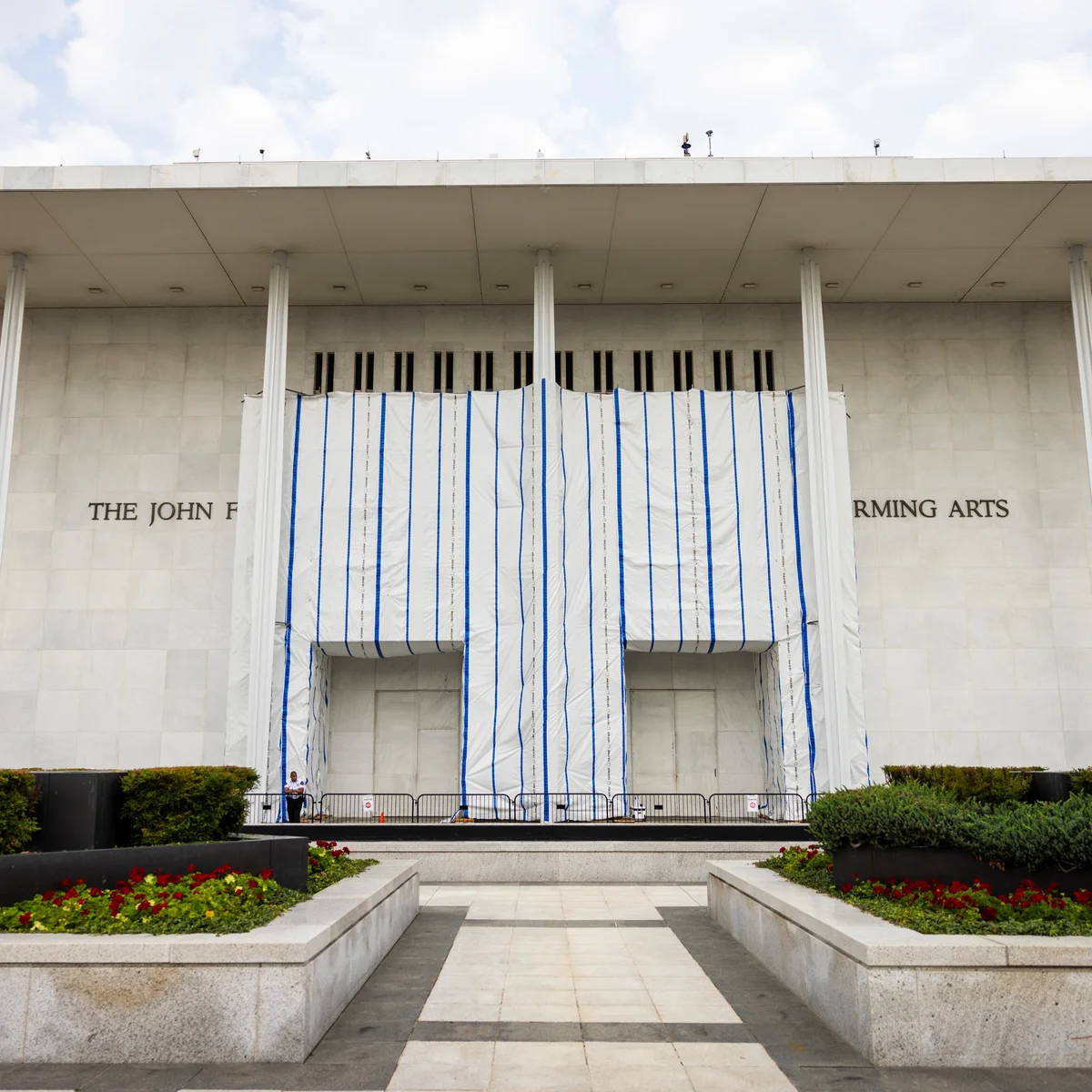
The Kennedy Center renaming vote taken on Thursday has pushed a months-long standoff between a presidentially appointed board and a federal judge into open confrontation. In a virtual meeting lasting close to two hours, the board approved both a partial shutdown of the Washington arts complex and a new, considerably longer name for it — one that places President Donald Trump’s name back on a building a court had ordered it removed from.
What the Board Actually Approved
The vote passed 20 to 3. Under the resolution, the institution would formally become “The John F. Kennedy Center for the Performing Arts Restored and Renovated by President Donald J. Trump.” The surrounding physical grounds would be designated “President Donald J. Trump Plaza.”
Commerce Secretary Howard Lutnick put the naming proposal forward. Trump himself, who installed himself as chairman of the board last year, dialled into the call for a few minutes, according to someone present.
The only dissenting votes came from the three ex officio congressional members: Representative Joyce Beatty of Ohio, Senator Sheldon Whitehouse of Rhode Island, and Representative Rick Larsen of Washington, all Democrats.
Half Open, Half Closed
The closure element of the vote was structured carefully. The main building would shut for as long as two years while renovation work proceeds, but a smaller adjacent facility known as the Reach would stay open to host some events.
That arrangement is not accidental. It responds directly to a court order issued in May requiring the board to preserve the center’s function as a memorial to President John F. Kennedy. Keeping the Reach operational allows ticketed performances to continue, at least on a reduced scale.
The Legal Wall the Board Is Pushing Against
U.S. District Judge Christopher Cooper’s May ruling temporarily halted the planned closure and directed that Trump’s name be stripped from the building, which happened in June. He also instructed the board to produce a financial plan justifying any decision to close.
Cooper did leave a door open. He wrote that the board could still choose to close the center if it reached that conclusion afresh, after weighing its various obligations independently and prudently.
On naming, however, his language allowed no such flexibility. He found that the statute establishing the center is unambiguous: the institution carries President Kennedy’s name and cannot bear any other formal designation or public memorial on the board’s own initiative. He framed the question directly — whether the center could be renamed without congressional authorisation — and answered it in a single word. No. He added that no other individual may be memorialised on the building’s front portico, since Congress conferred the name and Congress alone can alter it.
Critics Call It Defiance
Beatty, who was among the plaintiffs in the lawsuit challenging the earlier renaming attempt, characterised Thursday’s action as a plain effort to work around the court’s decision and disregard statutes Congress had enacted. She said she would keep fighting for what she called a treasured national monument.
Her attorneys, Norm Eisen of Democracy Defenders Action and Nathaniel Zelinsky of Washington Litigation Group, went further. They noted that a federal judge had already struck down the board’s previous renaming effort and had described its earlier closure vote as poorly informed and effectively decided in advance. Thursday’s action, in their view, repeats that pattern and amounts to open disrespect toward the judiciary.
The Orchestra Caught in the Middle
Lost in the legal argument is a practical casualty. The National Symphony Orchestra, the Kennedy Center’s principal resident ensemble, has performed in the building since it opened in the early 1970s.
Under music director and principal conductor Giancarlo Noseda, the orchestra’s reputation has been climbing. Now its immediate future is unsettled, because the Concert Hall will not be available during the works. A search for alternative venues around the region is already underway.
For an orchestra, a venue is not interchangeable furniture. Acoustics shape rehearsal habits, subscriber bases attach to locations, and a temporary displacement of two years can cost audience relationships that took decades to build.
How the Center Came to Exist
The institution at the centre of this dispute was conceived by Jacqueline Kennedy as a memorial to her assassinated husband. That origin is what makes the naming fight more than a branding disagreement.
A living memorial, in the legal framing Cooper applied, is not simply a building with a plaque. Its identity is the memorial. Altering the name alters the thing itself, which is why the statute reserved that power to Congress.
Family and Political Reaction
Members of the Kennedy family have been vocal. Former Representative Joseph Kennedy III, a grandnephew of the late president, argued last year that the center is a living memorial established under federal law and cannot be renamed any more easily than the Lincoln Memorial could, regardless of who claims otherwise.
The broader renovation push has drawn sustained criticism from the administration’s opponents, who view it as one piece of a wider effort to reshape prominent Washington institutions.
What Happens Now
The board has voted, but voting is not the final word here. The previous renaming attempt ended in court, and there is little reason to expect this one will avoid the same path.
Three questions will decide the outcome: whether the financial justification satisfies the conditions Cooper set, whether a partial closure counts as preserving the memorial function, and whether appending a name rather than replacing one changes the legal analysis at all.
The board appears to believe the answer to that last question is yes. The judge’s own words — that no other individual may be memorialised on the portico — suggest he may see it differently.
Author
-
Lucienne Albrecht is Luxe Chronicle’s wealth and lifestyle editor, celebrated for her elegant perspective on finance, legacy, and global luxury culture. With a flair for blending sophistication with insight, she brings a distinctly feminine voice to the world of high society and wealth.