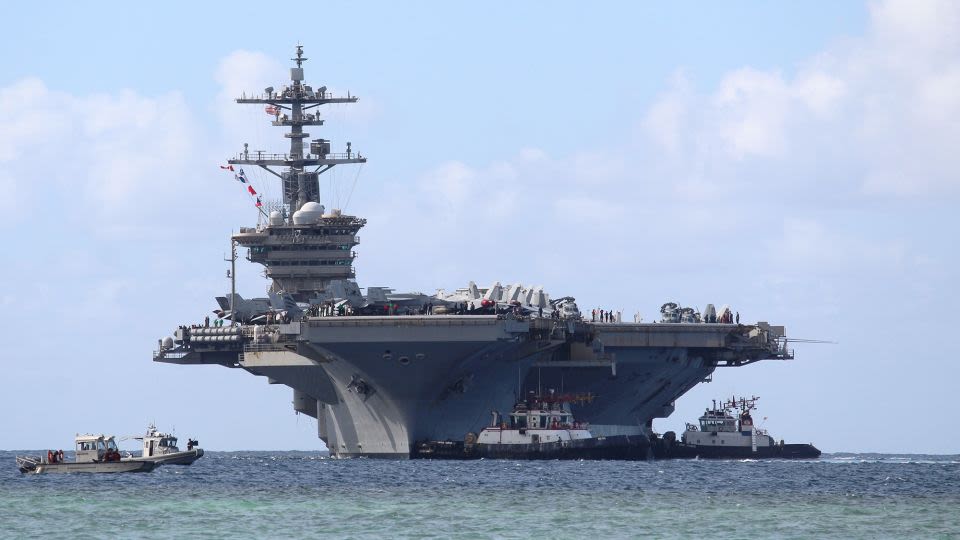
The USS Abraham Lincoln deployment has stretched close to nine months, and the strain is showing — not only on the ship itself, but on the thousands of sailors aboard and the families waiting for them back home. What began as a routine departure from San Diego in late November has turned into one of the longest continuous stretches at sea for an American carrier in decades, and the human cost of that endurance is now drawing attention from lawmakers, defense analysts and the public.
A Record Nobody Set Out to Break
The Lincoln has spent more than 240 days without pulling into port. For most of the crew, the last time they stood on solid ground was a brief stop in Guam in December. The ship is now within reach of a mark set only months earlier by the USS Gerald R. Ford, which returned from a 326-day tour covering operations near Venezuela and Iran — the longest carrier absence from a home port since the Vietnam era.
This is not an isolated case. A review of fleet movement data shows that the median length of carrier deployments based in the United States has climbed steadily since 2020. The Navy’s own planning model calls for roughly seven months at sea inside a predictable three-year cycle. Between 2018 and 2022, most ships stayed close to that target. After October 2023, when conflict erupted in the Middle East, the schedule began slipping badly. Several carriers passed 250 days. In 2025, two crossed 270.
Life Aboard When the Ports Are Closed
Port calls are not simply shore leave. They are how a warship reloads on food, spare parts and basic goods, and how a crew resets mentally. Combat operations have kept the Lincoln from making those stops, and the effects have compounded.
Sailors and relatives describe periodic gaps in the food supply, thinning stocks of soap and toiletries, and an unreliable water system. One crew member noted that the ship’s store, once fully stocked with personal care items, now runs with purchase limits and empty shelves. Restrooms and drinking fountains are frequently taken offline. Hot water is often unavailable. Photographs shared by one family showed washroom areas flooded with sewage — a problem the Ford also dealt with during its own extended run.
Engineers point out that hardware suffers too. On very long missions, repairs done at sea tend to be stopgaps. Arresting cables that snag landing aircraft begin to wear. Saltwater works its way into systems it was never meant to touch. Individually these are small annoyances; together they raise the odds of something going seriously wrong.
Morale, Burnout and a Difficult Conversation
Several crew members have described morale as extremely low. One said conversations about self-harm among shipmates had become uncomfortably common, and that the daily hope aboard is simply for news of a return date. Two sailors from the strike group went overboard in recent months; both were recovered alive, and officials say others were stopped before they could.
The Navy disputes that the deployment has produced a measurable spike in such incidents, saying it has not recorded an increase and that chaplains, medical staff and mental health professionals are available to crew members who need them. Officials also argue there is no established link between time at sea and thoughts of self-harm, and that overboard incidents occur across the fleet.
Commanders are not ignoring the problem. Aboard one of the strike group’s destroyers, the captain acknowledged that sustained combat conditions create real psychological pressure. His ship runs group sessions where sailors can talk openly, alongside deliberately lighter outlets — ice cream socials, and boards where crew members post memes about their own misery.
For all of it, the strike group has flown roughly 10,000 sorties supporting strikes on Iran and enforcing the blockade around the country.
The Families Left Waiting
Relatives describe a slow grind of their own. Care packages sometimes arrive months late or never turn up at all. One mother said she accepts that her child is in a war zone, but argued that if the crew cannot go ashore, the very least the service can do is deliver mail on time.
A sailor’s wife said her husband — normally someone who leaves work at work — has told her this is the hardest tour of his career, and that he feels himself growing angrier and more frustrated in ways that are out of character. Hearing that from thousands of miles away, unable to do anything, is its own kind of helplessness.
Political Friction
Asked about the deployment’s length, President Trump pushed back on the idea that families were upset and remarked that the time at sea was not nearly long enough. The comment landed poorly with some military spouses, one of whom called for more empathy and accountability from the president and the defense secretary. Senator Richard Blumenthal has written to the Pentagon seeking answers on the crew’s condition.
The Structural Problem
The Navy’s senior enlisted leader has publicly questioned whether the current rotation model still fits reality, describing it as a rigid conveyor belt built for peacetime and calling for a new approach to generating deployable forces.
Part of the math is unavoidable. The United States operates eleven carriers, and never all at once — maintenance windows and reactor refuelings take ships offline for long stretches. Replacements are running late. The USS John F. Kennedy, now in final sea trials, is due for delivery in March 2027, close to two years behind the original plan. The next ship in the class, the USS Doris Miller, faces a redesign after a directive to replace its electromagnetic launch system with traditional steam catapults. Analysts estimate the change could cost billions and push the ship’s entry into service from around 2034 toward the end of the following decade.
Every delay narrows the margin. Fewer available hulls means either stretching deployments further or keeping aging Nimitz-class ships running past their fifty-year design life — and either choice sends the bill back to the crews.
A note on the sensitive material above: the reporting includes references to self-harm among service members. If this topic touches you personally, I’m glad to help you find appropriate support resources.
Author
-
Lucienne Albrecht is Luxe Chronicle’s wealth and lifestyle editor, celebrated for her elegant perspective on finance, legacy, and global luxury culture. With a flair for blending sophistication with insight, she brings a distinctly feminine voice to the world of high society and wealth.