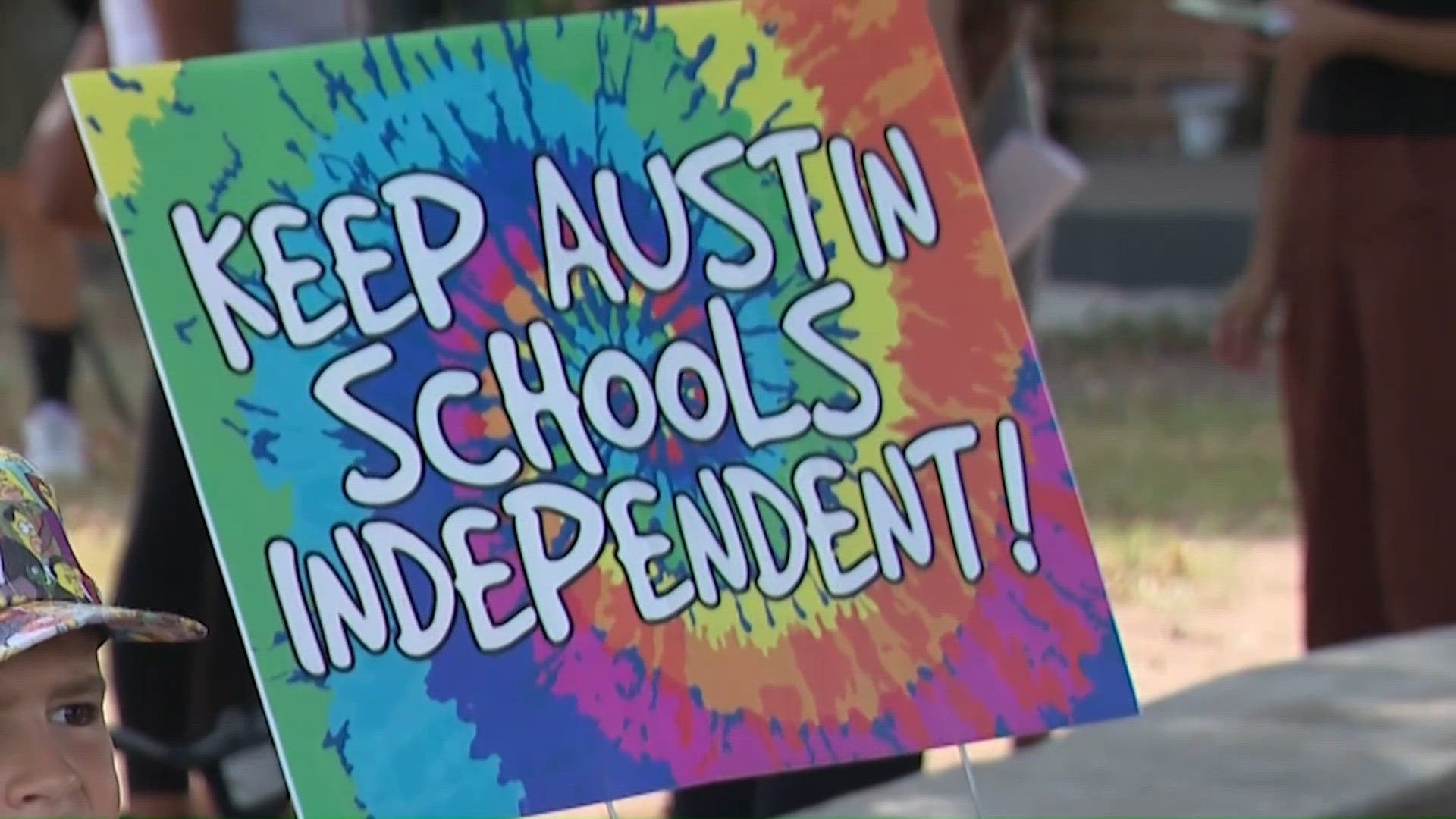
Austin ISD accountability ratings released by the Texas Education Agency this month brought a mix of encouraging district-wide progress and a serious problem at two specific campuses.
Burnet Middle School and Webb Middle School each received an “F” for the fifth year in a row. Under Texas rules, that streak places Austin Independent School District in a genuinely precarious position, opening the door to potential state intervention.
The Two Campuses in Trouble
Five consecutive failing ratings is the threshold that triggers the most serious state responses available under Texas law. The agency has previously used that authority elsewhere in the state, most notably in Houston, where a similar situation led to the replacement of the elected school board and the appointment of a state-selected superintendent.
Austin ISD is not there yet. But the ratings put the question on the table.
Dobie’s Turnaround Matters
There is a genuine bright spot in the same group of campuses.
Dobie Middle School had accumulated four straight “F” ratings heading into this cycle. This year it earned a “D.”
That single letter change carries real weight because of how the accountability system counts.
How the Streak Rules Work
The mechanics are worth understanding, since they determine whether a campus is heading toward intervention or stepping back from it:
- A “D” rating following an “F” pauses the cumulative count of failing years. It does not erase the record, but it stops the clock.
- An “A,” “B” or “C” rating following an “F” resets the count entirely to zero.
So Dobie’s “D” halted what would have become a fifth consecutive failure. Burnet and Webb had no such reprieve.
The District’s Response
Austin ISD says it concentrated effort specifically on the three lowest-performing campuses while working on improvements more broadly.
Superintendent Matias Segura addressed the question directly, saying that yes, the district is making systemic changes intended to ensure every student achieves academically, and that it will do what it can for those campuses.
Districts have until September 11 to file appeals of the ratings. Any word on what the Texas Education Agency intends to do about Burnet and Webb may not arrive until December, leaving several months of uncertainty.
The Wider Picture Is Improving
Set against the trouble at two schools, the district-level trend runs in the opposite direction.
Austin ISD’s overall rating climbed from a “C” in 2025 to a “B” this year.
The campus-level numbers show movement as well. In 2024, 43 schools held an “A” or “B” rating. That figure rose to 61 the following school year. For 2026-27, 57 campuses carry an “A” or “B” — a decline from the previous count, but one the district attributes to school consolidations rather than falling performance.
The more striking figure concerns struggling schools. Campuses rated “D” or “F” dropped from 48 in the 2024-25 school year to 25 for 2026-27, roughly a fifty percent reduction.
What the Ratings Actually Measure
The Texas A-F Accountability System evaluates schools across three domains:
- Student Achievement, reflecting performance on state assessments and, at high school level, indicators of college and career readiness
- School Progress, measuring growth over time and comparing results against similar campuses
- Closing the Gaps, examining outcomes for specific student groups to identify disparities
The system is designed to capture both absolute performance and improvement, which is why a campus serving a challenging population can still register progress even when raw scores lag.
Reading the Result Fairly
Ratings like these tend to generate two competing narratives, and both contain some truth.
The first says the numbers reflect real academic shortfalls that students are living with every day, and that persistent failure at a campus is not something to explain away.
The second points out that letter grades correlate heavily with student poverty, mobility rates and language learning status, and that a single letter compresses a great deal of complexity into a label that follows a school and shapes how families perceive it.
Neither view eliminates the other. Both Burnet and Webb serve students who need effective instruction now, regardless of how the scoring system is designed.
What Happens Next
Three dates structure the coming months. September 11 is the appeal deadline. Sometime after that, the agency will evaluate any challenges filed. And by roughly December, Austin ISD expects to learn what the state intends to do about its two five-year campuses.
For families at Burnet and Webb, that timeline means an academic year beginning without clarity about how their schools will be governed by its end.
Author
-
Lucienne Albrecht is Luxe Chronicle’s wealth and lifestyle editor, celebrated for her elegant perspective on finance, legacy, and global luxury culture. With a flair for blending sophistication with insight, she brings a distinctly feminine voice to the world of high society and wealth.