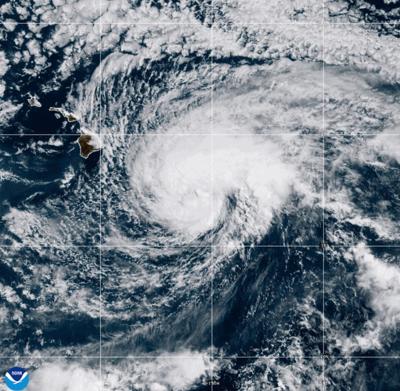
Hurricane Lala Hawaii coverage dominated the weekend as the strengthening storm swept past the island chain, drenching communities, downing power lines and driving one of the most extreme wind readings the state has seen in years.
The system was upgraded to hurricane status at 9 a.m. local time on Saturday once sustained winds reached 75 mph. From there it kept grinding westward, dragging bands of heavy rain and violent gusts across the archipelago.
A Near Miss That Still Packed a Punch
The storm’s core scraped along the southern edge of the Big Island rather than coming ashore. Forecasters at the National Hurricane Center noted that Lala never technically made landfall on the island’s southern tip, instead angling to the northwest and pulling away at roughly 9 mph by Saturday evening.
That distinction matters on paper more than it does on the ground. A storm does not need to cross the coastline to cause serious damage, and Hawaii’s residents felt the difference hardly at all as hurricane-force winds, torrential rain and punishing surf hammered the eastern slopes.
Forecasters expected Lala to remain south of the smaller islands, though they cautioned that shifting conditions could nudge it toward the northwestern Hawaiian Islands. The storm was also predicted to weaken as it moved on, but weakening is a slow process, and the immediate hours were the dangerous ones.
A Rare Kind of Threat
Direct hurricane landfalls in Hawaii are genuinely uncommon. Since record keeping began in 1949, only two are known to have struck the islands outright: Dot in 1959 and Iniki in 1992.
That statistic can be misleading, though. Storms that pass close offshore have repeatedly caused severe damage without ever technically arriving. Lala fit that pattern almost exactly.
Governor Josh Green urged residents on Friday evening to take the situation seriously, telling them plainly to stay indoors if conditions were unsafe.
Rain Was Always the Bigger Danger
Wind grabs headlines, but meteorologists flagged rainfall as the primary hazard from the start.
By Saturday morning, before Lala had even reached its closest approach, the outer bands had already dropped about 12 inches of rain on parts of the Big Island’s eastern slopes, according to National Weather Service meteorologist Ian Morrison. Lower elevations recorded far less, a gap that says a lot about how Hawaii’s landscape shapes storms.
The Big Island’s steep, rugged topography acts almost like a rain amplifier. When saturated air slams into rising terrain, it is forced upward, cools, and wrings itself out. The result is rainfall totals in mountainous zones that can dwarf what falls a few miles away at sea level, and a sharply elevated risk of flash flooding and landslides.
Forecast totals reflected that. Meteorologists projected 10 to 20 inches across the Big Island, with isolated pockets potentially reaching 25 inches. Maui and the remaining islands were expected to see less, though even 8 inches in places was enough for the weather service to warn of life-threatening flooding and mudslides, particularly on steep ground.
A flash flood warning covering the Big Island cautioned that water could overwhelm small creeks and streams, urban areas, highways, streets, underpasses and any location with weak drainage or low elevation.
The 140 MPH Reading on Mauna Kea
The single most striking measurement of the event came from the summit of Mauna Kea, which rises close to 13,800 feet and is the highest point in the state. Instruments there clocked a gust of 140 mph early Saturday afternoon.
Summit readings are not directly comparable to conditions in coastal towns, since extreme elevation exposes equipment to far stronger flow than anything at sea level. Even so, the figure illustrated the raw energy circulating through the system as it passed.
Terrain Made the Wind Unpredictable
One of the more unsettling warnings from forecasters had nothing to do with the storm’s center. Shortly before noon local time, the weather service noted that damaging winds would push westward toward Oahu and Kauai later in the evening and into Sunday.
More importantly, officials stressed that Hawaii’s mountainous terrain tends to channel and accelerate wind in unpredictable ways. Localized bursts of highly enhanced, damaging wind can develop well away from the storm’s core, meaning residents far from the eye still had reason to secure property and stay put.
What Each Island Faced
The Big Island sat under a hurricane warning, absorbing the worst of the rain and the strongest sustained conditions.
For the rest of the state, Morrison said Lala was expected to arrive at tropical storm strength rather than hurricane strength. That translated to sustained winds in the range of 35 to 45 mph with gusts approaching 55 mph, beginning Sunday and continuing into Monday.
Those numbers are far less dramatic than a 140 mph summit gust, but they are still capable of toppling trees, cutting power and making driving hazardous, especially on saturated ground where root systems lose their grip.
The Takeaway
Lala served as a reminder that Hawaii’s hurricane risk does not depend on a formal landfall. A storm tracking just offshore can still deliver two feet of rain, trigger mudslides on unstable slopes and disrupt daily life across multiple islands.
For residents, the practical lesson was the one the governor offered before the worst of it arrived: treat the forecast seriously, avoid unnecessary travel, and wait out the bands rather than testing them.
Author
-
Lucienne Albrecht is Luxe Chronicle’s wealth and lifestyle editor, celebrated for her elegant perspective on finance, legacy, and global luxury culture. With a flair for blending sophistication with insight, she brings a distinctly feminine voice to the world of high society and wealth.