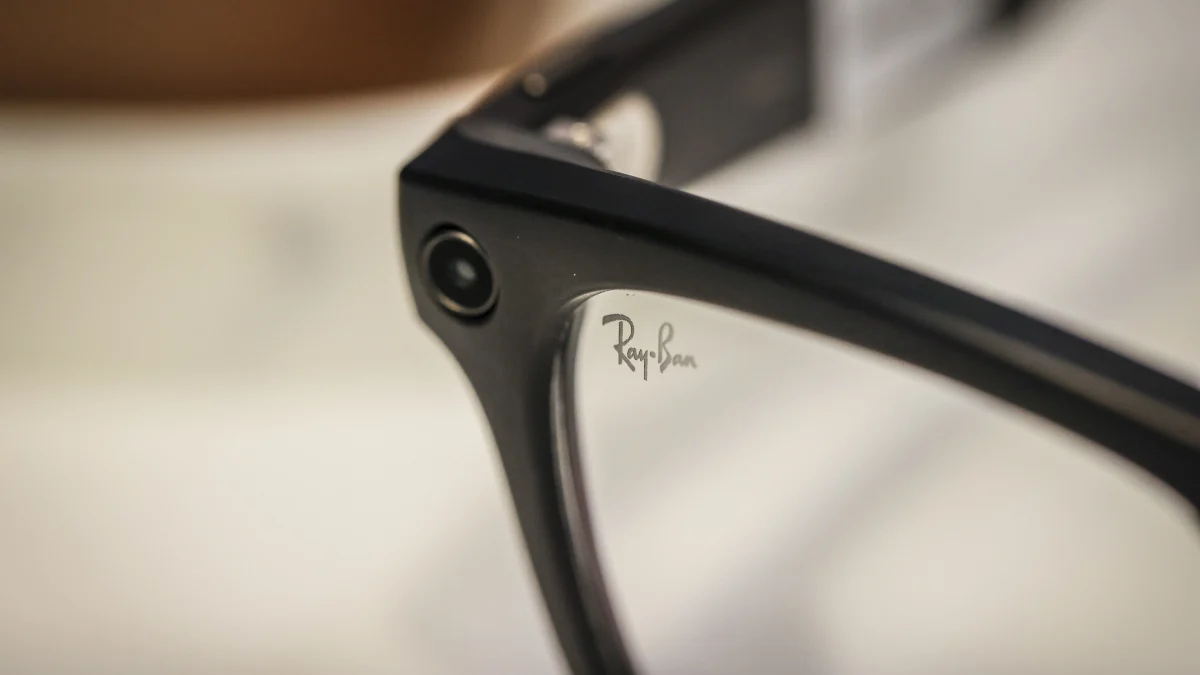
Meta glasses harassment videos were supposed to be disappearing from Instagram. A month after the company’s most senior product executive publicly committed to removing them, they remain readily available, often on verified accounts with large followings.
The gap between the announcement and the enforcement illustrates a recurring problem in platform moderation: stating a policy and applying it consistently are entirely different undertakings.
The Content in Question
A representative example involves a young man wearing Meta glasses approaching a woman on the sidewalk and asking whether she is a secret code. When she responds with visible confusion, he delivers the line: he is trying to crack her.
The clip was filmed by content creator Colin Allen for his Instagram account. It was one of dozens of comparable videos found across popular, verified accounts in the weeks following Instagram head Adam Mosseri’s statement that Meta would remove harassing pickup line videos recorded on its glasses.
After a list of more than 20 such videos was submitted to Meta, the company removed the secret code clip along with eight others. Allen, who describes himself as a lifestyle and comedy creator rather than a pickup artist, had used the identical line on multiple women in other videos, several of which remained online. He did not respond to attempts to reach him.
An Established Genre
Videos of men using Meta glasses to approach women in public have become a recognisable category on Instagram Reels and TikTok, with the most successful clips accumulating millions of views.
Related content includes pranks targeting cashiers and service workers. On Instagram, these videos are frequently tagged as having been shot on Meta glasses, which effectively links the product directly to the behaviour.
That association carries a cost. Some users have already begun referring to the devices as creep glasses, and when Kylie Jenner posted wearing hers, comments flooded in calling them pervert glasses.
What Meta Says It Has Done
Meta spokesperson Tracy Clayton said thousands of pieces of content have been removed and that several large accounts have been taken down.
The enforcement operates under existing Community Standards addressing bullying and harassment, which prohibit content that sexualises adults or subjects people to sexual harassment. Search terms associated with pickup culture, including rizz and cold approach, have been blocked.
Mosseri framed the position clearly in mid-July, saying the company does not want people surreptitiously filming others, harassing them, and posting the results, and that Meta is fighting it by every available means.
Where Enforcement Breaks Down
The follow-through has been inconsistent.
Two large pickup artist accounts were deactivated during the initial enforcement wave. Days later, one was back online. A Meta spokesperson attributed the restoration to error, and the account was banned again once flagged.
A similar sequence played out with creator Caren Babaknia, who has 174,000 followers and posts videos of himself driving up to women he identifies as escorts and filming conversations with them while wearing the glasses.
In one clip, he offers a woman 50 dollars to watch a video of memes and gambling advertisements on his laptop. She agrees, watches, and takes the money.
Speaking by phone, Babaknia argued the women in his videos knew they were being filmed because his content is widely enough seen that they recognised him. He was notably critical of pickup artist content, calling it cringe and saying the women featured in it are ordinary people who do not deserve to be recorded without consent.
After one of his videos was included in a list sent to Meta, his account was deactivated the next morning. He said he intended to appeal. A day later, the account and its videos were restored.
The Algorithm Amplifies What It Finds
There is a secondary effect worth noting. After seeking out and engaging with a handful of these videos, the Reels feed began serving them almost exclusively.
Search terms became unnecessary. The recommendation system, having identified an interest signal, filled the feed with the genre. That dynamic means enforcement against individual pieces of content competes against a distribution system actively promoting more of it.
The Criticism from Researchers
Carolina Are, a digital criminologist at the London School of Economics and Political Science, argues Meta’s response falls short of what the situation requires.
Her critique targets the framing rather than the removals. When backlash arrives, she said, Meta minimises its own role, attributing problems to user-generated behaviour or enforcement errors. What goes unacknowledged, in her assessment, is the systemic dimension: how the company’s policies and infrastructure enabled the behaviour in the first place.
Sarah T. Roberts, faculty director and cofounder of the UCLA Center for Critical Internet Inquiry, points to a related structural issue. Public-facing rules are often written vaguely enough that platforms retain discretion to shift their application whenever circumstances demand it.
Her sharper observation concerns institutional memory. These platforms have not just launched, she noted. They have two decades of accumulated understanding of how people behave at their worst when given the opportunity.
Not Just Instagram
The content exists across platforms.
TikTok said it maintains policies against harassing content. Presented with four videos from creators who also post on Instagram, it removed two, citing rules on bullying and sexual harassment.
YouTube representative Boot Bullwinkle said the platform has policies covering certain forms of harassment and dangerous prank content. YouTube has grappled with street prank and pickup artist material for years. Given four examples of channels posting Meta glasses content, it removed several videos and stripped one channel of monetisation.
Why Instagram Is Different
What distinguishes Instagram is that Mosseri personally delivered the commitment, which no comparable platform executive has done.
The reason is likely proximity. Meta makes the glasses. The videos are not merely content hosted on its platform, they are advertisements for its hardware, and unflattering ones.
The commercial stakes are substantial. Smart glasses sales surpassed 7 million units in 2025, more than triple the prior year, positioning Meta as the early leader in the category. The product has been one of the few bright spots for Reality Labs, a division that lost money and cut jobs this year.
Mark Zuckerberg has tied the glasses directly to his AI strategy, arguing in a 2025 earnings call that people without AI-capable eyewear will eventually face a meaningful cognitive disadvantage relative to colleagues and competitors.
The Moderation Bet
Meta is wagering that AI will solve the scale problem. Executives have long argued that reliance on third-party human contractors cannot keep pace.
In June, the company told the Financial Times that early testing showed its AI systems made fewer errors than human moderators while catching more violating content. Whether that holds over time remains unproven.
The Underlying Problem
Content moderation at scale is genuinely hard, and enforcement changes take time to implement across billions of posts. Some inconsistency is inevitable.
But the specific failure here, accounts deactivated and restored within a day, videos removed while identical clips from the same creator remain, suggests something beyond ordinary lag.
As the glasses become more common, the volume of this content will grow, and new categories of misuse will emerge that current policies do not anticipate. The question is whether Meta treats that as a moderation problem to manage or a design problem to solve.
Author
-
Lucienne Albrecht is Luxe Chronicle’s wealth and lifestyle editor, celebrated for her elegant perspective on finance, legacy, and global luxury culture. With a flair for blending sophistication with insight, she brings a distinctly feminine voice to the world of high society and wealth.