Ukraine’s Unusual New Target: Russia’s Online Shopping Empire Goes Up in Flames
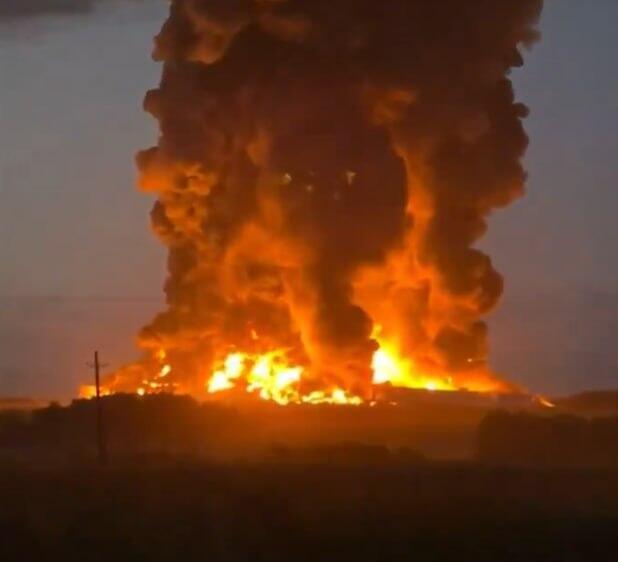
Ukraine attacks Wildberries warehouses have opened an unexpected chapter in a war that has largely revolved around energy infrastructure and military production, shifting the pressure toward something ordinary Russians encounter in daily life.
The campaign began over a weekend in July and has continued for roughly a month, and its geographic reach tells much of the story.
A Campaign Spanning the Country
The strikes have not been concentrated in any single region. They have hit facilities in Moscow and St. Petersburg, extended into cities across southern Russia, and reached eastward as far as the Ural Mountains.
That spread covers thousands of kilometres and crosses multiple air defence zones, which is precisely the point. Ukraine has demonstrated an ability to select targets across the breadth of Russian territory rather than being limited to areas near the front line.
Roughly 20 Wildberries facilities have been struck over the course of the campaign.
Why These Targets Are Different
Ukrainian deep strikes have typically focused on categories with obvious military or economic-strategic value: oil refineries, maritime hubs, arms manufacturing plants.
Warehouses operated by an online retailer fall outside that pattern entirely. Wildberries is Russia’s largest e-commerce company, and its distribution network exists to move consumer goods to households across the country.
The damage has been substantial. Billions of dollars worth of merchandise has burned in the attacks, representing an economic loss that lands on a company, its suppliers and ultimately its customers rather than on defence contractors.
Bringing the War Home
The strategic logic behind targeting a retailer appears to rest on reach rather than destruction alone.
Oil refinery fires occur in industrial zones that most citizens never see. Missile plants are secured facilities that exist largely as abstractions to the general public. A disrupted delivery network, by contrast, produces effects that arrive at the door.
Delays, cancelled orders and empty shelves function as a form of communication. They translate a distant conflict into an inconvenience that ordinary people experience directly, regardless of how the war is portrayed on state television.
For a population that has been substantially insulated from the daily realities of the invasion, that shift carries psychological weight beyond the monetary value of the goods destroyed.
A New Problem for the Kremlin
The campaign presents President Vladimir Putin with a challenge that differs in kind from previous Ukrainian operations, now nearly four and a half years into the full-scale invasion.
Defending military and energy infrastructure is difficult but conceptually straightforward. Those sites are finite in number, and resources can be allocated according to strategic priority.
Commercial logistics networks do not work that way. They consist of large, dispersed, lightly protected structures positioned near population centres precisely because that is where customers are. Extending meaningful air defence coverage across such a network would require diverting assets from targets the military considers far more important.
The alternative is accepting continued losses, which carries its own political cost as the disruption becomes visible to consumers.
What the Attacks Demonstrate
Beyond the immediate damage, the campaign functions as a demonstration of capability.
Reaching approximately 20 sites distributed from the western cities to the Urals establishes several things simultaneously:
Ukrainian strike systems possess the range to operate across most of European Russia and beyond
Target selection is not constrained to a narrow military category
Air defence coverage has gaps that can be exploited repeatedly over an extended period
Each of those conclusions matters independently of whatever damage a particular warehouse sustained.
The Broader Calculation
Attacks on civilian commercial infrastructure inevitably raise questions about proportionality and legitimacy, and the campaign will be assessed differently depending on where the assessment is made.
From Kyiv’s perspective, the reasoning appears to be that economic pressure and domestic discomfort inside Russia represent legitimate avenues for influencing a war that has resisted resolution on the battlefield.
Whether that pressure translates into any shift in Russian policy is a separate and far less certain question. Populations under external attack have historically tended to consolidate rather than fracture, and inconvenience at the scale of delayed parcels sits well below the threshold that has produced political change in other conflicts.
Where This Leads
For now, the campaign continues, and Wildberries faces the practical problem of rebuilding capacity while its remaining facilities stay exposed.
The larger significance may lie in what the operation signals about Ukraine’s evolving approach. Having spent years targeting refineries and defence plants, Kyiv has demonstrated a willingness to expand its definition of what constitutes a worthwhile target, and the reach to act on that definition almost anywhere in Russia.
Author
-
Lucienne Albrecht is Luxe Chronicle’s wealth and lifestyle editor, celebrated for her elegant perspective on finance, legacy, and global luxury culture. With a flair for blending sophistication with insight, she brings a distinctly feminine voice to the world of high society and wealth.