The MMR executive order signed this month asks American parents to weigh an option that is not actually on the table, while attaching a warning to the vaccine that is. That combination is the problem.
No parent enjoys handing a small child to a nurse holding a needle. The crying and the look of betrayal make it genuinely difficult. Doing it anyway is part of responsible parenting, and it becomes far harder when the messages reaching mum and dad about risks and benefits contradict each other.
What the Order Actually Says
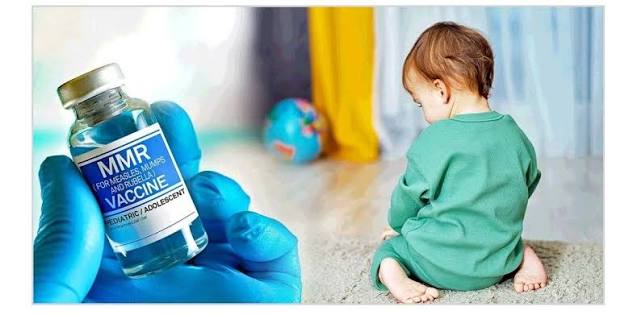
The president advised states to offer separate vaccinations against measles, mumps and rubella rather than the combined shot, while describing the triple jab as potentially lethal.
Under his proposal, families would choose between six clinic visits for separate injections or two visits for the combined vaccine.
For decades, the overwhelming majority of families have followed medical advice and accepted assurances that MMR is both safe and highly effective.
The Choice Is Not Available
Here is the practical difficulty that undermines the entire proposal.
Individual vaccines for measles, mumps and rubella are not on the market. They have not been in widespread use for decades. Neither the United States nor the United Kingdom licenses them.
Obtaining a licence would likely require pharmaceutical manufacturers such as GSK and Merck to conduct fresh clinical trials demonstrating safety and effectiveness, a process taking years.
Both companies have stated that no published scientific evidence supports separating the MMR vaccine into individual shots. Neither is hurrying to invest in producing them, regardless of presidential enthusiasm.
So the order presents a choice between an existing vaccine described as dangerous and an alternative that does not exist.
We Have Seen This Before
The current situation closely mirrors events in 1998.
Andrew Wakefield, a British gastroenterologist rather than an infectious diseases specialist, claimed a link between the MMR vaccine, the gut disorder Crohn’s disease and autism. His recommendation was that parents seek separate vaccines instead.
Those separate vaccines were not readily obtainable then either.
The result was predictable and documented. Many children received nothing at all. Measles vaccination rates fell sharply. Measles cases climbed.
Wakefield was struck off the medical register. He now lives in Texas, where vaccine sceptics treat him as a hero, and his views circulate among those suspicious of or hostile toward mainstream medicine and science.
The Broader Agenda
The MMR proposal is not isolated.
The president and Health Secretary Robert F Kennedy Jr aim to reduce the American childhood vaccine schedule from 18 shots to 11, pointing to Denmark, where young children receive fewer vaccinations.
That comparison omits the relevant context. Denmark provides universal high-quality healthcare alongside strong screening programmes that identify children at risk. The United States does not, and children slip through gaps in the system.
The same climate has produced a congressional committee pursuing Dr Anthony Fauci, who led the American response to Covid-19 and now faces accusations of concealing the pandemic’s origins.
Why the Combined Vaccine Exists
There are practical reasons the combined shot became standard, and they are worth stating plainly.
- Fewer visits mean fewer missed appointments and higher completion rates
- Children experience two injections rather than six
- Protection against all three diseases arrives at the same time, closing gaps
- Families with transport, work or childcare constraints face lower barriers
Spreading the same protection across six appointments increases the chance that some appointments never happen. That is not a theoretical concern; it is what occurred in Britain after 1998.
No other country recommends separate measles, mumps and rubella vaccinations.
The Message Parents Will Actually Receive
Policy debates and public understanding are different things.
Faced with a president describing the available vaccine as potentially lethal and recommending an alternative that cannot be obtained, many parents will draw the simplest conclusion available: that the combined jab is unsafe, and that skipping vaccination altogether is the cautious choice.
That is not what the order says. It is what confusion produces.
What Falling Coverage Costs
Measles is among the most contagious diseases known. Maintaining herd immunity requires vaccination coverage above roughly 95 percent, a higher threshold than most other illnesses.
When coverage slips even modestly, outbreaks follow. The children most at risk are infants too young for vaccination and those who cannot be vaccinated for medical reasons, who depend entirely on the immunity of everyone around them.
Complications from measles include pneumonia, encephalitis and death. These are not historical curiosities; they occur in outbreaks now.
The Contradiction at the Centre
The president has spoken about protecting beautiful, healthy, lovely, delicate little children.
The MMR executive order does the opposite. It undermines confidence in a vaccine with an extensive safety record while directing parents toward products no manufacturer intends to produce.
Wakefield’s episode already demonstrated what follows. Children went unvaccinated, and measles returned.
There is no reason to expect a different result this time.
Author