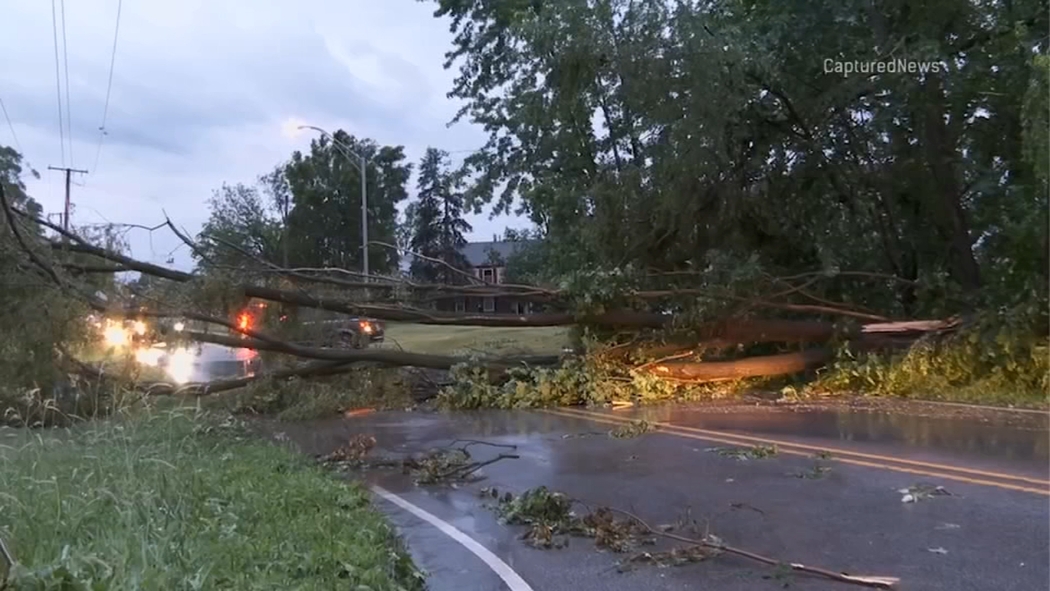
A NIPSCO class-action lawsuit has been filed on behalf of Indiana residents as thousands across the northwest corner of the state entered yet another day without electricity. The legal action accuses Northern Indiana Public Service Company of neglecting the trees and brush growing near its power lines, arguing that poor upkeep allowed falling limbs and toppled trunks to knock out service for entire neighborhoods.
Families Running Out of Patience and Money
For households still sitting in the dark more than a week after severe storms tore through the region, the situation has moved past inconvenience. Everyday routines have unraveled, costs have piled up, and frustration has hardened.
Lori Bugielski, who lives in Lake Station, described the experience as emotionally exhausting and admitted she was close to her breaking point. Her family lost power during last week’s storms and has been bouncing between hotel rooms ever since.
Keeping up with work and school has meant hunting for internet access wherever they can find it, including libraries and any location offering a usable hotspot. The financial toll has been steep. By her own estimate, lodging and meals for her children have already cost the family roughly $1,500.
Community Groups Step In
Local institutions have moved quickly to fill the gap. On Friday, Bugielski brought her family to the River Forest Community School Corporation in Hobart, one of several sites distributing hot meals and hygiene supplies to residents affected by the blackout.
Demand there has climbed sharply. Superintendent Kevin Trezak said the site served about 300 people on its first day Tuesday, then 550 the following day, with numbers expected to climb again. The steady increase suggests that the number of households running low on supplies is still growing, not shrinking.
Gary Neighborhood Faces a Second Crisis
In Gary’s Woods Park subdivision, the outage has triggered a problem few residents anticipated. The neighborhood recently received a new sewer system, but the equipment depends on electricity to operate. Without it, pipes have backed up and wastewater has spilled into yards.
City officials have brought in portable toilets and mobile shower units while crews work to restore service. Residents, however, have said those temporary measures fall well short of what the situation requires.
The Legal Claim Against the Utility
The newly filed complaint argues that the scale of the outages was avoidable. Attorneys representing the plaintiffs contend that NIPSCO failed to keep vegetation clear of its infrastructure and did not carry out sufficient inspections of poles and lines.
Otto J. Shragal of the Allen Law Group summed up the plaintiffs’ position bluntly, describing the outcome as something that could have been anticipated, was plainly visible in advance, and should have been stopped before it happened.
NIPSCO Pushes Back Firmly
The utility rejects the accusations outright. In a statement, the company said it disagrees strongly with how its vegetation practices have been portrayed in both the amended complaint and the public statements made by the law firm behind it, and that it intends to defend itself aggressively.
NIPSCO also pointed to oversight and spending as evidence of its commitment. The company noted that its electric operations, including the vegetation program, fall under the supervision of the Indiana Utility Regulatory Commission, and that spending in that area has more than doubled since 2016.
The utility acknowledged the hardship prolonged outages create, describing the recent weather as producing damage across its electric system on a scale it had not previously encountered. It said restoring service safely and quickly remains its top priority.
Relief on Billing
Company leadership also addressed a complaint that has surfaced repeatedly among customers: receiving bills while receiving no electricity.
NIPSCO President Melody Birmingham said the utility has halted disconnections for the coming week and indicated that assistance options would be made available for customers struggling to pay. She added that the company plans to keep working directly with affected households.
Why the Lawsuit May Be Harder to Win Than It Looks
Legal observers caution that widespread damage does not automatically translate into a successful case. ABC7 Chief Legal Analyst Gil Soffer noted that while the harm to consumers is undeniable, proving liability is a separate matter entirely.
Soffer explained that the case will likely hinge on granular, tree-by-tree analysis. Key questions include:
Where exactly were the trees that caused each outage located?
Did they sit within the corridor the utility is legally obligated to maintain?
Were they growing on private property beyond NIPSCO’s control?
Did each individual failure fall inside or outside the company’s responsibility?
Each of those points will need to be resolved separately, which could make the litigation lengthy and technically complex.
What Comes Next
For now, the practical concerns and the legal ones are running on parallel tracks. Crews continue working to bring circuits back online while relief sites in Hobart and elsewhere absorb rising demand from families who cannot cook, refrigerate food or reliably work from home.
The lawsuit, meanwhile, raises a broader question that extends well past this storm: how much preventive maintenance utilities owe their customers, and who absorbs the cost when severe weather exposes the gaps. That debate is unlikely to be settled quickly, and residents waiting for the lights to come back on will feel its effects long before any courtroom does.
Author