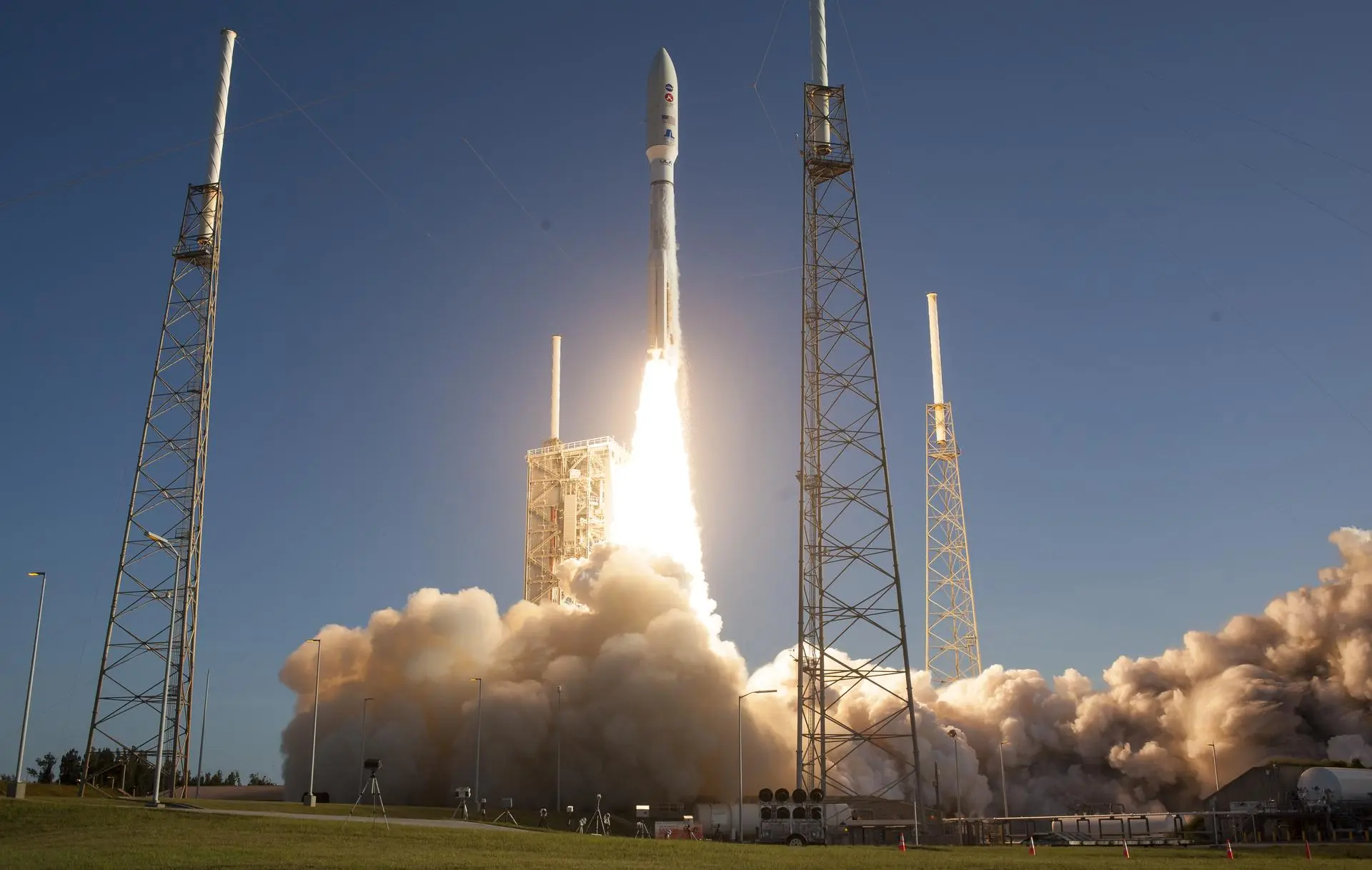
A new national space transportation policy signed Thursday sets an aggressive target for American launch infrastructure: capacity for more than 1,000 launches and reentries annually by 2030, along with the development of additional spaceports to handle that volume.
The presidential memorandum supersedes a policy issued in 2013, and while both documents emphasize commercial industry support and guaranteed access to space, the landscape they address has transformed almost beyond recognition.
How Much the Industry Has Grown
The numbers tell the story. Last year saw 176 orbital launch attempts from American soil, roughly ten times the total recorded in 2013.
SpaceX accounted for the overwhelming majority, conducting 165 orbital flights with Falcon 9 alongside five suborbital tests of the far larger Starship vehicle.
The policy language is direct about what comes next, stating that ranges must expand to accommodate more than a thousand launches and reentries each year by 2030, and framing that expansion as necessary to maintain American dominance in space.
What Is Driving the Demand
The projected growth reflects converging commercial and military needs across several categories:
Satellite communications networks
Overhead imaging and surveillance
Space-based targeting systems
Orbital data center concepts
Each represents a market that barely existed or was purely theoretical when the previous policy was written.
Pressure on Existing Facilities
The federal spaceport inventory is limited. Cape Canaveral Space Force Station and NASA’s Kennedy Space Center occupy adjacent property in Florida. Vandenberg Space Force Base sits in California, and NASA operates the Wallops Flight Facility in Virginia.
Of these, only the Florida and California sites currently support heavy-lift operations, which creates an obvious bottleneck as vehicle sizes and flight rates increase.
The memorandum instructs the Pentagon and NASA to prioritize and coordinate infrastructure investments aimed at expanding both capacity and operational flexibility at federal ranges.
Opening the Schedule Books
One of the more practical changes involves transparency.
The policy calls for more efficient scheduling criteria that balance commercial and government requirements, and directs the military and NASA to publish range schedules on a regular basis so resource allocation is visible and capacity can be optimized.
At present, most launch schedules become public only days or weeks ahead of a flight, making planning difficult for operators competing for range time.
Hunting for New Locations
The government will identify candidate sites for additional launch facilities within the United States, work to integrate launch and reentry operations into air traffic modernization efforts, and designate priority airspace for essential launch corridors.
The Interior Department received a specific assignment: identify federal lands suitable for an additional designated reentry site.
That directive follows a request for public comment issued last month by the Bureau of Ocean Energy Management, which asked about potentially using submerged lands and decommissioned offshore oil platforms for sea-based launch and reentry activity.
The Case for a Third Heavy-Lift Site
The policy appears to formalize conclusions from a Pentagon study that has not been publicly released but was described by Air Force Secretary Troy Meink during a May hearing before the House Armed Services Committee.
Meink summarized the finding plainly, saying the country likely needs another site capable of heavy and super heavy launches, driven both by resiliency concerns and by simple physical limits on available space at the Cape.
Space Force officials indicated at the same time that they anticipate roughly 700 launches per year combined from Cape Canaveral and Vandenberg by 2036. That projection excludes activity from private and state-owned facilities, including SpaceX’s Starbase in Texas and the company’s planned Starship site in Louisiana. SpaceX is separately constructing Starship pads on federal property at both Cape Canaveral and Kennedy.
Gen. Chance Saltzman, the Space Force’s senior officer, framed the issue in terms of both volume and vulnerability, noting the need to increase capacity while reducing dependence on just two launch ports.
Launching on Short Notice
Another component addresses responsiveness. The policy targets the ability to place high-priority payloads in orbit within 48 hours of a requirement emerging, potentially operating from expeditionary sites well removed from established ranges.
Several companies are already pursuing this capability. Rocket Lab and Astra have both worked on portable launch systems designed for rapid deployment.
Beyond Earth Orbit
The memorandum also backs NASA’s continuing efforts on commercial lunar transportation, covering both cargo and crew, and instructs the agency to support future commercial missions to Mars involving robotic and human explorers.
Already in Motion
Several elements described in the policy reflect work already underway rather than entirely new initiatives.
The government has been expanding commercial access at federal ranges, accelerating permitting and environmental review processes, and implementing user fees for companies launching from NASA or military facilities.
Taken together, the document reads less as a departure from current direction and more as an attempt to codify and accelerate a transformation the launch industry has already forced upon federal infrastructure.
Author