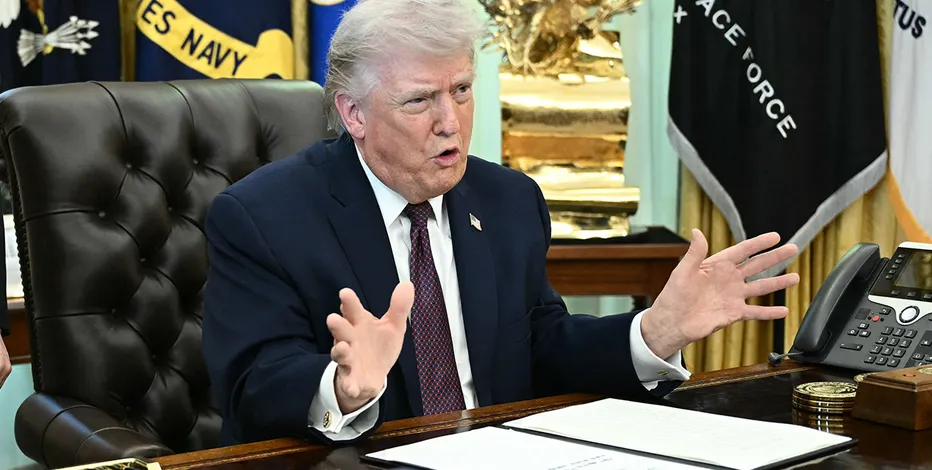
The Trump hush money conviction remains intact after a federal judge in New York rejected the president’s latest attempt to have it wiped away — a ruling delivered in unusually blunt terms.
Judge Alvin K. Hellerstein turned down Trump’s renewed bid to shift the case from state court into federal jurisdiction and dismiss it on presidential immunity grounds. It is not the first time the judge has heard and refused this argument.
Nothing New in the Filing
Hellerstein’s central criticism was that the request offered no fresh legal ground.
He described Trump’s stated reasons for renewing the motion as neither new nor legally sufficient. The judge singled out several specific claims: that trial testimony from former aides and a lawyer, along with Trump’s own posts on Twitter, fell within the protection of presidential immunity.
The judge disagreed directly and left little room for interpretation. Paying hush money to an adult film performer, he wrote, or working to conceal an embarrassment, is not the kind of conduct presidential immunity covers.
The reference was to the $130,000 payment made to adult film actor Stormy Daniels — the transaction at the heart of the case.
What Immunity Actually Protects
The ruling turns on a distinction that has surfaced repeatedly across Trump’s various legal fights: the difference between official acts and personal ones.
Presidential immunity, in the form courts have recognized it, shields conduct undertaken as part of the office. It does not function as a general shield covering anything a president has ever done, said, or arranged, regardless of context or timing.
Hellerstein’s language reflects that boundary. Concealing a personal embarrassment through payment sits, in his assessment, squarely outside the category of presidential function. No amount of framing converts a private arrangement into an exercise of executive authority.
The Removal Question
The second half of the request concerned venue rather than substance.
Trump sought to move the case out of New York state court and into federal court, a procedure known as removal. Federal removal is available in defined circumstances, generally involving federal officers acting under color of their office or cases presenting substantial federal questions.
The strategic appeal is obvious. A federal forum offers different procedural rules, a different judicial pool, and a different appellate path. But removal requires meeting a legal standard, not simply preferring the alternative, and Hellerstein found the standard unmet.
That the argument was raised again after previous rejection speaks to how few options remain in this particular avenue.
A Conviction That Has Proven Durable
The case has now survived multiple attempts at dismantling it through different mechanisms.
The conviction arose from a New York state prosecution centered on records connected to the Daniels payment during the 2016 campaign period. Trump has consistently maintained his innocence and characterized the prosecution as politically motivated.
Since the verdict, the effort has focused less on relitigating the facts than on finding a structural argument capable of removing the case from state control altogether — jurisdiction, immunity, forum. Each attempt has run into the same obstacle: the underlying conduct is difficult to characterize as presidential.
The Twitter Argument
One element of the motion deserves particular attention because it illustrates how expansively immunity was being interpreted.
Trump argued that his statements on Twitter implicated presidential immunity. The theory would presumably treat public communications by a president as official acts, shielded from use in a criminal proceeding.
Hellerstein rejected it alongside the rest. The practical implication of accepting such a claim would be substantial — a president’s public statements would become largely unusable as evidence in any case, regardless of subject matter. Courts have generally been unwilling to extend immunity that far.
What Comes Next
Trump retains the ability to appeal Hellerstein’s ruling to a higher federal court, and given the pattern of this litigation, that seems likely.
The path upward would run through the Second Circuit Court of Appeals, with the possibility of a subsequent petition to the Supreme Court. Whether either court would view the immunity question differently is uncertain, though Hellerstein’s reasoning tracks closely with the official-acts framework the Supreme Court has previously articulated.
In the meantime, the conviction stands. It has now been affirmed against removal, against dismissal, and against the immunity theory in more than one form.
Why the Ruling Matters
Beyond this specific case, the decision reinforces a boundary that has become increasingly consequential.
American law has never resolved with complete clarity how criminal accountability applies to someone holding or having held the presidency. Recent years have pushed that question forward considerably, and each ruling adds definition to a framework that was previously theoretical.
Hellerstein’s contribution is a simple one, stated plainly: some conduct is personal, and calling it presidential does not make it so. Whether higher courts endorse that framing will determine how much weight the ruling ultimately carries.
For now, an effort that began as an attempt to erase a conviction entirely has produced instead another judicial statement about the limits of the office.
Author