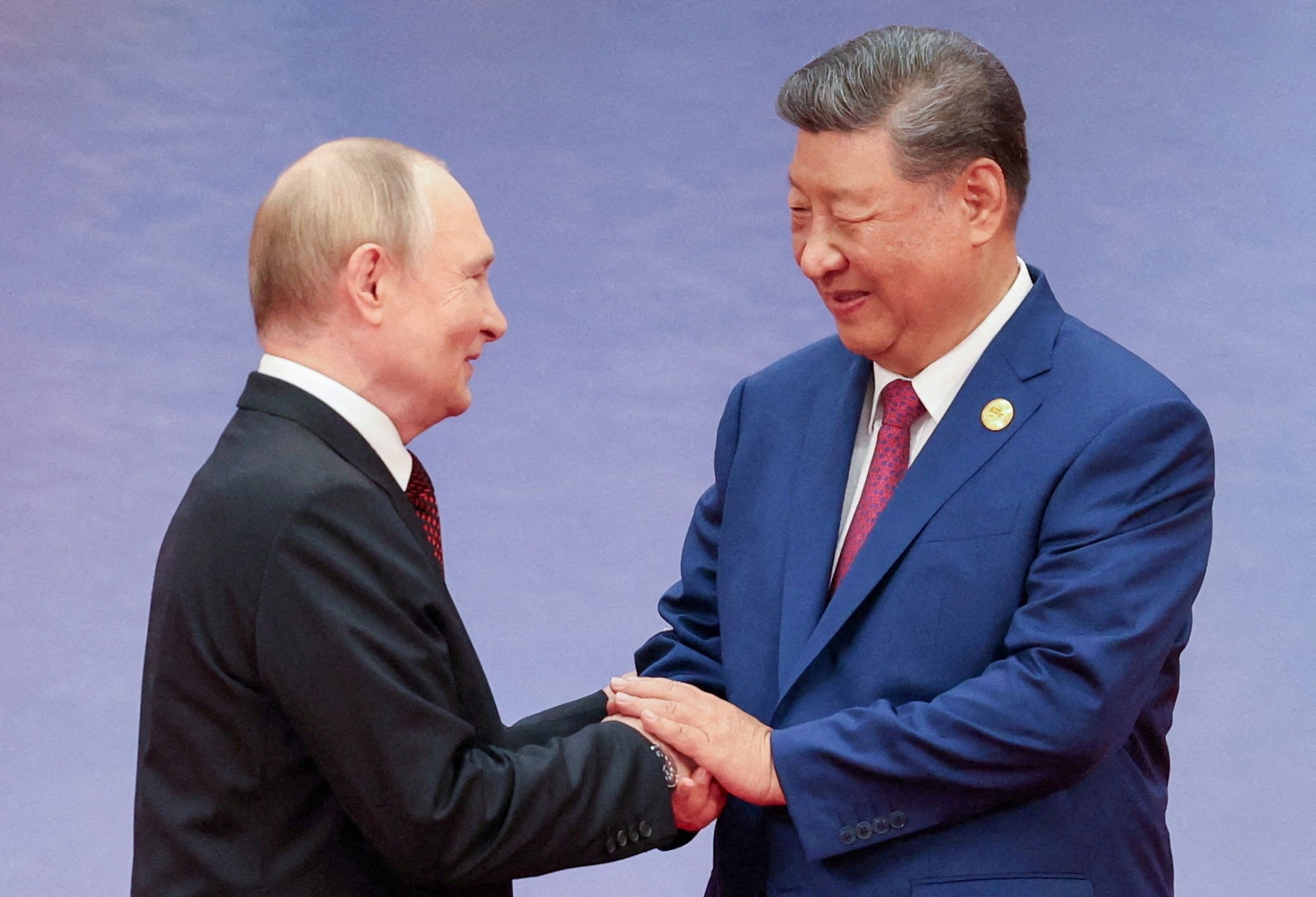
The Shanghai Cooperation Organisation summit opens Monday in Kyrgyzstan with Vladimir Putin, Xi Jinping and more than a dozen other heads of state converging on Bishkek for a gathering that marks the bloc’s twenty-fifth year.
The organisation’s origins were practical and regional. What it has become, particularly in how its two most powerful members use it, is something broader.
Not an Alliance, But Not Neutral Either
The SCO’s founding declaration states plainly that the group is not directed against other states. Its early agenda centred on economic cooperation and border security.
The tone at recent summits has been less restrained.
At last year’s meeting, Putin accused Western countries of provoking the war in Ukraine. Xi condemned what he described as acts of intimidation, a reference understood to concern tensions with the United States.
Neither statement changes the organisation’s formal character. Both illustrate why the SCO is increasingly read abroad as a platform for advancing a particular worldview rather than a purely technical body.
Who Is Attending
The guest list reflects the bloc’s expanding reach.
- Ten permanent members, including India and Pakistan, whose leaders are both expected
- Iranian President Masoud Pezeshkian, whose country joined in 2023
- Turkish President Recep Tayyip Erdogan, attending despite Turkiye not being a member
- Fifteen dialogue partner states, among them Turkiye, Saudi Arabia and Qatar
Pezeshkian is expected to hold bilateral talks with Putin during the summit. The two countries’ foreign ministers already met in July at the SCO’s Council of Foreign Ministers gathering.
Iran maintains close military ties with Russia and significant energy links with China, which makes its membership more than symbolic.
The presence of both India and Pakistan as full members remains one of the organisation’s more unusual features. Two states with a long history of hostility sitting in the same bloc is either evidence of the SCO’s convening power or of how little the membership actually binds anyone.
The Numbers the Bloc Cites
The SCO claims to represent roughly 40 percent of the world’s population and around 25 percent of global GDP.
Those figures appear in nearly every description of the organisation, and they are accurate. They also flatter it somewhat. The population share is driven overwhelmingly by China and India, two countries whose relationship inside the bloc is competitive rather than cooperative. The GDP share reflects the same concentration.
Aggregate weight is not the same as collective capability, and the SCO has no mutual defence commitment, no common currency and no enforcement mechanism.
The Economic Backdrop
The summit convenes days after pointed comments from Washington.
US Treasury Secretary Scott Bessent said he would urge G20 members to reconsider their trade terms with China, describing Beijing’s global trade surplus of 1.2 trillion dollars as unsustainable.
Speaking to Reuters ahead of a G20 finance leaders meeting in the United States, Bessent said the world cannot accommodate a China running a surplus of that size. He argued the Chinese economy is quite weak and that Beijing is attempting to export its way out of the problem when it needs to rebalance instead.
He also confirmed plans for a bilateral meeting with People’s Bank of China Governor Pan Gongsheng during the G20 conference, without offering details.
The timing places two competing gatherings in the same news cycle: a summit in Bishkek presenting an alternative centre of gravity, and a finance meeting in the United States coordinating pressure on one of its leading members.
What the SCO Actually Delivers
Beneath the geopolitical framing, the organisation’s practical output tends to be modest and incremental.
Its established areas of work include:
- Counterterrorism cooperation and intelligence sharing
- Joint military exercises
- Trade facilitation and transport connectivity across Eurasia
- Energy agreements
- Cultural and educational exchange
Decisions are reached by consensus, which limits how far any single member can push the agenda. That constraint is often mistaken for weakness, though it is also what allows states with conflicting interests to remain inside.
What to Watch
The plenary statements will be predictable. The margins usually matter more.
Worth following over the coming days:
- The Putin-Pezeshkian meeting, particularly given renewed US-Iran military exchanges
- Any Putin-Xi discussion of trade settlement outside the dollar
- Whether India moderates the strongest language in joint declarations
- Signals on further membership expansion
- Bilateral energy and infrastructure announcements
Twenty-Five Years In
The anniversary invites a straightforward question: what has the organisation become?
It has grown from a small regional grouping into a wide forum spanning much of Eurasia. It has attracted states seeking alternatives to Western-led institutions without requiring them to sever existing relationships.
What it has not become is a bloc in any meaningful sense. Its members disagree on too much, and its founding preference for consensus ensures those disagreements translate into caution rather than action.
That may be the source of its durability. Countries join because membership costs little and offers optionality. The summit in Bishkek will produce images of unity, and those images have value in themselves, particularly for leaders under pressure from Washington. Whether they reflect anything more durable is a question the SCO has not needed to answer in twenty-five years.
Author