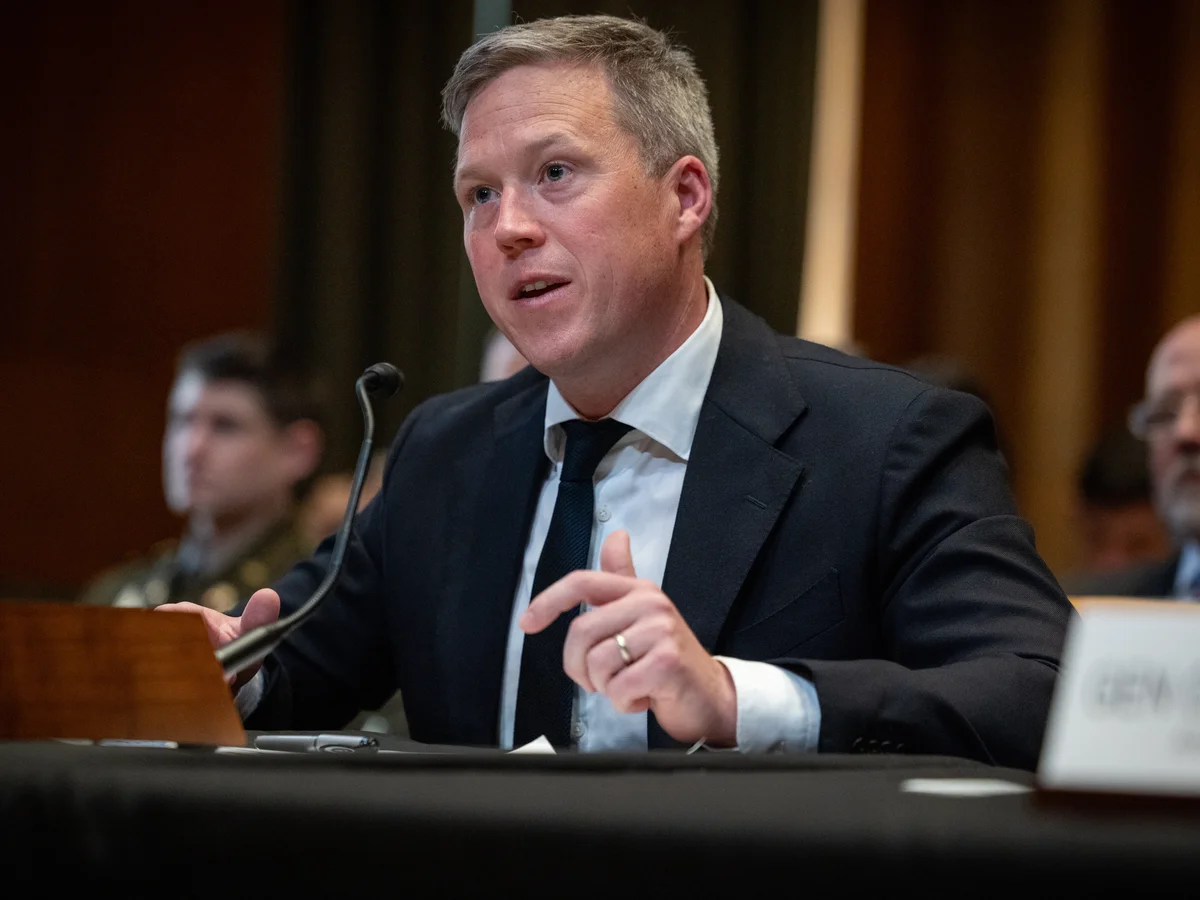
The Daniel Driscoll resignation has added another name to a long list of senior departures from the Pentagon, with the Army Secretary stepping down after months of friction with Defense Secretary Pete Hegseth, according to media reports.
The White House did not deny a Wall Street Journal report on the resignation when asked about it Monday.
The White House Response
Spokeswoman Anna Kelly issued a statement praising Driscoll’s tenure rather than addressing the resignation directly.
She said he had been highly effective in advancing the president’s agenda at the Department of the Army, citing his leadership during major military operations, a renewed focus on readiness and lethality, and his role assisting negotiations between Russia and Ukraine.
She added that the Army is more powerful than ever as a result of his work alongside the commander in chief and the secretary of war.
Reuters, citing a source familiar with the matter, reported it remains unclear whether the White House has accepted the resignation. The Army declined to comment.
The Disagreement Behind the Exit
According to the Reuters source, Driscoll had raised concerns with the Trump administration about Army transformation and readiness, and specifically about Hegseth blocking those efforts by removing the generals responsible for carrying them out.
That framing points to a substantive policy dispute rather than a purely personal one. Driscoll’s portfolio as Army Secretary covers training and equipping soldiers, work that depends heavily on continuity among senior officers.
A US official speaking anonymously told Reuters that Hegseth regarded Driscoll as a bureaucratic threat and had wanted him gone for some time, but found it difficult given Driscoll’s relationship with Vice President JD Vance, a former law school classmate.
The same official said the firing of Army Chief of Staff Randy George in April blindsided Driscoll and deepened his frustration.
A Pattern of Turnover
Driscoll’s departure fits into a broader reshuffling of Pentagon leadership under Hegseth.
- Army Chief of Staff Randy George was fired in April
- General Christopher Donahue, the Army’s commander in Europe and Africa, unexpectedly stepped down in June
- Navy Secretary John Phelan’s departure was announced abruptly in April, making him the first service head to leave during Trump’s second term
- Several other generals and admirals have been removed, including the head of the Navy
That volume of change at senior levels is unusual over a short period. Military institutions rely on continuity in leadership to sustain multi-year programmes, and rapid turnover tends to disrupt exactly the modernisation efforts Driscoll was reportedly pushing.
Who Driscoll Is
Confirmed to the post in February 2025, Driscoll came to the role with a mix of military and political experience.
He served in Iraq, ran unsuccessfully for Congress in 2020, and advised Trump’s 2024 re-election campaign before taking the Army position.
In office, he pressed the service to become more agile in how it acquires weapons, pushing toward cheaper systems and publicly criticising major defence contractors. That stance made him a notable figure in procurement debates, where the entrenched relationship between the Pentagon and large manufacturers has resisted change for decades.
An Unusual Diplomatic Assignment
Driscoll gained visibility beyond the Pentagon when Trump selected him to participate in talks with Moscow and Kyiv aimed at ending the war in Ukraine.
That is a rare assignment for an Army Secretary, whose responsibilities are ordinarily administrative and domestic rather than diplomatic. Its inclusion in the White House statement suggests it was viewed internally as a significant part of his record.
What the Departure Signals
Two readings are available, and both may be partly correct.
The first is straightforward institutional friction: a service secretary and a defence secretary disagreeing over personnel decisions and modernisation priorities, with the more senior official prevailing.
The second is about how the Pentagon is being run. If, as reported, generals responsible for transformation programmes were removed and the service secretary who objected has now resigned, the pattern points toward centralised control at the top and reduced tolerance for internal dissent.
Neither reading tells us what happens next. The Army now faces the prospect of replacing both its chief of staff and its civilian secretary within months of each other, while modernisation efforts already underway continue without their principal advocates.
Whether the White House accepts the resignation, and who is named to succeed him, will indicate which of those readings the administration itself accepts.
Author