





Paris Curfew Imposed at Place de la République and Les Halles After Night of Unrest
Paris curfew orders have come into force in two of the city’s busiest districts as authorities attempt to stop a wave of protests from spilling into another night of violence. Police in the French capital have barred anyone from entering or staying in the Place de la République, the square where rioting erupted, and in the Les Halles shopping quarter, during overnight hours.
The move marks a significant escalation in how the city is handling the demonstrations. Rather than relying solely on crowd control tactics on the ground, officials have now drawn a clear line around specific areas and declared them off limits after dark.
What the Paris Curfew Actually Covers
The restriction is targeted rather than citywide. It applies only to the two named zones, and it runs during the overnight period when disorder has tended to flare up.
Within those boundaries, the rules are simple:
No one is permitted to enter either area during curfew hours.
Anyone already present must leave before the restriction takes effect.
Police are authorised to disperse gatherings and remove people who refuse to comply.
Officials have described the measure as preventive. The intention is not to punish the wider public but to deny protesters and troublemakers the ground where confrontations have repeatedly taken place.
Why Place de la République Became the Flashpoint
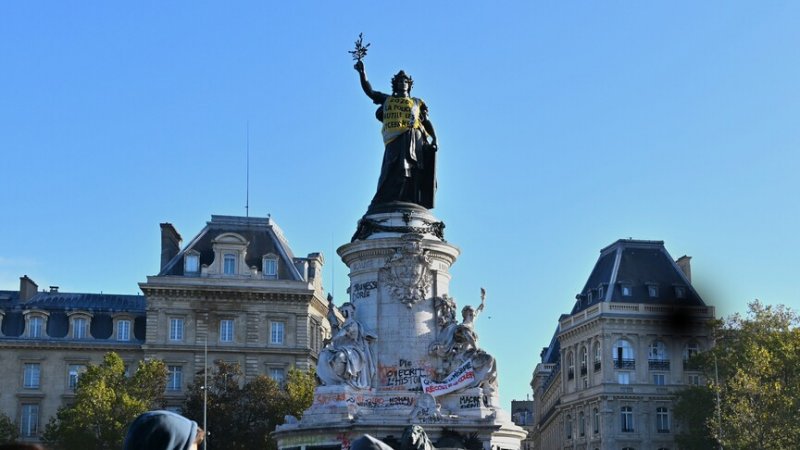
Place de la République is one of the most symbolically charged spaces in Paris. The large square, with its towering statue of Marianne at the centre, has long served as the natural gathering point for rallies, vigils and political demonstrations of every kind.
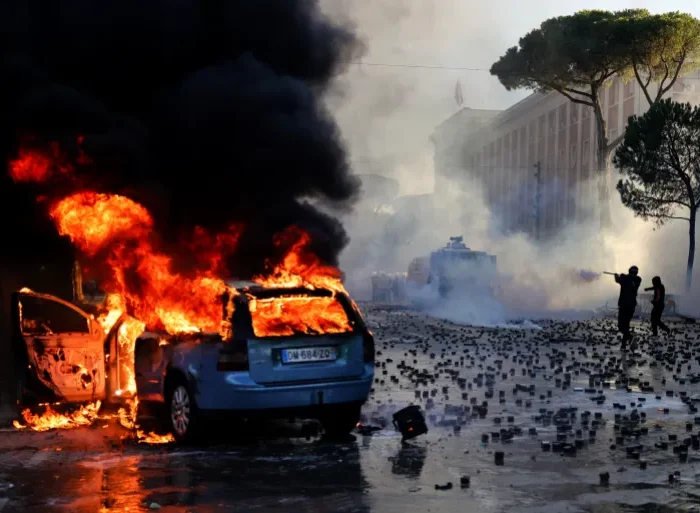
That same openness makes it difficult to police. Wide boulevards feed into the square from several directions, giving crowds multiple entry points and giving police limited ability to contain movement once tensions rise. Over recent evenings, peaceful gatherings there reportedly gave way to clashes, with reports of projectiles, fires and damage to nearby property.
By sealing the square overnight, authorities hope to break the cycle in which a daytime protest becomes an evening standoff.
Les Halles: A Commercial Hub Under Pressure
The second zone, Les Halles, tells a different story. This neighbourhood is dominated by one of Europe’s largest underground shopping complexes and a sprawling transport interchange that funnels enormous numbers of people through the heart of the city.
Its inclusion in the Paris curfew suggests concern that unrest could shift from political squares to commercial streets, where looting and vandalism tend to follow. Shop owners in the district have reportedly been bracing for trouble, with some shuttering early and others appealing for a stronger police presence.
Protecting Les Halles also protects a key artery of the metro and regional rail network, which thousands of commuters rely on even during periods of disruption.
How the Curfew Will Be Enforced
Enforcing a localised curfew in a dense city presents real challenges. Officers are expected to establish checkpoints along the main approaches to both areas and to carry out identity checks on anyone attempting to pass through.
Those who live or work inside the affected zones may need to show proof of their address or employment to move freely. Emergency services, residents returning home and people with legitimate reasons to be present are expected to be allowed through, though the process may involve delays.
Anyone found breaching the order without good reason risks being removed, fined or detained, depending on the circumstances.
The Wider Context of the France Protests
The curfew is only the latest response to a period of sustained unrest across France. Demonstrations have drawn large crowds in several cities, and while the majority of participants have remained peaceful, a minority have engaged in confrontations with police that have left streets littered with debris and burnt-out bins.
Authorities face a familiar balancing act. On one side sits the constitutional right to protest, which the French public guards fiercely. On the other sits the responsibility to keep neighbourhoods safe and prevent the kind of destruction that leaves local businesses counting the cost for months.
Curfews are a blunt tool, and their use in Paris is relatively rare. That officials have reached for one signals how seriously they view the risk of further escalation.
Reactions From Residents and Business Owners
Early reactions from people living and working in the affected zones have been mixed. Some residents have expressed relief, saying the nightly noise and tension had become exhausting and that any measure bringing calm was welcome.
Others have voiced frustration at being caught in the middle. Workers finishing late shifts, restaurant staff and delivery drivers all face the prospect of being questioned simply for trying to go about their routines.
Business owners near Les Halles have offered cautious support, hoping the restriction will deter opportunistic damage, while worrying that an empty, cordoned-off district will also drive away the customers they depend on.
Could the Measure Be Extended?
Officials have framed the Paris curfew as temporary and tied directly to the current level of disorder. If the situation calms, the restriction is expected to be lifted quickly. If violence spreads to other districts, however, authorities have not ruled out widening the perimeter or extending the hours.
Observers note that this kind of localised approach may become a model for future unrest. Rather than imposing sweeping bans that affect an entire city, targeting the specific places where trouble concentrates allows the rest of Paris to function normally.
What Happens Next
For now, attention turns to whether the curfew achieves its goal. A quiet night in both zones would strengthen the case for keeping the restriction narrow and short. Renewed disorder, whether inside the perimeter or displaced to surrounding streets, would raise harder questions about whether the strategy is working.
Either way, the sight of police checkpoints around one of the city’s most famous squares is a stark reminder of how quickly a protest movement can reshape daily life in the capital. Parisians, protesters and police alike will be watching closely to see which way the coming nights turn.
Author