Gaza Flotilla Activists Detention Sparks International Concern
The Gaza flotilla activists detention has placed two foreign citizens at the centre of a fast-developing international story, raising fresh questions about Israel’s interception of humanitarian missions and the treatment of those involved. Two activists — one from Spain and one from Brazil — appeared before an Israeli court on Sunday, with prosecutors requesting an extension of their detention. Their case has reignited global debate about the legality, ethics, and human cost of efforts to break the long-standing Israeli blockade of Gaza.
The Court Hearing in Ashkelon
Saif Abu Keshek, a Spanish national, and Thiago Ávila, from Brazil, were brought before a court in the Israeli city of Ashkelon. According to Miriam Azem, the international advocacy coordinator at the rights group Adalah, the Israeli state requested an extension of their detention by four additional days.
Adalah, which has been representing the two men, has been vocal about the treatment they say their clients have endured since being detained. The legal team has been pushing for transparency, access, and the protection of their rights under both Israeli and international law.
The Mission Behind the Flotilla
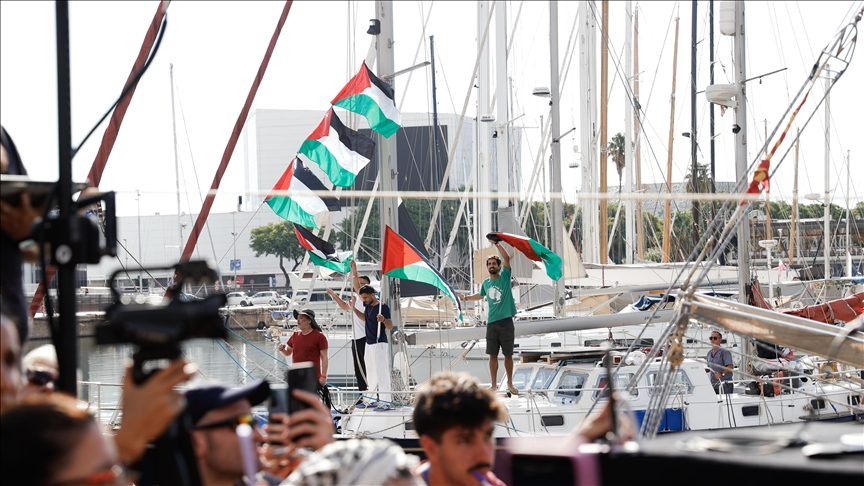
The two activists were among 175 people Israeli forces removed from a flotilla of more than 50 vessels that set sail from France, Spain, and Italy. The mission’s objective was clear: to break Israel’s blockade of Gaza and deliver desperately needed humanitarian supplies to the devastated Palestinian territory.
The flotilla, organised under the banner of the Global Sumud Flotilla, has long served as a symbol of civilian-led solidarity efforts. Volunteers from across the world joined the mission, hoping to draw international attention to the dire conditions facing civilians in Gaza.
Interception in International Waters
Early on Thursday, Israeli forces intercepted the vessels in international waters off the coast of Greece. According to flotilla organisers, the interception took place more than 620 miles — roughly 1,000 kilometers — from Gaza itself. They claim that equipment on board was destroyed during the operation, leaving the activists in what they described as a “calculated death trap at sea.”
The fact that the seizure occurred so far from Gaza in international waters has been one of the most controversial aspects of the operation. Critics argue this raises serious questions about the legality of the action under maritime law.
Allegations of Severe Treatment
The most disturbing accounts coming out of the case concern the alleged treatment of the two men in Israeli custody. According to Adalah, lawyers met with the activists at Shikma Prison in Ashkelon on Saturday, where the men provided detailed accounts of what they had experienced.
Thiago Ávila told his legal team that he had been subjected to extreme brutality during the seizure of the vessels. He described being dragged face-down across the floor and beaten so severely that he lost consciousness twice. Since arriving in Israel, he said, he has been kept in isolation and blindfolded for extended periods.
Saif Abu Keshek’s account was equally troubling. According to Adalah, he was hand-tied and blindfolded from the moment he was seized and was forced to lie face-down on the floor throughout the journey to Israel.
These descriptions, if accurate, point to serious concerns about the conditions under which detained activists are being held and questioned.
Israel’s Justification for the Detentions
Israel’s foreign ministry has defended the detentions, claiming that both men were affiliated with an organisation subject to US Treasury sanctions. The group in question, known as the Popular Conference for Palestinians Abroad (PCPA), has been accused by Washington of secretly operating on behalf of Hamas, a Palestinian militant group designated as a terrorist organisation by the United States, the European Union, and several other governments.
Israel’s foreign ministry described Abu Keshek as a leading member of the PCPA. Ávila, according to the same statement, is also linked to the organisation and is suspected of involvement in illegal activity. Israeli officials argue these connections justify the actions taken to intercept the flotilla and detain the two men.
Spain Pushes Back Against the Allegations
Spain has not stayed silent. The Spanish government condemned the detention of Saif Abu Keshek and rejected Israel’s accusations against him. The diplomatic friction is likely to grow as Spain seeks more information about its citizen’s status, treatment, and access to legal counsel.
Tensions between Israel and several European nations have been rising over Israel’s broader military campaign and its handling of civilian aid efforts. The detention of European activists adds another layer of complexity to those already strained relationships.
A Quick Release for Other Detainees
While Abu Keshek and Ávila remain in Israeli custody, the majority of the activists intercepted from the flotilla had a different outcome. Dozens of the participants were allowed to disembark on Friday at the Greek island of Crete, according to an AFP journalist. Their release suggests that Israel chose to focus its detention efforts narrowly on individuals it believes are linked to organisations it considers hostile.
A Recurring Pattern of Confrontation
The Global Sumud Flotilla’s effort is not the first time activists have attempted to deliver aid to Gaza by sea. The flotilla’s previous Mediterranean voyage in the summer and autumn of 2025 drew worldwide attention when Israeli forces intercepted boats off the coasts of Egypt and Gaza in early October of that year. Among those detained at the time was the well-known Swedish activist Greta Thunberg, who was later expelled by Israeli forces along with the rest of the crew.
That earlier incident already raised intense international debate, and the latest interception suggests this pattern is far from over.
Wider Implications for Diplomacy and Aid
The Gaza flotilla activists detention sits at the intersection of several major global issues — humanitarian access, maritime law, international human rights, and the politics of the wider Israel-Palestine conflict. Each new incident involving foreign citizens being detained by Israeli forces brings renewed pressure on governments around the world to respond, both diplomatically and politically.
The case also highlights a broader frustration shared by humanitarian organisations and civilian groups: that despite repeated international calls for greater aid access to Gaza, civilians continue to face severe shortages of food, water, medical supplies, and shelter.
What the Coming Days Will Bring
With the court extending the detention of Abu Keshek and Ávila by four more days, attention will now turn to several key questions. Will additional details emerge about their alleged links to the PCPA? Will more evidence be presented in court regarding their treatment in Israeli custody? Will Spain and Brazil continue to push back diplomatically?
Human rights groups, international observers, and the families of the detained men will be watching closely. Their case may also influence how future humanitarian missions to Gaza are planned, organised, and protected.
A Story Far From Over
The Gaza flotilla activists detention has touched a deep nerve in an already painful chapter of global affairs. Whether viewed through a humanitarian, legal, or political lens, the situation underscores the harsh realities surrounding the Gaza conflict and the lengths to which both activists and authorities are willing to go.
For Saif Abu Keshek, Thiago Ávila, and the wider community supporting them, the next several days will be critical. Their story is no longer just about two men in custody — it has become part of a much larger global conversation about justice, humanitarian rights, and what it means to take a stand when the world appears unable, or unwilling, to act.
Author