EU Approves Sanctions on Hamas Leaders and Israeli Settlers in Landmark Decision
EU sanctions Hamas and Israeli settlers has become the defining headline out of Brussels this week, as the European Union unanimously agreed on Monday to impose new restrictions on both Hamas leaders and key figures within the Israeli settler movement. The decision marks a significant shift in European policy, driven by mounting outrage over the devastation in Gaza and escalating violence in the occupied West Bank.
A Unified European Decision
The foreign ministers of the 27 EU member states gathered in Brussels and reached a rare unanimous political agreement. While the decision in principle has been made, the bloc still has to determine exactly which individuals and organizations will appear on the final sanctions list. A specialized committee will now finalize the draft.
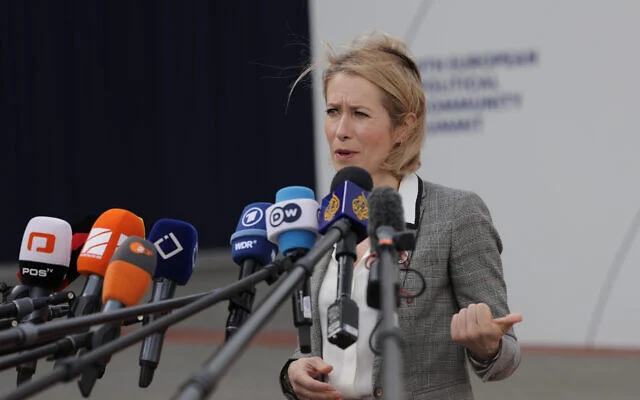
EU foreign policy chief Kaja Kallas welcomed the move, posting on social media that ministers had agreed extremism and violence must come with real consequences. She emphasized that it was “high time” for the bloc to shift from political deadlock to concrete action.
However, despite the strong symbolic step, EU ministers stopped short of approving tougher economic measures against the Israeli government, a move that some member states had been pushing for.
Who Will Be Targeted?
Although the EU has not officially released the names on the draft sanctions list, Israeli newspaper Haaretz reported that the targets include prominent settler organizations such as:
- Amana
- Nachala
- Hashomer Yosh
- Regavim
The list reportedly also includes well-known settler leaders Daniella Weiss, Meir Deutsch, and Avichai Suissa.
Weiss, often referred to as the “godmother” of the Israeli settler movement, said she had not received any formal notification. Speaking to The Associated Press, she described the sanctions as “ridiculous” and insisted they would not stop the settler movement. Meanwhile, Regavim took a defiant stance, calling the sanctions a “badge of honor” and pledging to continue its activities across what it described as the Jewish homeland.
Israel Responds With Defiance
The Israeli government, heavily influenced by far-right supporters of the settler movement, rejected the EU’s decision outright. Foreign Minister Gideon Saar dismissed the sanctions as “arbitrary and political,” vowing that Israel would continue defending what he called the right of Jews to settle in the heart of their homeland.
Two of the most influential figures shaping Israel’s settlement policies include:
- Finance Minister Bezalel Smotrich, who oversees settlement planning
- Cabinet Minister Itamar Ben-Gvir, who controls the national police force
Their continued presence in government suggests Israel is unlikely to soften its policies in response to European pressure.
A Balanced Move Against Hamas and Settlers
French Foreign Minister Jean-Noël Barrot confirmed that the ministers had decided to sanction both Hamas leaders and Israeli settler organizations operating in the West Bank. Barrot strongly condemned the violence on both sides, stating that intolerable acts must end immediately.
He described Hamas as a terrorist movement responsible for the deadliest antisemitic massacre since the Holocaust, in which 51 French nationals were killed during the October 7 attacks. He stressed that Hamas must be disarmed and excluded from any future role in governing Palestinian territories.
Escalating Violence in the West Bank
International concern over the situation in the West Bank has grown sharply. According to the United Nations Office for the Coordination of Humanitarian Affairs, at least 40 Palestinians have been killed since the start of the year. Of those, a record 11 were killed by settlers — already two more than in the entirety of 2025.
Rights groups, Palestinians, and international observers continue to warn about a worsening cycle of:
- Arson attacks
- Vandalism against homes and farmland
- Displacement of Palestinian farming communities
- Killings of young Palestinian men near settlements
Irish Foreign Minister Helen McEntee summed up the EU’s mood by stating the bloc cannot remain a bystander while violence and breaches of international law continue. Peace Now, an Israeli human rights group, said the EU’s move should serve as a wake-up call for the Israeli public to confront the consequences of decades of occupation and settlement expansion.
The Orbán Factor
Monday’s unanimous decision was made possible partly due to a major shift in European politics. Hungarian Prime Minister Viktor Orbán, a strong supporter of Israeli Prime Minister Benjamin Netanyahu, had repeatedly blocked previous EU efforts to sanction settlers during his 16 years in power.
His removal from office last month, following the victory of Péter Magyar in the April election, removed the political obstacle that had long stalled such measures. According to Martin Konečný, head of the European Middle East Project, the new EU agreement confirms that Orbán had been single-handedly blocking these sanctions for years.
A Possible Turning Point in EU-Israel Relations
The decision could mark a broader shift in how Europe approaches Israel. Several EU governments, led by Spain, Ireland, and the Netherlands, have been pushing for tougher measures in response to Israeli military actions in Gaza, the West Bank, Lebanon, Syria, and Iran.
Luxembourg’s Foreign Minister Xavier Bettel emphasized that Europe could no longer “turn a blind eye.” However, EU diplomats still failed to agree on more sweeping actions, including:
- Banning products from Israeli settlements in the West Bank
- Suspending the EU-Israel trade agreement
- Imposing direct economic penalties on the Israeli state
Critics argue that focusing only on individuals and a handful of organizations falls short of addressing the deeper systemic issues at play. Hugh Lovatt of the European Council on Foreign Relations described the move as narrow, saying that simply “adding a few more settlers” to the list “misses the big picture.”
Mixed Reactions From Rights Groups
Claudio Francavilla of Human Rights Watch called the sanctions a “step in the right direction” but stressed that the EU still has significant work ahead to fully comply with international legal obligations.
Italian Foreign Minister Antonio Tajani indicated that Rome needed more time to evaluate a French-Swedish proposal aimed at cutting West Bank settlers off from EU markets. Meanwhile, Dutch Foreign Minister Tom Berendsen suggested that individual countries could move forward with their own bans if EU-wide consensus stalls.
Spain’s Foreign Minister José Manuel Albares Bueno urged the bloc to move beyond endless discussions and finally bring the matter to a vote, signaling growing impatience among several member states.
What Comes Next
While the unanimous vote represents a major political shift, the road ahead remains uncertain. The EU must still finalize the list of sanctioned individuals and organizations, navigate political resistance, and decide whether to pursue broader economic actions against Israel.
For now, the message from Brussels is clear: extremism and violence — whether from Hamas leaders or Israeli settlers — will no longer go unchecked. Whether this marks the beginning of a deeper transformation in EU-Israel relations or remains a symbolic gesture will depend on what the bloc does in the months to come.
Author