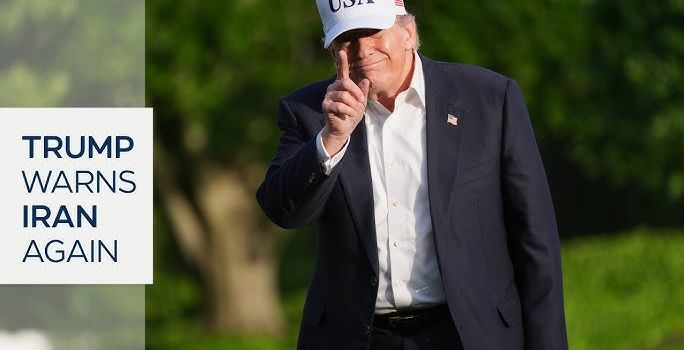
Trump Warns Iran the “Clock Is Ticking” as Harder U.S. Strikes Loom
In a sharp escalation of rhetoric, President Trump warns Iran that the “clock is ticking” — and that the consequences of inaction could be severe. Speaking by phone with Axios, Trump made clear that if Tehran fails to return with a stronger offer, the United States is prepared to hit Iran “much harder than before.”
The message marks a pivotal moment in a tense standoff: while U.S. officials insist the president genuinely wants a deal to end the war, Iran’s resistance has pushed the military option firmly back into consideration.
A Blunt Ultimatum
Trump did not soften his words. He framed the situation as a simple choice for the Iranian regime — negotiate seriously, or face a far heavier strike.
“We want to make a deal. They are not where we want them to be,” Trump told Axios. “They will have to get there, or they will be hit badly, and they don’t want that.”
He went further, warning that Iran risks losing everything if it continues to stall. “The clock is ticking. They better get moving fast or they are not gonna have anything left,” he stressed.
Notably, despite the urgency in his tone, Trump declined to set a specific deadline for the talks.
Why It Matters
The stakes here extend well beyond rhetoric. According to U.S. officials, Trump’s preference is still a negotiated end to the war. But Iran has rejected many of his core demands and has refused to make meaningful concessions on its nuclear program.
That refusal has changed the calculus in Washington. With diplomacy stalling, the prospect of renewed and intensified military action is no longer a distant threat — it is an active option on the table.
Inside the White House Strategy
Behind the public warnings, the administration has been quietly preparing.
A source with knowledge of the discussions said Trump met Saturday with members of his national security team at his Virginia golf club specifically to discuss Iran. The meeting drew a notable lineup of senior officials, including:
- Vice President JD Vance
- White House envoy Steve Witkoff
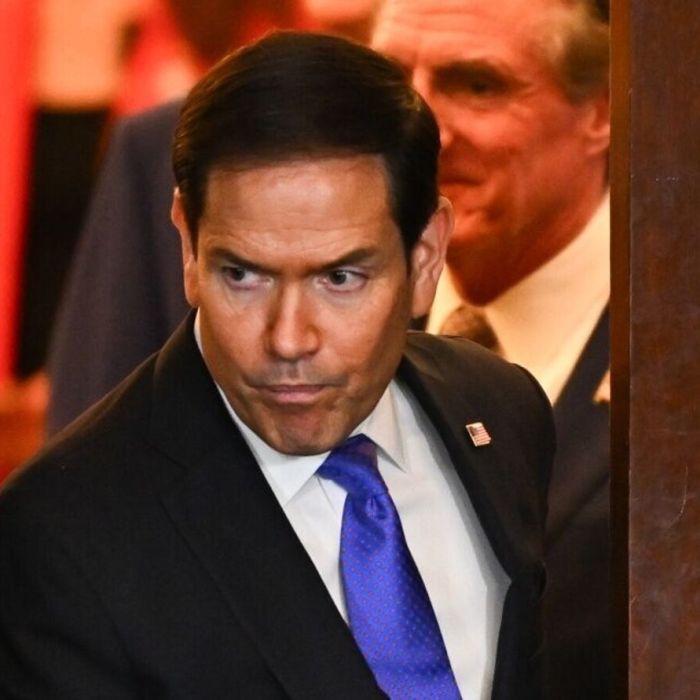
- Secretary of State Marco Rubio
- CIA Director John Ratcliffe
The planning is set to continue. Two U.S. officials said Trump is expected to convene his top national security team in the Situation Room on Tuesday to weigh military options directly.
Trump also spoke Sunday with Israeli Prime Minister Benjamin Netanyahu about the unfolding situation in Iran, underscoring the close coordination between Washington and Jerusalem.
Diplomacy Still Has a Pulse
Despite the hardening tone, diplomatic channels remain open — and active.
Trump told Axios he still believes Iran wants a deal. He said he is waiting for an updated Iranian proposal and hopes it will be a clear improvement on the offer delivered several days earlier.
Several mediators are working to keep negotiations alive:
- Pakistan, the official mediator between the U.S. and Iran, sent its interior minister to Tehran on Saturday and Sunday for talks with senior Iranian leaders.
- Qatari Prime Minister Mohammed bin Abdulrahman Al Thani, who is also mediating, spoke Sunday with both his Pakistani counterpart and the Iranian foreign minister.
The picture that emerges is one of intense parallel activity — military planning on one track, urgent diplomacy on the other.
Markets React to the Uncertainty
The geopolitical tension is already rippling through global markets. With peace talks deadlocked, oil prices climbed in early trading.
Brent crude, the global benchmark, rose more than 2% to $111 a barrel just before 9:30 p.m. ET on Sunday. Such a move reflects investor anxiety that any breakdown in talks — or any strike — could disrupt energy supplies across the region.
A Dangerous Backdrop: The Barakah Strike
The pressure is mounting against an already volatile backdrop. On Sunday, a drone struck the United Arab Emirates’ Barakah nuclear power plant, damaging an electrical generator located outside the facility’s inner perimeter, according to the UAE defense ministry.
The ministry said the drone was one of three that entered Emirati airspace from the western border direction, with the other two intercepted. Investigators are still working to determine who launched the attack.
Crucially, Emirati Foreign Minister Abdullah bin Zayed told IAEA Director General Rafael Grossi that there had been no impact on radiological safety levels.
While the UAE has not directly accused Iran, the implication was hard to miss. Diplomatic adviser Anwar Gargash described the strike as a dangerous escalation, warning that targeting the plant — whether by a principal actor or one of its proxies — violated international law and showed criminal disregard for civilian lives in the UAE and beyond.
The Bottom Line
As Trump warns Iran that the “clock is ticking,” the region finds itself balanced on a knife’s edge. Washington is openly preparing military options while still leaving room for a deal, and mediators are racing to bridge the gap before that window closes.
For now, much depends on Iran’s next move. A stronger proposal could revive the path to peace; continued resistance, by Trump’s own account, could trigger a far harder American response. With oil prices rising and a nuclear plant already struck, the cost of miscalculation has rarely looked higher.
Author