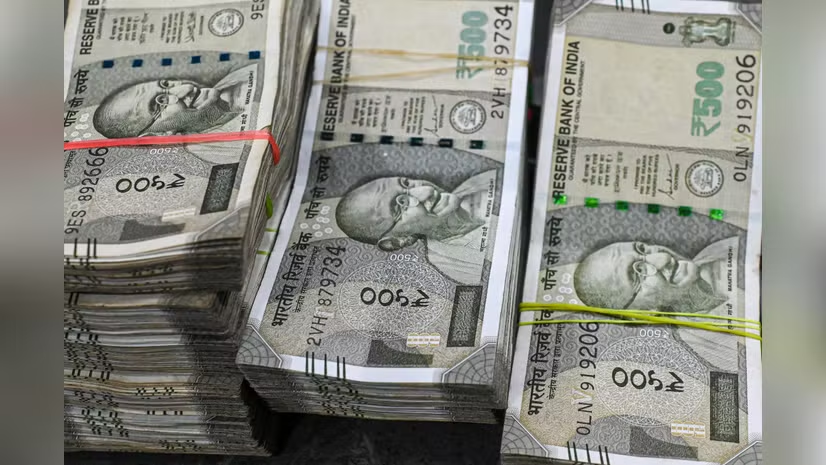
The Indian rupee has stormed back into the spotlight, becoming the strongest-performing currency in Asia on Thursday after the Reserve Bank of India (RBI) stepped in to support it. The intervention, combined with reports that policymakers are weighing more aggressive tools — including a potential interest rate hike — has sparked fresh optimism about the rupee’s near-term trajectory.
For weeks, the Indian currency had been under sustained pressure, weighed down by global volatility, foreign outflows, and rising energy costs. But Thursday’s sharp rebound suggests that the central bank is no longer willing to sit on the sidelines.
Rupee Climbs Sharply Against the Dollar
In early trading, the rupee gained as much as 0.6%, reaching 96.2450 per dollar — its strongest level in days. The move marked the steepest single-day gain in Asia’s currency markets, signaling that traders were quick to react to the RBI’s intervention.
The action came after weeks during which the rupee struggled to find footing amid:
- Persistent dollar strength
- Volatile crude oil prices
- Geopolitical tensions affecting global trade
- Heavy foreign portfolio outflows from Indian markets
The RBI’s move helped calm nerves and demonstrated that the central bank is prepared to defend the currency more directly if conditions deteriorate further.
Behind the Scenes: A Quiet but Decisive Intervention
According to traders familiar with the development — who requested anonymity due to the private nature of the matter — the RBI conducted dollar sales in the offshore market. Offshore intervention is a notable strategy because it allows the central bank to influence currency sentiment in markets where rupee non-deliverable forwards (NDFs) trade actively.
This kind of intervention tends to:
- Curb speculative pressure
- Signal central bank commitment to currency stability
- Provide immediate liquidity support
- Push back against bearish bets on the rupee
While the RBI doesn’t typically confirm its actions in real time, the move was widely interpreted by market participants as a deliberate policy signal.
Rate Hike on the Table?
Beyond the immediate intervention, reports indicate that policymakers are also considering broader monetary tools — including a possible interest rate hike — to defend the rupee. Raising rates can strengthen a currency by:
- Attracting foreign capital looking for higher yields
- Reducing the attractiveness of dollar-denominated assets
- Slowing inflationary pressures that weaken purchasing power
- Reinforcing investor confidence in macroeconomic stability
While no formal decision has been announced, the very discussion of a rate hike marks a meaningful shift in tone. Until now, the RBI had largely relied on indirect tools to manage currency volatility.
Why the Rupee Has Been Under Pressure
The rupee’s struggles in 2026 mirror trends seen across many emerging-market currencies. Some of the most significant headwinds include:
- A resurgent U.S. dollar driven by global risk aversion
- Elevated oil prices, which strain India’s import bill
- Capital outflows as investors shift toward dollar assets
- Trade-related uncertainty in Asian markets
India is the world’s third-largest oil importer, which means any spike in crude prices quickly translates into pressure on the rupee. With ongoing tensions in the Middle East — including concerns surrounding the Strait of Hormuz — the currency had been particularly vulnerable in recent sessions.
Market Reaction: Cautious Optimism
Currency markets responded positively, but analysts remain cautious. While the rupee’s surge was significant, sustainability will depend on:
- Continued RBI intervention if pressure resumes
- Stability in global oil prices
- Foreign investor sentiment toward Indian equities and bonds
- Broader U.S. dollar trends
Some analysts suggest that the rupee’s rebound could quickly fade if external conditions worsen again. Others believe that the central bank’s clearer signaling could mark the start of a more proactive defense.
What a Stronger Rupee Means for Indians
For everyday consumers and businesses, currency movements aren’t just abstract numbers. A stronger rupee has tangible effects across the economy. Some of the most direct impacts include:
- Lower import costs, particularly for oil and electronics
- Reduced pressure on inflation
- Cheaper foreign travel and overseas education
- Lower borrowing costs for companies with dollar-denominated debt
- Potential stabilization for the stock market
On the flip side, exporters — particularly in sectors like IT services, pharmaceuticals, and textiles — tend to prefer a slightly weaker rupee because it makes their goods more competitive abroad. A sustained appreciation could pressure their margins.
A Test for the RBI’s Credibility
The RBI’s intervention also serves a symbolic purpose. In recent months, the central bank had been criticized for being too passive in the face of mounting currency stress. Thursday’s clear, decisive action — and the open consideration of rate hikes — signals that the institution is reasserting control over the narrative.
Markets often respond not just to actions, but to perceived confidence. A central bank willing to use multiple tools simultaneously sends a strong message: it is willing to defend macroeconomic stability even at the cost of short-term growth trade-offs.
The Outlook for the Rupee
Looking ahead, the rupee’s path will likely depend on several intersecting factors:
- The RBI’s willingness to continue intervening when needed
- The trajectory of global oil prices
- Federal Reserve policy decisions in the U.S.
- The pace of capital outflows or inflows into India
- Any geopolitical shocks that affect risk sentiment globally
Currency analysts say the rupee may continue to trade in a volatile range over the coming weeks, but Thursday’s move suggests that the floor may be more secure than markets had feared.
The Bigger Picture
India’s currency story isn’t just about exchange rates — it’s about confidence. The rupee’s strength reflects investor trust in India’s economic management, its ability to weather global shocks, and the credibility of its central bank. A stable rupee supports stable inflation, encourages foreign investment, and reinforces India’s position as one of the most resilient emerging-market economies.
For now, the rupee has earned itself a much-needed breather. Whether this is the start of a sustained recovery or simply a temporary reprieve will depend on how aggressively the RBI continues to act — and how the global economic environment evolves in the days ahead.
But one thing is unmistakable: India’s central bank has made its message clear. It’s no longer just watching the rupee. It’s defending it.
Author