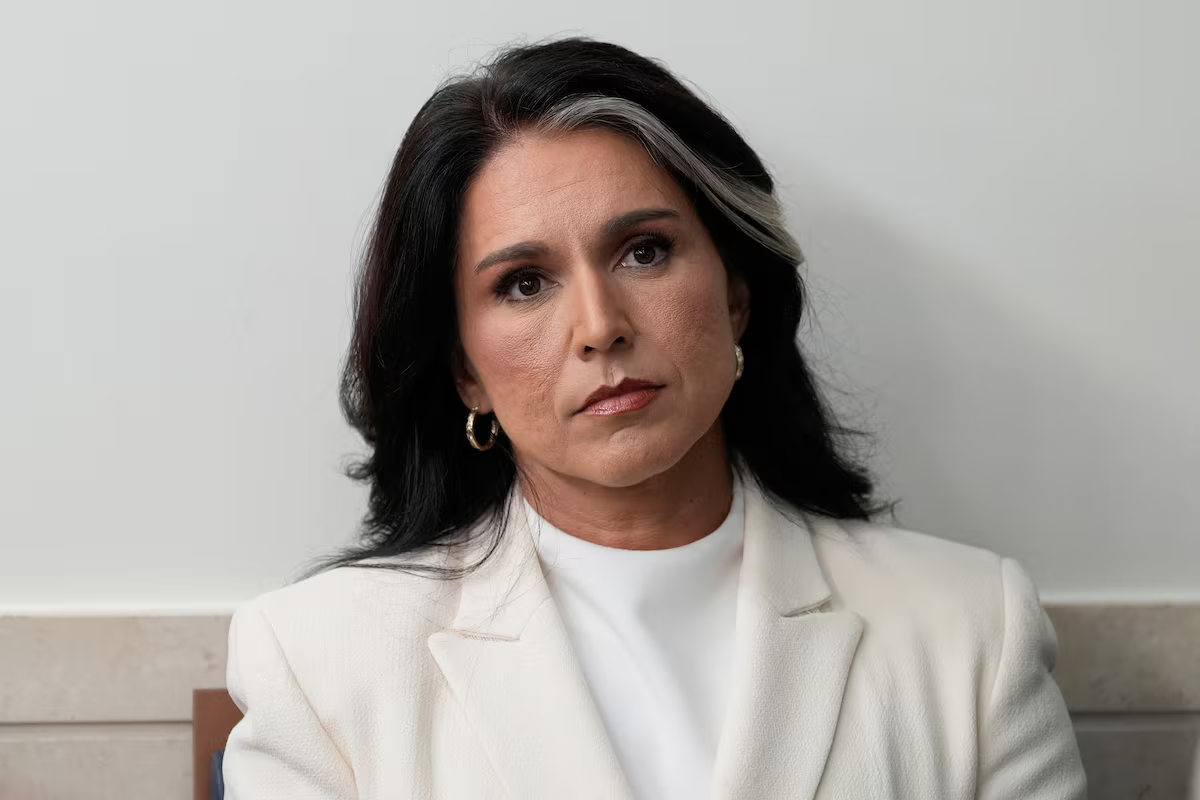
Tulsi Gabbard Resignation Shakes Trump Administration Amid Iran Fallout
The Tulsi Gabbard resignation became official on Friday when she stepped down as President Donald Trump’s director of national intelligence, citing the urgent need to support her husband during his battle with a rare form of cancer. Her departure adds another high-profile name to the growing list of officials leaving Trump’s second-term Cabinet.
A Personal Reason Behind the Decision
In a heartfelt resignation letter posted on X, Gabbard explained that her husband, Abraham, had been diagnosed with an extremely rare type of bone cancer. She wrote that she felt compelled to step away from her demanding role to be by his side, with her resignation taking effect on June 30, 2026.
While her personal circumstances were front and center in the announcement, political observers had already been speculating about her possible exit. Reports of friction between Gabbard and the White House had been swirling for months, particularly after Trump ordered military strikes against Iran earlier this year.
Tensions Over the Iran Strike
Gabbard, a former Democratic congresswoman from Hawaii and a military veteran, had built much of her political identity around opposing American involvement in foreign wars. That position put her in a delicate spot when the United States joined Israel in launching attacks against Iran on February 28.
During a congressional hearing in March, she carefully avoided endorsing or condemning Trump’s decision. Her cautious responses stood out, especially when lawmakers asked whether the administration had anticipated the consequences of the strikes, including Iran’s move to close the Strait of Hormuz.
She also delivered written remarks to the Senate Intelligence Committee stating that Iran had made no attempt to rebuild its nuclear program after last year’s U.S. attacks, which she described as having “obliterated” it. That assessment directly contradicted Trump’s claims that the war was necessary to prevent an imminent Iranian threat.
When pressed by lawmakers about her own view of the danger posed by Iran, Gabbard repeatedly maintained that the choice to strike was Trump’s, not hers. She insisted that determining imminent threats was not the role of the intelligence community.
An Unconventional Pick From the Start
Gabbard’s appointment to lead the Office of the Director of National Intelligence raised eyebrows from the beginning. Although she had a strong military background, she lacked direct intelligence experience. The agency she was chosen to lead oversees all 18 U.S. intelligence organizations and was created after the September 11 attacks to improve coordination across them.
Her political journey leading up to the role was anything but ordinary. She ran for president in 2020 on a progressive platform, focusing heavily on her opposition to overseas wars. She later dropped out and endorsed Joe Biden. By 2022, she had left the Democratic Party, accusing it of being dominated by what she called “warmongers” and “woke” ideologues. After becoming an independent, she campaigned for several Republican candidates and joined Fox News as a contributor before ultimately endorsing Trump.
Early Friction With the White House
Almost immediately after taking office, Gabbard found herself at odds with Trump. She told lawmakers there was no intelligence indicating Iran was actively pursuing nuclear weapons. After the June strikes, Trump publicly dismissed her assessment, saying he didn’t care what she had concluded.
She briefly appeared to regain favor with the president when she joined his renewed efforts to challenge the results of the 2020 election. She even participated in an FBI search at election offices in Fulton County, Georgia, despite the fact that her agency was meant to focus on foreign threats, not domestic elections.
However, her recent testimony reaffirming that Iran’s nuclear program had been destroyed and not rebuilt reopened old tensions with the White House.
A Pattern of Cabinet Departures
Gabbard is the fourth Cabinet member to leave Trump’s second-term administration. Homeland Security Secretary Kristi Noem was forced out in late March amid criticism of her handling of immigration enforcement and disaster response. Attorney General Pam Bondi resigned soon after, following backlash over how the Justice Department managed files connected to Jeffrey Epstein. Labor Secretary Lori Chavez-DeRemer also stepped down in April after facing several misconduct investigations.
Additionally, Joe Kent, who led the National Counterterrorism Center, resigned back in March, openly stating that he could not in good conscience support the war with Iran.
A Year of Major Changes Under Gabbard
During her short but eventful tenure, Gabbard introduced significant changes to the intelligence community. She pledged to eliminate what she described as political bias inside the system, though critics argued she used her position to promote Trump’s own political narratives, including doubts about the 2020 election outcome.
She also worked to discredit earlier investigations into Trump’s connections with Russia. Under her leadership, the intelligence workforce was significantly reduced, and a new task force was created to consider sweeping reforms.
Earlier this year, a whistleblower filed a complaint accusing her of withholding intelligence for political purposes, prompting Democrats to call for her resignation long before her own announcement.
A Trailblazing Background
At 44 years old, Gabbard has had a remarkable journey. Born in American Samoa and raised in Hawaii, she also spent a year of her childhood in the Philippines. She entered politics at just 21, becoming one of the youngest members of Hawaii’s House of Representatives. Her career was briefly interrupted when her National Guard unit deployed to Iraq.
She made history as the first Hindu member of the U.S. House and the first American Samoan ever elected to Congress, famously taking her oath of office on the Bhagavad Gita. Her support for Bernie Sanders in 2016 also cemented her place as a notable figure in progressive politics.
What Comes Next
The Tulsi Gabbard resignation closes a turbulent chapter in Trump’s intelligence leadership. With her departure set for June 30, 2026, attention now shifts to who Trump will choose as her replacement and how this latest exit will influence the administration’s already strained relationship with the intelligence community.
Author