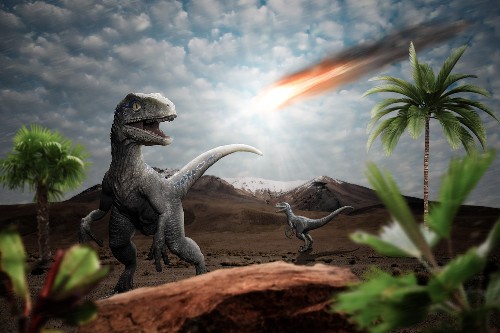
How Animals Survived the Asteroid That Killed the Dinosaurs: Secrets of Survival 66 Million Years Ago
How animals survived the asteroid that wiped out the dinosaurs is one of the most fascinating mysteries in the history of life on Earth. Around 66 million years ago, a massive space rock struck our planet with such force that it changed the trajectory of evolution forever. Yet despite the unimaginable destruction, certain animals managed to endure the catastrophe and pass their lineage on to the modern world. Scientists today are still uncovering the surprising survival strategies that allowed early mammals, birds, turtles, and even some reptiles to overcome one of the most devastating events in planetary history.
This is the story of how life clung to existence when nearly everything else perished.
A Day That Changed the Planet Forever
The asteroid that ended the age of dinosaurs slammed into Earth with the energy of billions of nuclear bombs. The collision unleashed a chain reaction of catastrophic events that reshaped the entire planet in just a few horrifying hours.
Some of the most destructive consequences of the impact included:
- Superheated debris flung into the atmosphere
- A mushroom cloud heating the upper atmosphere to extreme temperatures
- Tsunamis reaching nearly a mile high in the Gulf of Mexico
- Global wildfires burning across continents
- Shock waves tearing apart landscapes thousands of miles away
- Massive amounts of sulfur and dust blocking sunlight for years
- Acid rain falling across both land and sea
These cascading disasters caused around 75% of life on Earth to vanish, including the non-avian dinosaurs. Massive predators like Tyrannosaurus rex, giant herbivores like Triceratops, and terrifying ocean creatures like Mosasaurus stood little chance of surviving. Yet somehow, life found a way to persist.
Why Size Mattered in Survival
According to paleontologist Kenneth Lacovara, size was one of the most important factors determining who lived and who died. Earth’s massive apex predators and large herbivores were doomed within minutes of the impact, while small animals had a far better chance of survival.
The reasons small creatures had an advantage are clear when you consider what survival required:
- They could squeeze into burrows or shelters during the chaos
- They needed far less food to survive after the disaster
- They had higher reproductive rates, helping them recover quickly
- They were less affected by the initial blast and shockwaves
- They had more flexibility in adapting to changing environments
Most surviving land animals were no larger than a modern house cat. In the oceans, the largest survivors were about the size of an average shark today. This shift caused a dramatic reduction in the average body size of animals on the planet for thousands of years after the extinction.
Birds: The Surprising Survivors of the Sky
One of the most remarkable survival stories belongs to birds. The avian group that led to modern birds managed to make it through the disaster because they had several adaptive traits that allowed them to outlast competitors. Their small size, powerful chest muscles, and strong wings gave them the ability to escape dangerous environments and search far and wide for food.
Their chicks also grew rapidly, meaning parents weren’t drained by long, demanding child-rearing periods. This rapid development was a major advantage in a world full of scarcity.
The birds we see flying today all descend from these small but mighty survivors that took to the skies to escape an apocalyptic world.
The Role of Diet in Survival
Diet was another crucial factor in determining who survived. With the sun blocked for up to a decade after the impact, plant life around the world began collapsing. This was bad news for herbivores and the predators that depended on them.
Many small lizards and turtles couldn’t survive because their diets relied heavily on photosynthetic plants. Even with the size advantage, plant-dependent species struggled to find enough food in the months and years following the extinction.
Some lucky creatures, however, had diets that allowed them to thrive in a changing environment. These survivors included:
- Seed eaters, particularly birds
- Insectivores like the tree-dwelling primate Purgatorius janisae
- Animals that ate dead organic material (detritivores)
- Generalists with wide-ranging diets including fruits, seeds, and insects
Generalist species had a major advantage, since they could shift between food sources as the environment changed. Modern equivalents include crows and raccoons, both of which thrive across diverse landscapes today because of their flexible eating habits.
Marine Life Faced Its Own Challenges
While the asteroid’s direct impact was most devastating on land, ocean ecosystems were also thrown into chaos. The death of photosynthetic plankton caused the entire marine food chain to begin collapsing.
Animals that survived in the seas tended to be those that could feed on organic debris and slow-moving prey. Some of the most resilient ocean creatures included:
- Sea sponges
- Mollusks, including ancestors of today’s chambered nautilus
- Sharks of the Carcharias genus
- Various deep-sea creatures protected from surface destruction
Aquatic turtles that survived also showed unique adaptations. A 2026 study found that turtles with durophagous feeding habits — meaning they ate hard-shelled animals like mollusks — had higher survival rates. These shelled prey could feed on debris, allowing the turtles a stable food source even when much of the ocean was struggling.
The Mystery of Mammal Dominance
Mammals are often portrayed as the great winners of the post-asteroid world, eventually rising to dominate the planet. But why mammals took over instead of other small survivors is still a subject of scientific debate.
According to Lacovara, one theory is that mammals are naturally more resistant to fungal infections than reptiles. After the extinction event, the planet entered what researchers describe as a “mini age of fungus,” with fungal blooms taking over decaying ecosystems. Animals more resistant to fungal infections, like mammals, may have had a significant advantage.
This biological resilience allowed mammals to gradually rise from small, hidden creatures into the diverse and powerful animal group they are today.
Exceptions That Defy the Rules
While general survival patterns are clear, there are also unusual exceptions that puzzle scientists. Several species survived despite lacking the typical traits associated with survival.
Some surprising survivors include:
- Bivalves that depended on sun-loving microorganisms but still survived
- Night lizards with small litters that defied the high-reproduction theory
- A large terrestrial crocodile in present-day Argentina called Tewkensuchus salamanquensis
The discovery of large surviving species — like a 660-pound crocodile — has led researchers to wonder whether the asteroid’s effects may have been less severe in the Southern Hemisphere than in the north. Evidence of rich plant diversity in modern-day Argentina supports this theory, suggesting plants in southern regions were able to bounce back more quickly than expected.
Behavior and Adaptability Were Key
Beyond physical traits, certain behavioral adaptations also helped some species survive. Animals that could quickly change diets, switch habitats, or adjust to extreme environmental conditions were more likely to outlast the disaster.
A few behavioral factors that aided survival included:
- High reproductive rates
- Behavioral flexibility in food selection
- Ability to seek shelter quickly
- Slower metabolisms requiring less food
- Burrowing or nesting habits
The lizards near the impact site, for example, survived not because of fast reproduction, but because of slow metabolisms. This shows that survival strategies were diverse, and no single trait determined who made it through.
How the Aftermath Shaped Modern Life
The asteroid’s impact didn’t just end the age of dinosaurs — it set the stage for the modern world. Every animal alive today, including humans, descends from a small group of resilient survivors that endured one of the harshest periods in Earth’s history.
Some of the most important long-term outcomes of the extinction event include:
- The rise of mammals as Earth’s dominant macrofauna
- The evolution of modern birds from small dinosaurian ancestors
- The expansion of insect-eating primates that eventually led to humans
- The development of complex ecosystems shaped by survivors
- The creation of new niches that allowed new species to flourish
Without this extinction event, the planet today would look completely different, and humans likely wouldn’t exist at all.
What Scientists Still Don’t Know
Even with decades of research, many questions remain about how life survived the asteroid. Why did certain mammals thrive while others didn’t? Why did some reptiles flourish while others vanished? How did certain large animals survive when the size rule should have doomed them?
Some unanswered questions include:
- Why mammals became dominant instead of reptiles or birds
- How some larger species survived in specific regions
- Whether southern hemisphere ecosystems were less affected
- Why some survival traits worked for one species but not another
- How quickly ecosystems were able to fully recover
These unknowns make the extinction event one of the most fascinating areas of paleontological research today.
Final Thoughts
The story of how animals survived the asteroid that killed the dinosaurs is a powerful reminder of life’s incredible resilience. While giant predators perished and entire ecosystems collapsed, small, adaptable, and resourceful creatures managed to push through the darkness and continue the story of life on Earth.
These survivors, from tiny mammals and ground-dwelling lizards to early birds and resilient marine creatures, became the foundation for the world we know today. Their evolutionary journey eventually led to the rise of mammals, the diversification of birds, and ultimately the emergence of humans.
The dinosaurs may have fallen, but life — through clever, adaptable survivors — continued, paving the way for a future none of them could have imagined. Their resilience continues to inspire scientists, historians, and curious minds around the world even 66 million years later.
Author