Orange County Chemical Leak Update: Tank Explosion Threat Eliminated as Evacuations Continue
The Orange County chemical leak crisis took a significant turn this week as officials confirmed that the threat of a catastrophic tank explosion has been successfully eliminated. While this announcement brought a measure of relief to thousands of evacuated residents, authorities have made it clear that the danger is not entirely over. Mandatory evacuation orders remain in place across several Southern California communities as crews continue working to stabilize the situation.
A Crisis That Began with a Failing Tank
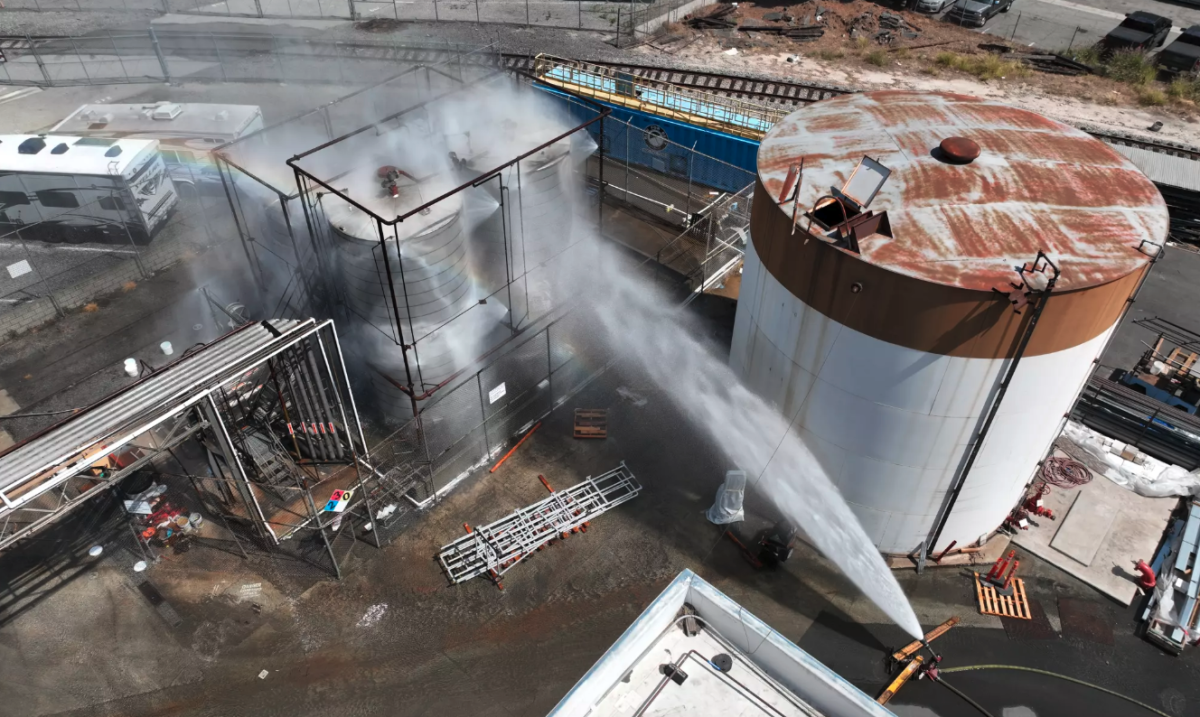
The incident first emerged on Thursday when firefighters in Garden Grove responded to reports of a chemical vapor leak at GKN Aerospace. The source of the leak was a failing storage tank containing methyl methacrylate, a highly flammable and toxic substance commonly used in the production of plastics and epoxy materials.
Within hours of arriving on the scene, officials from the Orange County Fire Authority (OCFA) realized just how dangerous the situation had become. They warned that if the tank were to fail completely, it could either spill nearly 7,000 gallons of toxic chemicals into the surrounding area or potentially trigger a massive explosion.
A Crack in the Tank Raises New Concerns
The crisis took another worrying turn on Saturday night, when emergency crews discovered a crack in the tank. While the crack could potentially help release built-up pressure inside the container, it also added uncertainty to the response strategy.
Officials noted that the development required them to reassess their approach. On Sunday, the OCFA announced an ambitious “all-night mission” aimed at testing the pressure inside the tank and determining the best path forward. The success of this overnight operation would prove to be a turning point in the crisis.
Explosion Threat Now “Off the Table”
By Monday, officials confirmed that the overnight operation had been a success. The pressure test results allowed authorities to declare that the threat of an explosion was officially “off the table.”
This marked a major step forward in the response effort and brought some reassurance to a deeply worried community. However, officials were quick to emphasize that the crisis is far from over. The risk of a toxic chemical leak still remains a real possibility, and emergency crews continue to monitor the site around the clock.
OCFA Interim Chief TJ McGovern stressed that the evacuation zones are still in effect and urged residents to follow the guidelines for their safety. OCFA spokesperson Nick Garton echoed this caution, explaining that while significant progress has been made, there is currently no firm timeline for when evacuees will be allowed to return home.
Nearly 50,000 Residents Forced to Evacuate
The Orange County chemical leak has triggered one of the largest mandatory evacuations in recent memory for the region. Roughly 50,000 residents across multiple Southern California communities have been forced to leave their homes. The affected areas include:
- Garden Grove
- Buena Park
- Anaheim
- Stanton
- Westminster
- Cypress
For many residents, the past several days have been emotionally and physically draining. Families have been forced to find temporary housing, often unsure of when they will be able to return. Many have turned to Red Cross shelters, which are now reportedly stretched to capacity, adding further strain on evacuees who are already in limbo.
Challenges Faced by Evacuees
Those impacted by the evacuation have shared a range of concerns, including:
- Uncertainty about when they can return home
- Limited shelter space and resources
- Disruption to school, work, and daily routines
- Anxiety over the safety of their pets and belongings
- Lack of clear timelines from authorities
The emotional toll of such a large-scale evacuation cannot be understated, especially for elderly residents, families with young children, and individuals with medical conditions.
State of Emergency and Federal Assistance Sought
In response to the unfolding crisis, California Governor Gavin Newsom issued a State of Emergency for Orange County. He has also formally requested that President Trump approve a federal emergency declaration to bring in additional resources and financial support for the affected region.
A federal emergency declaration would unlock access to:
- Federal disaster relief funding
- Additional emergency response teams
- Specialized hazardous materials support
- Long-term recovery assistance for impacted communities
Such measures would significantly strengthen the local government’s ability to manage the situation and assist displaced residents.
Investigation Launched Into GKN Aerospace
Beyond the immediate emergency response, broader concerns have emerged about how the leak occurred in the first place. Orange County District Attorney Todd Spitzer has officially launched an investigation into GKN Aerospace, the facility at the center of the crisis.
Spitzer has called on whistleblowers with knowledge of the company’s operations to step forward and share any information that may shed light on what led to the failure of the chemical storage tank. This investigation could potentially uncover important details about workplace safety practices, regulatory compliance, and accountability.
Key questions the investigation may aim to answer include:
- Were proper safety inspections conducted regularly?
- Did the company follow all required hazardous material handling protocols?
- Were warning signs or maintenance issues ignored?
- Could this disaster have been prevented?
Why Methyl Methacrylate Is So Dangerous
Methyl methacrylate, the chemical at the heart of this incident, is widely used in industrial manufacturing but poses serious safety risks when not handled properly. It is highly flammable and can release toxic vapors that may irritate the respiratory system, eyes, and skin.
The dangers associated with this chemical include:
- Risk of fire or explosion under high pressure or heat
- Health issues from prolonged exposure
- Environmental contamination if spilled in large quantities
- Significant cleanup challenges following a leak
Given these risks, the precautionary evacuation of 50,000 residents was considered a necessary step, even as efforts continue to fully secure the tank.
What Comes Next
While officials have made considerable progress in stabilizing the tank, there is still much work to be done before evacuated residents can return home. Emergency crews must:
- Continue monitoring the tank for any new leaks
- Safely transfer or neutralize the remaining chemicals
- Conduct air quality testing in surrounding neighborhoods
- Ensure the long-term structural integrity of the facility
- Coordinate a phased return for displaced residents
Authorities have promised regular updates as the situation evolves, urging the public to rely on official channels for accurate information.
A Community on Edge
The Orange County chemical leak has not only disrupted thousands of lives but also raised deeper concerns about industrial safety in densely populated areas. Many residents are now asking how a facility handling such dangerous materials could pose such a major threat to nearby neighborhoods.
For now, the affected communities remain on edge — grateful that the explosion threat has been neutralized but anxious to return to normal life. As investigations continue and recovery efforts unfold, the focus will increasingly turn to accountability, prevention, and rebuilding public trust.
Final Thoughts
The Orange County chemical leak serves as a stark reminder of the risks that come with industrial operations near residential communities. While the successful elimination of the explosion threat is a major win for emergency responders, the broader story is far from over. Tens of thousands of residents still wait in uncertainty, and the investigation into GKN Aerospace may bring lasting changes to how chemical facilities operate in California and beyond.
For now, the priority remains clear — keep residents safe, contain the chemical risk, and prepare the affected communities for a careful and well-coordinated return home.
Author