The Canada Germany LNG deal is making major waves across global energy markets as Canada takes a significant step toward diversifying its trade relationships beyond the United States. According to an official familiar with the matter, Canada has reached an agreement to export liquefied natural gas to Germany from a planned Pacific Coast terminal, marking one of the most important international energy deals for the country in recent years.
A Strategic Move Across the Atlantic
The agreement will be signed with Germany’s SEFE group, which stands for Securing Energy for Europe, and involves exports from the proposed KSI Lisims export facility located on the coast of British Columbia. Up to 1 million metric tons of liquefied natural gas per year are expected to flow from Canada to Germany under this arrangement.
The deal represents far more than a routine energy contract. It signals a clear pivot in Canada’s broader trade strategy under Prime Minister Mark Carney, who has set an ambitious goal to double non-U.S. trade within the next decade. For a country that currently sends nearly all of its oil and gas exports to its southern neighbor, that’s a significant reorientation.
Why Canada Wants to Diversify
Canada has long been one of the most resource-rich countries in the world, blessed with vast oil and gas reserves. However, that wealth has historically been funneled almost exclusively to the United States, leaving Canada heavily dependent on a single buyer.
This level of dependence creates real economic vulnerabilities. Changes in U.S. policy, infrastructure constraints, and political shifts can all dramatically affect Canada’s energy revenues. Carney’s push to expand into new markets is aimed at reducing this exposure and giving Canadian producers more flexibility in where and how they sell their products.
Some of the key reasons behind the diversification push include:
- Reducing economic vulnerability to U.S. policy decisions
- Capturing higher prices available in Asian and European markets
- Strengthening relationships with democratic allies in Europe
- Building long-term resilience against trade disruptions
- Positioning Canada as a global energy supplier rather than a regional one
The KSI Lisims Project at the Center of the Deal
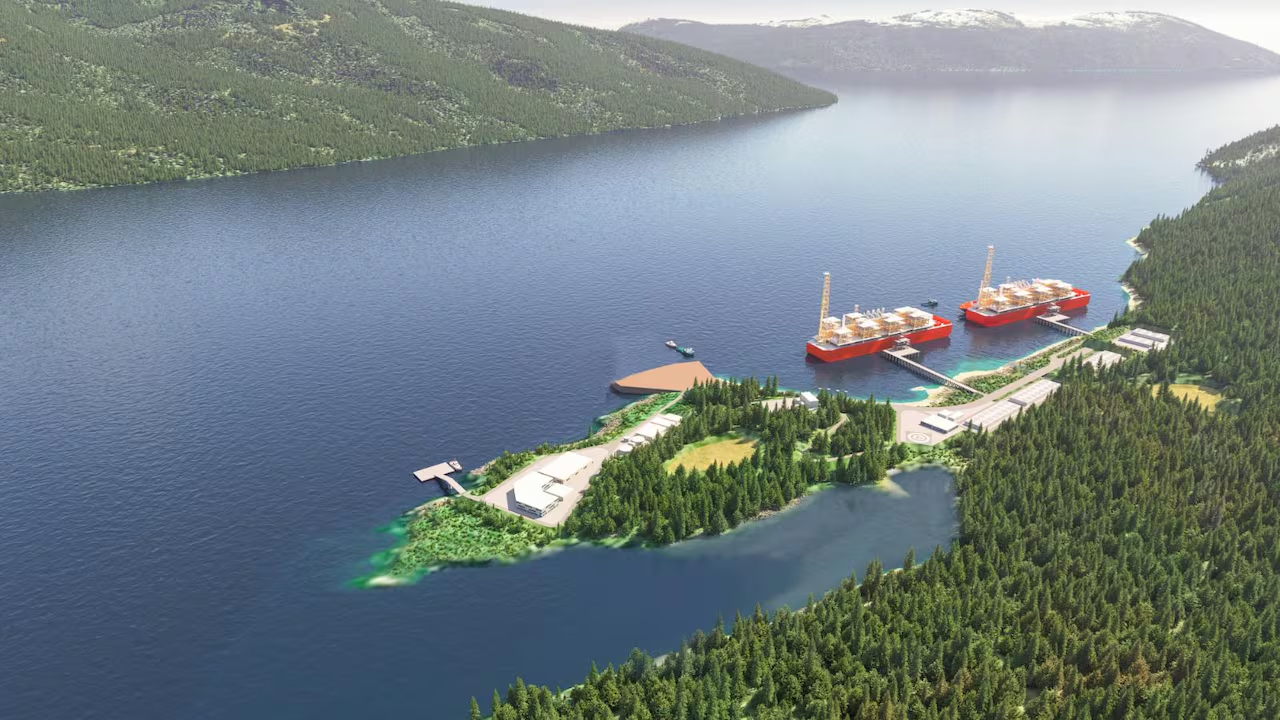
The proposed export terminal at the heart of this agreement is the Ksi Lisims facility, a major project located on Pearse Island near the Alaska border. The project carries an estimated cost of $10 billion Canadian, or roughly $7.2 billion U.S. dollars.
While the project already has the regulatory permits it needs, the consortium behind it has yet to make a final investment decision. That decision is the critical next step before construction can actually begin. British Columbia Premier David Eby has stated that securing supply agreements with major buyers is essential to reaching that milestone.
The Germany deal joins existing supply agreements that the Ksi Lisims partnership has already signed with a unit of London-based Shell and France-based TotalEnergies. With Germany now on board, the project takes another important step toward becoming a reality.
Germany’s Energy Crisis and the Push for New Suppliers
To understand why this deal matters so much for Germany, it helps to look at the energy crisis the country has faced in recent years. Before the war in Ukraine, Germany relied heavily on Russian natural gas to heat homes, generate electricity, and power its massive industrial base.
When European countries rallied to support Ukraine, Russia responded by sharply cutting gas supplies to Europe. The consequences were severe:
- Energy prices skyrocketed across the continent
- Inflation surged, hitting consumers and businesses hard
- Some factories were forced to shut down or reduce operations
- Governments scrambled to find alternative energy sources
- The economic impact spread well beyond the energy sector
Germany was one of the hardest-hit countries because of its previous dependence on Russian gas. SEFE itself is a fascinating part of this story. The utility was originally the German subsidiary of Russian energy giant Gazprom, but Germany nationalized it in 2022 in response to the worsening energy crisis. The company is now a leading German energy utility focused on ensuring stable, reliable supply for the country.
A Win-Win Energy Partnership
For both sides, this deal offers significant benefits. Germany gains access to a reliable, long-term supply of liquefied natural gas from a politically stable democratic ally. Canada gains a major new customer in a high-value market and takes a meaningful step toward its trade diversification goals.
The arrangement also fits into the broader European strategy of building energy security through partnerships with friendly nations. After being burned by overreliance on Russia, European countries are intentionally seeking suppliers that share democratic values and offer long-term stability.
What Happens Next for Ksi Lisims
The signing of the SEFE agreement is a major boost for the Ksi Lisims project, but it doesn’t automatically guarantee construction will begin. The consortium behind the project still needs to make its final investment decision, which depends on securing enough committed buyers and financing to justify the massive upfront cost.
Premier Eby has emphasized that offtake agreements like this one are essential building blocks toward that final decision. With Shell, TotalEnergies, and now SEFE all committed as buyers, the project is moving closer to the green light.
If the project does proceed, it would mark a significant addition to Canada’s energy infrastructure and open the door to even more international export opportunities. British Columbia’s Pacific Coast location is particularly valuable because it provides relatively short shipping routes to Asia, including major markets like Japan, South Korea, and potentially even Europe via specialized routes.
The Broader Implications
This deal is part of a much larger story about how the global energy map is being redrawn. The war in Ukraine, shifting geopolitical alliances, and the push for energy security are all reshaping where countries buy and sell natural resources. Canada is positioning itself to be a major beneficiary of this transformation, leveraging its abundant resources and reputation for reliability.
For Mark Carney’s government, the deal represents an early concrete success in the broader strategy to make Canada less dependent on a single trading partner. Whether this momentum continues will depend on Canada’s ability to attract more international buyers and to actually build the infrastructure needed to deliver on its energy promises.
Looking Forward
The Canada Germany LNG deal is more than just a commercial agreement. It’s a statement about how both countries see their futures — Canada as a globally connected energy supplier and Germany as a nation committed to building secure, diversified energy partnerships with trusted allies.
The official announcement is expected on Wednesday, but the implications of this deal will play out over years to come. For the energy industry, for both countries, and for the broader global trade landscape, this is a moment worth paying attention to.
Author