Strait of Hormuz dark shipping has emerged as one of the most dramatic workarounds in today’s global energy trade, as daring shipowners find ways to slip through one of the world’s most dangerous waterways. Although the strait is officially restricted, it is far from completely sealed off, thanks in large part to vessels willing to take extraordinary risks, often with quiet support from the U.S. military.
A Tiny Relief Valve for the Global Economy
In recent weeks, small clusters of ships, including some of the largest tankers on the planet carrying oil and liquefied natural gas, have managed to complete the perilous crossing. Each successful transit acts as a small pressure release for an anxious global economy that depends heavily on the energy flowing through this chokepoint.
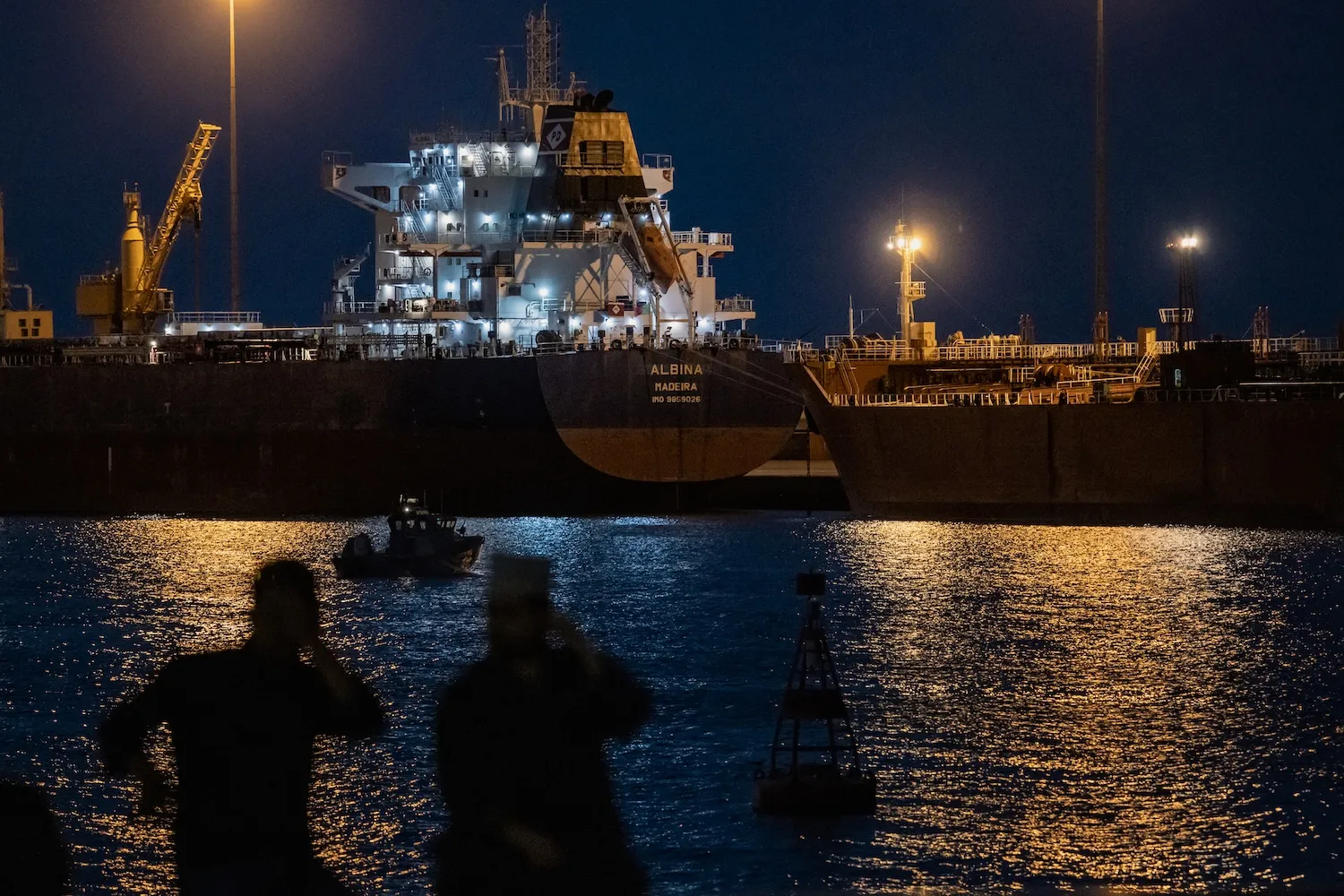
The technique at the heart of these crossings is known in the industry as sailing “dark.” Vessels switch off their lights and disable their navigational beacons, the Automatic Identification Systems, or AIS, that normally help prevent collisions. By going dark, ships become much harder to detect electronically, which in turn reduces their vulnerability to Iranian attacks.
The Role of the U.S. Military
Navigating the strait safely often requires close coordination with American forces. Some ships maintain direct contact with U.S. military officials, who rely on radar, drones, and other monitoring tools to track traffic and guide vessels through. According to shipowners and U.S. officials, the military advises captains on precisely when to go dark and how to respond if Iranian threats arise.
This delicate dance is more than a logistical challenge. The steady flow of ships passing through unharmed serves as a real-world test of Iran’s grip on global energy markets. It also measures the leverage Tehran holds at the negotiating table with Washington, where freedom of navigation remains a major point of contention.
Iran’s Counter-Moves
Iran has not stood by quietly. State media has declared that the Islamic Revolutionary Guard Corps Navy will continue to control and manage the waterway. Recent actions back up that rhetoric. Within the past week, the Revolutionary Guard reportedly attempted to lay sea mines and launched five one-way attack drones, according to U.S. Central Command.
The American response has been forceful. U.S. forces have sunk the Guard’s mine-laying boats and struck missile and drone sites, describing these operations as defensive. Despite the exchanges, the U.S. maintains that the ceasefire remains intact.
Meanwhile, Iran has dug in at the negotiating table. It insists on retaining a role in approving ship traffic going forward, potentially even charging tolls. In response, the U.S. recently imposed sanctions on the Persian Gulf Strait Authority, an entity Iran created to screen and bill commercial vessels seeking passage.
The Legacy of “Project Freedom”
A handful of the crossings are taking place through a section of the Gulf that the U.S. cleared earlier this month under an operation dubbed “Project Freedom.” That initiative involved American naval and air escorts, but it proved short-lived. It was halted after Iran began attacking vessels and Saudi Arabia restricted U.S. access to its bases and airspace.
Even so, Project Freedom left behind a valuable legacy: a relatively safe corridor through the Gulf. In the weeks leading up to the operation, U.S. forces deployed underwater robots to clear the path of mines.
One striking example involved a Greek supertanker loaded with two million barrels of crude. The vessel communicated with the U.S. as it crossed off the Omani coast earlier this week. Having been stranded in the Persian Gulf since early March, it is now bound for India to deliver its cargo. Two Greek shipowners whose vessels recently made the journey reported being flooded with inquiries from clients eager to move their own cargoes the same way.
Tracking the Routes
Most transits this month either followed an Iran-specified route, hugging the northern coast of the strait, or passed in dark mode, making them extremely difficult to track. Only a small number used the U.S.-designated path along the Omani coast, according to Kpler data.
As maritime intelligence analyst Michelle Bockmann of Windward put it, everyone is essentially waiting for a brief window to open so they can get their ships out.
One notable case was the Vicstar, a Chinese-owned vessel that completed a dark transit on 17 May. Carrying fertilizer from the United Arab Emirates to Brazil, the ship had been stuck in the Gulf for nearly three months. A crew member described how the vessel switched off its AIS at night and sailed out along the Omani coast.
A Trickle Compared to Normal
Despite these successes, the current flow remains a shadow of what it once was. Before the war, more than 100 ships would traverse the channel each day. Now, only a handful make it through, and even that trickle stops almost entirely whenever fighting flares, including twice this week when U.S. forces struck Iranian drone and missile sites near the strait.
Captain Tim Hawkins, a spokesman for U.S. Central Command, confirmed that the U.S. continually communicates and coordinates with ships transiting the area.
Powerful Financial Pressures
For the hundreds of ships stranded in the Gulf, the incentive to escape is enormous. According to tanker broker Alessandro Gelli of BRS Shipbrokers, the financial pressure is intense.
Maritime analysts estimate that operators spend between $10,000 and $15,000 per day in fuel and crew costs just to keep large crude carriers idle. On top of that, insurance costs have soared, and crews are now earning double pay due to war premiums.
The Dangers of Sailing Dark
Going dark is not without serious risk. Without AIS, ships cannot see one another or pinpoint their own positions on electronic charts. Instead, they rely entirely on radar, which is dependable but demands an experienced hand at the helm.
The challenges compound quickly. The person steering must anticipate the intentions of other vessels, and because radar does not display ship names, communication and collision avoidance become considerably harder. As Claire Jungman of Vortexa noted, there are obvious safety and security risks tied to sailing dark.
A Divided Insurance Market
Insurers have responded to these conditions in strikingly different ways. While they generally prefer AIS to be switched on, Marcus Baker of broker Marsh pointed out that keeping it on is not always a strict condition of coverage.
Opinions diverge sharply on naval escorts. According to David Smith of broker McGill & Partners, some insurers charge higher rates for escorted ships, reasoning that an escort makes a vessel a more tempting target. Others offer lower premiums for the same escort, viewing it as added protection.
The U.S. government’s assessment of these risks is reflected in a $40 billion reinsurance program. This federal safety net, backed by U.S. insurers led by Chubb and announced by President Trump in early March, was designed to reopen the waterway but has yet to be used. As Chubb CEO Evan Greenberg told investors, it will be available only for ships traveling with a naval escort.
Rewarding the Risk-Takers
The economics of war-zone shipping insurance are structured to reward success. Vessels that complete the journey safely recover roughly half of their insurance costs. Current rates hover around 2.5% to 4% of a ship’s value, a dramatic jump from the typical 0.25% in peacetime.
To put that in perspective, a $100 million vessel paying a $3 million fee might recover around $1.5 million once it safely clears the strait. In an environment this dangerous, that financial reward, combined with the daily cost of sitting idle, is often enough to convince owners that the gamble of Strait of Hormuz dark shipping is one worth taking.
Author