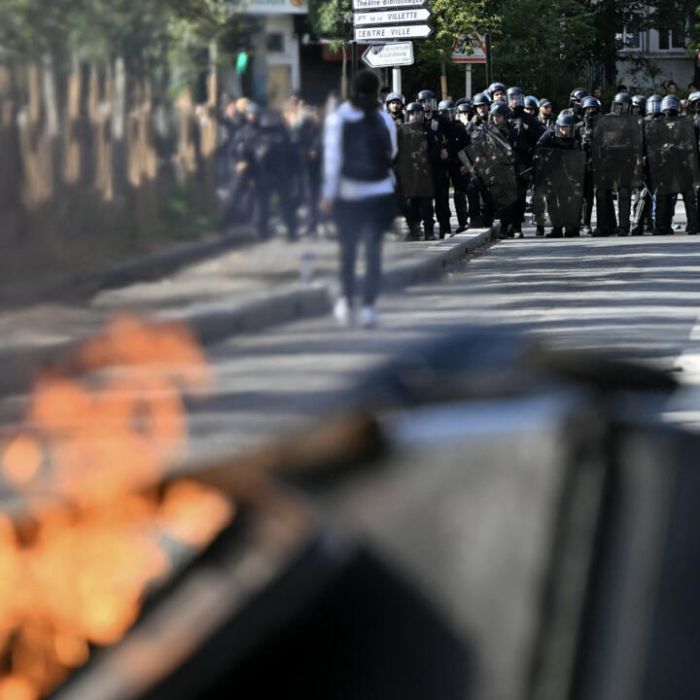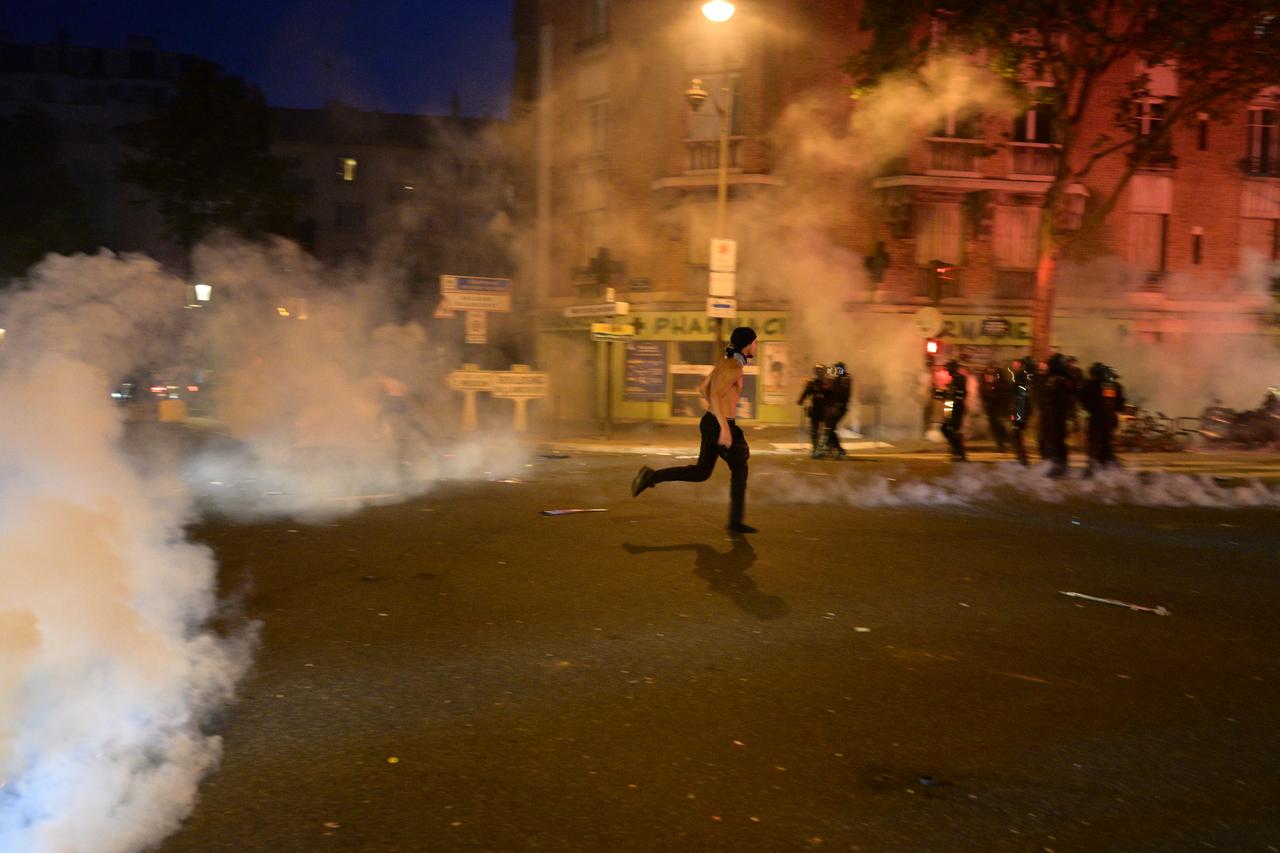
What should have been a night of pure celebration turned chaotic as the PSG Champions League victory triggered violent clashes across France. More than 780 people were detained nationwide, including 283 in Paris alone, after thousands poured into the streets following Paris Saint-Germain’s dramatic triumph. The unrest, which left officers wounded and property damaged, has reignited a familiar and contentious debate in France.
A Night of Celebration and Chaos
The trouble erupted as thousands of fans flooded the streets to mark PSG’s Champions League final win. Police detained more than 280 people in Paris as violent confrontations broke out amid the celebrations.
Authorities had braced for the possibility of disorder, having learned from the unrest that marred PSG’s victory in the competition the previous year. The scale of the security operation was enormous, with some 22,000 police deployed across France for the game, including 8,000 in the capital. In an effort to limit disturbances, Paris tram lines were halted, several metro stations were closed, and bus traffic was stopped in places.
The Toll of the Unrest
Despite the heavy preparations, the night produced significant damage and disorder. According to the French interior ministry, more than 780 people were detained nationwide, a figure up 32 percent compared to 2025. It was not immediately clear how many of those detained would be held for further investigation.
Interior Minister Laurent Nunez condemned the violence in blunt terms, reporting that seven officers had been wounded and calling the unrest absolutely unacceptable.
The physical damage was widespread, and the disruptions took several forms:
- Six vehicles and two businesses were damaged across the country.
- A group of supporters stormed the Paris ring road, the périphérique, halting traffic and setting off flares.
- Two dozen flares and roughly 100 fireworks were seized.
- A bus shelter was destroyed near the Champs-Élysées.
Scenes on the Champs-Élysées
As fans celebrated the dramatic penalty shootout victory, won in the Hungarian capital of Budapest, the energy converged on one of Paris’s most iconic locations. Police said around 20,000 people gathered on the Champs-Élysées avenue.
Memories of the previous year clearly loomed large. Shops along the avenue had boarded up their windows ahead of the match, hoping to avoid a repeat of the disturbances that saw youths ransack stores on the Champs-Élysées and other streets, leading to hundreds of arrests at the time.
Trouble Near the Stadium
The Parc des Princes, PSG’s home stadium, became another flashpoint. While tens of thousands gathered inside to watch the match, an estimated 4,000 to 5,000 people loitered outside, many carrying projectiles that were thrown at officers.
The situation grew tense as roughly 150 people attempted to enter through one of the stadium gates, only to be pushed back by police. Some demonstrators also tried to build a barricade using rental bikes, which officers cleared. An AFP reporter on the scene described clashes breaking out between police and supporters near the stadium, with officers responding with tear gas after fireworks were hurled at them. Nearby, a bakery and a restaurant were also damaged.
A Hectic Evening in the Capital
The match unfolded during an especially busy night in Paris. The city was juggling multiple major events simultaneously, including a performance by singer Aya Nakamura at the Stade de France, rapper Damso appearing at the La Défense Arena, and the French Open tennis tournament in full swing. The convergence of so many high-profile happenings added to the strain on the city and its security forces.
A Political Flashpoint
The disorder quickly took on a political dimension, drawing sharp reactions from the French far right. Three-time presidential candidate Marine Le Pen took to X to criticize the scenes, remarking pointedly that only in France does a football club’s victory spark riots.
She went further, lamenting that only in France does everyone feel compelled to lock themselves in their homes on the evening of a victory to avoid being confronted with violence. Her comments tapped into a recurring national debate over public order and celebration.
Officials, for their part, defended their preparations. Nunez insisted there had been a very robust, very solid system in place to curb the violence. A police spokesperson framed the mission in terms of public enjoyment and safety, stating that their responsibility was to guarantee everyone a festive celebration that is calm and fully secure.
What Comes Next
Despite the turmoil, the celebrations are set to continue. The PSG players will take part in a parade on Sunday afternoon at the Champs-de-Mars, in front of the Eiffel Tower, with some 100,000 people expected to attend. Following the parade, the team will be received by President Emmanuel Macron at the Élysée Palace.
The contrast between the planned festivities and the preceding night’s violence captures the tension at the heart of the moment, a historic sporting achievement shadowed by disorder on the streets.
The Bottom Line
The PSG Champions League victory delivered a landmark moment for the club and its supporters, yet it was overshadowed by widespread clashes that led to hundreds of detentions and injuries to police. With damage reported across Paris and beyond, and a sharp rise in detentions compared to the previous year, the celebrations once again exposed deep questions about how France manages large-scale public gatherings.
As the city prepares for Sunday’s parade and a reception with the president, officials will be hoping the remaining festivities pass peacefully. For now, the night stands as a vivid reminder that even moments of collective triumph can give way to conflict, and that the debate over how to balance celebration with public safety in France is far from settled.
Author