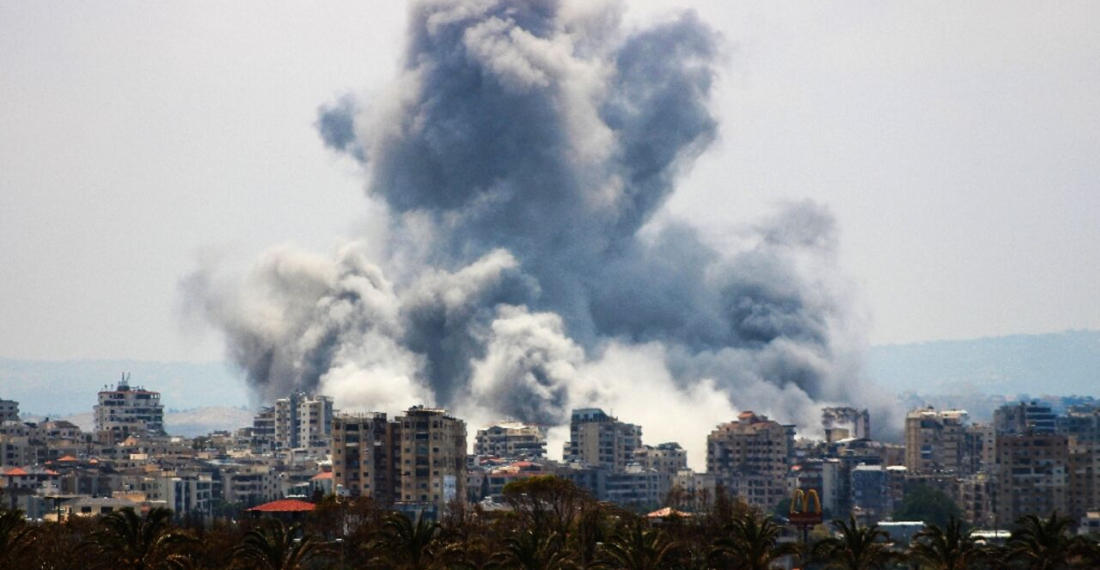
Israel strikes on Beirut have returned to the forefront of a widening conflict after Prime Minister Benjamin Netanyahu ordered attacks on the southern suburbs of Lebanon’s capital. The decision marks a sharp escalation in Israel’s fight with the Iran-backed armed group Hezbollah and threatens to unravel fragile diplomatic efforts across the region.
Netanyahu Orders Attacks on Dahieh
Netanyahu announced that “terror targets” in Dahieh, a known Hezbollah stronghold in southern Beirut, would be struck. He framed the move as a response to Hezbollah’s rocket and drone attacks on Israeli civilians, as well as repeated violations of a ceasefire that was announced in April but never managed to halt the fighting.
The warning was blunt. Defense Minister Katz drew a direct line between the two sides of the border, declaring that Beirut’s southern suburbs were no different from communities in northern Israel. In his words, if there is no calm in the north, there will be no calm in Beirut.
Shortly afterward, the Israeli military ordered residents of Dahieh to evacuate for their own safety, offering few additional details.
Thousands Flee in Fear
The response on the ground was immediate and chaotic. Roads leading out of the suburbs quickly clogged with traffic as thousands of people tried to escape.
Families packed into cars stuffed with suitcases, blankets, and whatever belongings they could grab. In some cases, two parents and their two children squeezed onto a single scooter. Other vehicles carried multiple generations together, with babies on their parents’ laps clutching small toys as the gridlock crawled forward.
Most drivers were reluctant to stop and talk, anxious to keep moving toward safety. Yet those who paused briefly often expressed a striking sentiment: they remained willing to stand by Hezbollah even as they did everything possible to shield their families from the threat of Israel strikes on Beirut.
A Ceasefire That Never Held
The latest assault breaks a period of relative restraint. Since the ceasefire between Israel and Lebanon took effect on April 16, Israel had struck Beirut only twice, most recently on Thursday.
That represented a dramatic reduction compared to earlier in the war. Reports suggest the White House had been pressing Israel to limit its operations in Beirut to avoid derailing a broader effort to end the war involving the United States, Israel, and Iran.
For now, that restraint appears to have lifted, with a US-Iran deal still out of reach.
How Lebanon Was Drawn Into War
The conflict traces back to March 2, when Hezbollah fired rockets into Israel in retaliation for an Israeli strike that killed Iran’s supreme leader. Israel responded with an air campaign across Lebanon and a ground invasion in the south.
In recent weeks, that ground offensive has intensified even as strikes on Beirut grew less frequent, until now.
Iran, Hezbollah’s longtime backer, has insisted that any agreement must include peace in Lebanon. Foreign Minister Abbas Araghchi argued that a ceasefire between Iran and the US must apply on all fronts, warning that a violation on one front amounts to a violation everywhere.
Mounting Casualties Across the South
The human toll continues to climb. In southern Lebanon, the state-run National News Agency reported that two men were killed in an air strike on the village of Zebdine, while another five died in a strike on the nearby town of Kfar Sir overnight.
In a particularly alarming incident, a strike hit a building and a car park near Jabal Amel hospital in the city of Tyre, killing at least two people and injuring 23. Footage circulating online appeared to show a damaged hospital ward littered with broken glass and debris.
The Israeli military, for its part, said one of its soldiers was killed in combat in southern Lebanon, reportedly in a drone attack.
Since the war began, Lebanon’s health ministry says at least 3,433 people have been killed, though its figures do not separate combatants from civilians. Israel reports that 24 of its soldiers and four civilians have died over the same period.
A Strategic Battlefield Shift
Concern in Lebanon has deepened as Israeli forces press further into the country’s south. Their capture on Sunday of Beaufort Castle, a 900-year-old fortress, after crossing the Litani river is being seen as a major development.
Israeli officials have cast the seizure as both symbolic and strategic, arguing that the high ground offers a commanding view across southern Lebanon and into Israel’s Galilee region, which could help counter Hezbollah attacks.
Even so, Hezbollah has managed to retreat from advancing troops while keeping up its cross-border fire. The group said it struck Israeli forces in Yahmar al-Shaqif and launched a missile salvo at military infrastructure in the northern Israeli town of Tiberias. Israel said it intercepted several drones and projectiles on Monday without injuries.
Diplomacy Struggles to Keep Pace
Efforts to halt the fighting have made little progress. A US official said Secretary of State Marco Rubio spoke with both Netanyahu and Lebanese President Joseph Aoun, though those talks appeared focused more on pressuring Hezbollah than on restraining Israel.
Rubio reportedly proposed a first step in which Lebanese officials would push Hezbollah to stop attacks on Israel, and in return Israel would avoid escalation in Beirut, creating room for gradual de-escalation. Aoun tried to advance the idea, but Parliament Speaker Nabih Berri shifted the responsibility back onto Israel to stop firing first.
A senior Lebanese official told the BBC the government was relying on US mediation to rein in Israel and prevent further civilian deaths, describing daily violations and limited leverage on the ground. The official confirmed that talks between Lebanon and Israel would still proceed in Washington this week, adding simply that there was no other choice but to negotiate and demand a ceasefire.
A Nation Caught in the Middle
Public sentiment in Lebanon is increasingly divided. Hezbollah still commands strong loyalty in its strongholds, including southern Beirut, but war fatigue is spreading nationwide. Many criticize the group’s decision to launch attacks in support of Iran, blaming it for dragging the country back into conflict.
At the same time, anger toward Israel is rising amid daily air strikes, expanding territorial gains, mass displacement, and growing civilian casualties. Over the weekend, Lebanese Prime Minister Nawaf Salam accused Israel of pursuing a “scorched-earth” policy.
For now, there is little sign of a breakthrough. Many in Lebanon fear Israel believes it holds the military advantage and intends to use it, with Netanyahu signaling that the offensive could grow wider and deeper in the days ahead.
Author