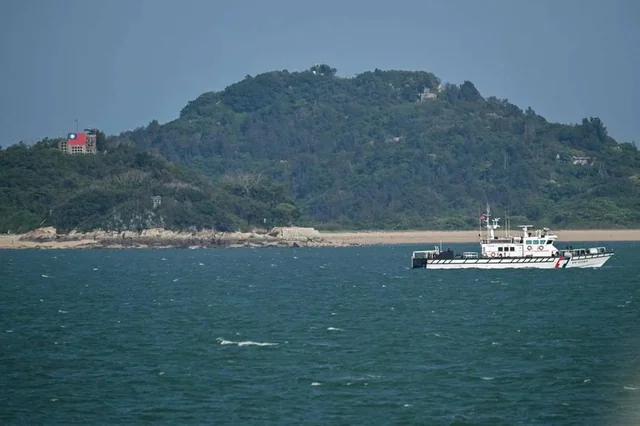
The China Taiwan patrol announced this week marks Beijing’s pointed response to growing cooperation between two of its regional rivals. China declared that it had dispatched Coast Guard vessels on “law enforcement patrols” to the waters east of Taiwan, a clear show of displeasure after Japan and the Philippines agreed to hold talks on maritime borders in the area.
The move underscores just how quickly tensions can flare in one of the world’s most sensitive geopolitical flashpoints.
Beijing’s Justification
China framed the patrol as a necessary defensive measure. According to Coast Guard spokesman Jiang Lue, the discussions between Japan and the Philippines had seriously infringed upon China’s territorial sovereignty and maritime rights and interests.
In a strongly worded statement, Jiang urged both nations to immediately halt what he called illegal acts undermining China’s sovereign interests. He added that the Coast Guard would continue to strengthen its control and management over the relevant waters, signaling that the patrols may not be a one-time gesture.
The Spark: Tokyo-Manila Talks
At the heart of the dispute lies a budding partnership between Japan and the Philippines. Following a meeting in Tokyo last week with Prime Minister Sanae Takaichi, Philippine President Ferdinand Marcos Jr. announced that the two sides had begun discussions on border issues.
Marcos emphasized that his country and Japan share a commitment to strengthening maritime security, framing their cooperation as an effort to ensure that the rule of law prevails across the region. To Beijing, however, such talks represent an unwelcome intrusion into waters it claims as its own.
Taiwan at the Center
The episode highlights the enduring tensions surrounding Taiwan, the democracy of 23 million people that Beijing regards as its territory, a claim that Taipei firmly rejects.
Recent statements from both Manila and Tokyo have only heightened the friction:
- Marcos said last month that the Philippines would likely become involved in the event of a conflict over Taiwan, given its proximity to the island, a stance that angers Beijing.
- Takaichi remarked in November that a Chinese invasion of Taiwan could justify Japan sending troops, sparking a feud with Beijing that continues to simmer.
These positions have placed both leaders on a collision course with China’s vision for the region.
A History of Patrols and Pressure
The latest patrol is not without precedent. The China Coast Guard has operated east of Taiwan before, often as part of a broader strategy of intimidation.
One mission in April of last year reportedly included training exercises aimed at arresting Taiwanese “separatists” attempting to flee by sea. Beyond such operations, the Coast Guard has also participated in the military drills that Beijing has increasingly staged around Taiwan in an effort to pressure the government in Taipei.
This pattern suggests that the current patrol fits into a larger, ongoing campaign of demonstrating Chinese reach and resolve.
Mounting Diplomatic Friction
China’s displeasure had been building even before the patrol. Last week, the country signaled its unhappiness with the border talks through its Foreign Ministry.
Spokeswoman Mao Ning asserted that China holds an exclusive economic zone and continental shelf rights in the area under both domestic and international law. She went so far as to dismiss the discussions between Tokyo and Manila as “illegal, null and void,” leaving little doubt about Beijing’s stance.
Veiled Threats of “Countermeasures”
The rhetoric has escalated further through state-affiliated channels. On Sunday, a social media account linked to China Central Television cited a researcher warning that Japan and the Philippines could face “historic and unprecedented countermeasures” if they proceeded with their discussions.
The researcher, affiliated with a government think tank, lent an air of official backing to the warning. Such language reflects Beijing’s determination to deter the two nations from deepening their cooperation.
A Broader Regional Contest
The standoff fits within a wider struggle for influence across the Indo-Pacific. Several recent developments illustrate the intensifying competition between China and those seeking to counter its ambitions, including efforts by Taiwan to push back against diplomatic isolation, growing security ties between Manila and Tokyo, and moves by the United States to bolster deterrence in Asia.
Together, these dynamics paint a picture of a region increasingly defined by maneuvering, alliance-building, and the careful testing of red lines.
What Comes Next
For now, the China Taiwan patrol serves as both a warning and a statement of intent. Beijing has made clear that it views any maritime cooperation touching on waters near Taiwan as a direct challenge to its sovereignty, and it appears prepared to respond with shows of force.
Whether Japan and the Philippines will press ahead with their border talks despite the threats remains to be seen. What is certain is that the waters around Taiwan will continue to be a stage for high-stakes posturing, where a single round of diplomatic discussions can prompt warships, sharp rhetoric, and warnings of unprecedented consequences. As the region watches closely, the delicate balance of power in the Indo-Pacific grows ever more fragile.
Author