The latest US jobs report has done more than reassure economists about the health of the labor market — it has quietly rewritten the Federal Reserve’s to-do list. A far stronger-than-expected May showing has pushed worries about hiring weakness to the back burner and thrust inflation back to center stage, just as a new chairman settles into the top seat.
A Blowout Number Nobody Saw Coming
The Labor Department reported a net gain of 172,000 jobs in May — more than double what economists had penciled in. The unemployment rate held steady at 4.3%, and revisions to March and April nudged earlier figures sharply higher.
Perhaps most striking, average hiring over the past three months has climbed back to levels last seen in the decade before the pandemic. After a sluggish 2025 that produced fewer than 10,000 new jobs a month on average, the first five months of 2026 have delivered roughly 113,000 monthly — a remarkable turnaround.
Why This Changes the Conversation
For much of the past year, Fed officials fretted over a softening job market. That anxiety justified rate cuts. But three consecutive consensus-beating reports have largely erased those fears, leaving policymakers far less willing to look past stubbornly high inflation.
The market noticed immediately. Investors lifted the odds of a December rate hike to around 70%, up from roughly 50% just a day earlier. In other words, the bet has flipped from “when will the Fed ease” to “how soon might it tighten.”
A New Chairman Caught in the Crosscurrents
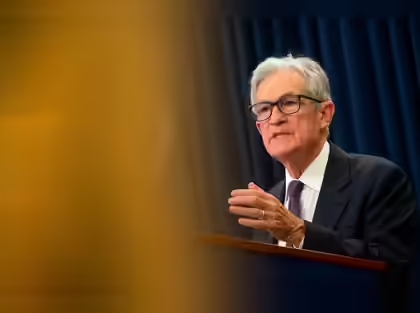
The timing could hardly be more awkward for Kevin Warsh, who took over from Jerome Powell in mid-May and will preside over his first policy meeting on June 16-17.
Warsh got the job partly by arguing that interest rates could fall — that President Trump’s policies and the spread of artificial intelligence would lift productivity, accelerate growth, and cool inflation all at once. The data so far are pointing the other way. Inflation appears stuck more than a full percentage point above the Fed’s 2% target and is on pace for a sixth straight year above that mark.
That leaves Warsh squeezed between two forces:
- The White House, which is openly hoping for lower borrowing costs.
- A growing camp of Fed colleagues who now see tightening, not easing, as the more likely next move.
The Hawks Find Their Voice
Several officials have already shifted. Cleveland Fed President Beth Hammack put it bluntly, noting that the economy sits right around her definition of full employment while inflation tells a very different story — high and climbing. If recent trends hold, she suggested, acting soon may be warranted.
Fed Governor Christopher Waller, once a reliable advocate for cuts, has changed his tune too. He now says he can no longer rule out rate hikes if inflation refuses to ease, describing the labor market as stabilizing and the unemployment rate as low and steady. That view may now represent the majority at the central bank.
Back at the April meeting, three policymakers had already dissented in favor of a more hawkish stance that would open the door to a hike. Waller says he now agrees with them, and others are speaking more openly about the possible need for tighter policy.
The Inflation Problem Won’t Quit
A big piece of the inflation puzzle traces back to the ongoing war with Iran, now in its fourth month. The conflict triggered an oil shock that continues to ripple through the economy. While benchmark crude prices have eased recently, shipping through the strategic Strait of Hormuz remains disrupted, and no deal to end the fighting has been reached.
The effects are spreading. Across the Fed’s 12 regional districts, business contacts described how the oil spike has primed other prices to keep rising, as executives pass along higher costs for fertilizer, shipping, and metals to consumers.
The International Monetary Fund, for its part, no longer expects inflation to return to the 2% target until late 2027 — pushed back from the middle of next year, largely because of the war’s fallout. The IMF urged the Fed to proceed with caution and calibrate carefully to incoming data.
The Question Hanging Over the Fed
Kansas City Fed President Jeffrey Schmid framed the dilemma plainly: with inflation creeping toward the 3.5% range, the choice now is between staying patient and acting. Is the spike temporary, or is it time to raise rates a quarter point or two and try to rein it in?
That tension carries political weight as well. Trump is counting on cheaper borrowing costs, and with the November midterms likely to hinge on the economy, the stakes for the Fed’s next moves run high.
What to Watch Next
Fresh inflation data lands next week and could tip the balance further. As things stand, the momentum is unmistakable. Barring a sudden summer jobs scare, analysts increasingly expect the Fed to enact a couple of “insurance” hikes later this year.
The irony is hard to miss. A robust US jobs report — normally cause for celebration — has become the very reason borrowing may soon get more expensive. For Warsh, the honeymoon looks short, and the first real test of his leadership arrives in just under two weeks.
Author